PHNOM PENH: Cambodia hit back on Thursday at US criticism over its decision to expel a US-funded pro-democracy group, accusing Washington of political interference and describing American democracy as “bloody and brutal.”
Prime Minister Hun Sen, the strongman who has ruled Cambodia for more than three decades, has taken a strident anti-American line in the increasingly tense run up to a 2018 election.
The US State Department criticized Cambodia’s decision to expel the National Democratic Institute (NDI) on Wednesday and a statement from the US embassy in Phnom Penh questioned whether Cambodia was a democracy.
In an open letter on Thursday, the Cambodian government asked whether the United States was “coming to Cambodia to help or hinder the Khmer people” and blamed it for contributing to the rise of the genocidal Khmer Rouge in the 1970s.
“Cambodians are well aware of what a democratic process means. You do not need to tell us what it is,” the letter said, describing US-style democracy as “bloody and brutal.”
“We wish to send a clear message again to the US Embassy that we defend our national sovereignty,” it added.
Tensions have risen anew in Cambodia, with rights groups and the United Nations expressing alarm and the opposition accusing Hun Sen of persecution ahead of next year’s election.
After the government’s order to expel the NDI and a threat to shut a newspaper founded by an American journalist if it didn’t pay back taxes immediately, the US State Department voiced concern at the government “curtailing freedom of the press and civil society’s ability to operate.”
’AMERICAN INTERFERENCE’
Government supporters have threatened to protest at the US Embassy in Phnom Penh, the pro-government “Fresh News” web site reported on Thursday.
“The protests are likely to be in large scale against the US Embassy in Phnom Penh like in the 1960s because of the American interference in Cambodia’s sovereignty,” it said, citing an anonymous government source.
The spillover from the US war in neighboring Vietnam in the 1960s and 70s helped bring to power the Khmer Rouge regime, whose rule was marked by the genocide of at least 1.8 million Cambodians through starvation, torture, disease and execution.
Hun Sen, the former Khmer Rouge commander who is one of China’s closest regional allies, has warned of a possible return to war if his party doesn’t win elections.
In a statement on its website on Wednesday the NDI called on Cambodia to reconsider its decision to shut it down. The institute said it worked with all major parties and that its work was “strictly nonpartisan.”
NDI President Kenneth Wollack said the NDI has fulfilled all legal obligations for registration.
Hun Sen has also targeted local media in what rights groups say is a growing crackdown ahead of the election.
Cambodia’s ministry of information on Wednesday revoked the license of a local radio station for selling air time to the opposition Cambodia National Rescue Party.
The station also rents out space to the US government-financed Voice of America (VOA) English news outlet.


![]()
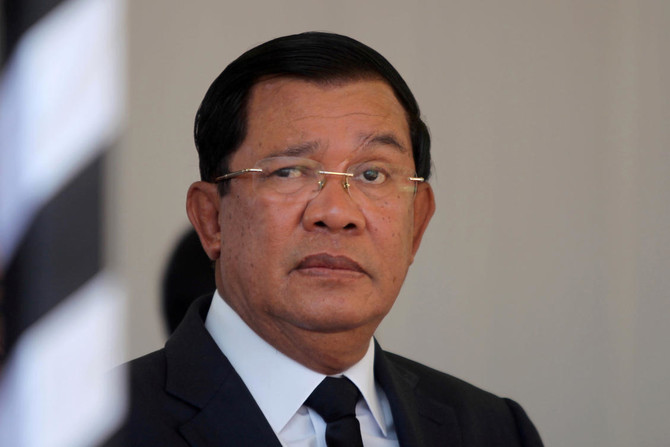
Cambodia accuses Washington of political interference, calls US democracy “bloody and brutal”
Cambodia accuses Washington of political interference, calls US democracy “bloody and brutal”
Latest updates


© 2026 SAUDI RESEARCH & PUBLISHING COMPANY, All Rights Reserved And subject to Terms of Use Agreement.