SYDNEY: Australia said on Thursday it would strengthen its money laundering laws, including bringing bitcoin providers under the government’s financial intelligence unit, days after a fresh scandal at one of the country’s biggest banks.
The government said a coming bill would be the first stage of reforms to strengthen the country’s Anti-Money Laundering And Counter Terrorism Financing Act.
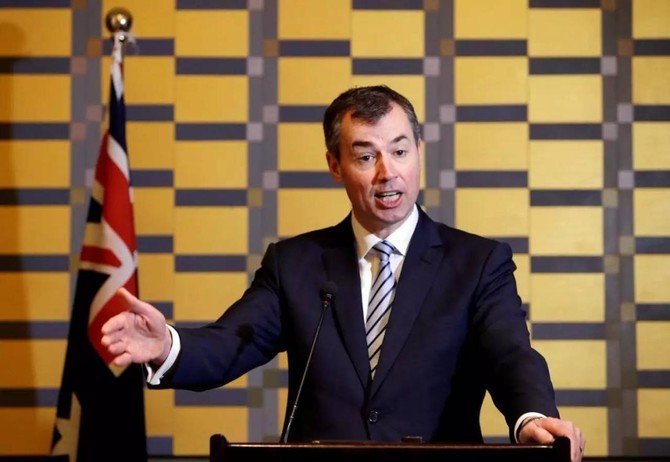
“The threat of serious financial crime is constantly evolving, as new technologies emerge and criminals seek to nefariously exploit them. These measures ensure there is nowhere for criminals to hide,” Minister of Justice Michael Keenan said, without specifying when the legislation would be introduced.
The bill will also aim to bolster the investigative and enforcement powers of the financial intelligence agency Australian Transaction Reports and Analysis Center (AUSTRAC).
The announcement comes just days after the agency accused the Commonwealth Bank of Australia of “serious and systemic” breaches of money laundering laws.
But the move is more than two years after global watchdog Financial Action Task Force (FATF) found significant deficiencies in Australia’s anti-money laundering framework.
The next and more challenging phase of legislative reforms in Australia will be to extend the rules to lawyers, accountants, real estate agents and dealers in high-value goods.
Under Australian regulations, one can pay millions in cash for precious stones or a prime property without having to identify themselves or the source of their funds.
Australia had agreed in 2003 to extend strict controls to these sectors, but has yet to act on those promises.
“Stopping the movement of money to criminals and terrorists is a vital part of our national security defenses and we expect regulated businesses in Australia to comply with our comprehensive regime,” Keenan said.
The digital currency exchange sector, which includes bitcoin, will be regulated for the first time, Keenan added.
The Australian Digital Currency & Commerce Association welcomed the reform, saying it will increase safeguards and provide regulatory certainty to digital currency businesses.
Earlier this year, Australia launched a world-first private-public partnership called ‘Fintel Alliance’ to encourage banks and other financial institutions to provide intelligence to regulators.
However, allegations against CBA that it failed to provide more than 53,000 transaction alerts to AUSTRAC on time has put a question mark over those efforts.
On Thursday, Keenan said that the private sector was an essential partner in ensuring Australian businesses are not exploited by criminals. He did not say whether the bill was in response to the CBA case.
“Australia was seen as a place where there was a real cooperation between regulatory authorities, law enforcement and financial institutions,” said Kieran Beer, New York-based chief analyst at the Association of Certified Anti-Money Laundering Specialists.
“This kind of cooperation is getting institutionalized and gathering momentum in the UK But there will be a backlash against the perceived failures, if proven, in the CBA case and some will argue that Fintel-like alliances may be an illusion.”
— Reuters


![]()
Australia proposes stronger money laundering rules, includes bitcoin
Australia proposes stronger money laundering rules, includes bitcoin


Latest updates


© 2026 SAUDI RESEARCH & PUBLISHING COMPANY, All Rights Reserved And subject to Terms of Use Agreement.