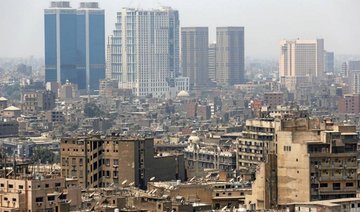
CAIRO: Egypt’s first bitcoin exchange will go live later this month, the founders of Bitcoin Egypt said, linking the Middle East’s most populous country with a cryptocurrency that has surged in value in recent months.
Many governments around the world are still mulling how to regulate and classify bitcoin, a volatile digital currency that has captured the interest of speculative investors worldwide as its value has soared, roughly quadrupling since the start of 2017 and trading at around $4,400 on Thursday.
Egypt, most of whose 93 million people have no bank accounts but where electronic payments have grown in recent years, lacks regulations for digital currency. This means local retailers cannot accept it as payment but users on an exchange may be left to trade freely, potentially cashing in on its ascent.
“We’re still waiting on the Egyptian government to set some kind of regulations ... Without any laws, bitcoin is not legal money in Egypt,” said Bitcoin Egypt founder Rami Khalil.
He said the exchange has picked up about 300 pre-registrations from users ahead of its launch.
The Egyptian Financial Supervisory Authority, the country’s financial markets regulator, did not respond to requests for comment.
Khalil and co-founder Omar Abdelrasoul see their platform connecting a community of several thousand bitcoin enthusiasts who will for the first time be able to trade in Egyptian pounds, which have roughly halved in value since November after flotation under an International Monetary Fund loan program.
“Cryptoassets are happening whether (the Egyptian government) joins in or not. And by not joining they’re missing out on a very big market. Currently bitcoin is about a $70 billion market,” said Khalil.
Cryptocurrencies allow anonymous peer-to-peer transactions between individual users, without the need for banks or central banks.
Bitcoin’s lack of central authority makes it attractive to those wanting to get around capital controls. This has helped it proliferate in China, the world’s most active bitcoin market, but has led some governments to crack down on its use to prevent money laundering.
Those same dynamics could propel bitcoin in Egypt, where a shortage of hard currency after the 2011 uprising sharply restricted bank transfers. Though liquidity at banks has improved and capital controls have been lifted in recent months, businesses still resort to a black market for dollars to obtain currency not available in the formal banking system.
“We’re trying to get people used to the idea of bitcoin, to ready the market so that in a couple of years we will reach a greater number of users. But for now we are trying to let people know what cryptocurrency is,” said Abdelrasoul.


![]()

Egypt’s first bitcoin exchange to begin trading this month
Egypt’s first bitcoin exchange to begin trading this month

Latest updates


Recommended


© 2026 SAUDI RESEARCH & PUBLISHING COMPANY, All Rights Reserved And subject to Terms of Use Agreement.