LONDON: Tour companies are already lining up to send holidaymakers to Saudi Arabia following a move to introduce visa-free travel to part of the Kingdom’s Red Sea coast.
UK-based Wild Frontiers has been advertising eight-day packages to Saudi Arabia for several months in the hope that the country’s closed tourism attractions might be opened up.
“There is huge pent up demand,” said marketing manager Michael Pullman. “This is fantastic news and we have a waiting list of people to go there. We have been taking bookings in expectation that this might happen.”
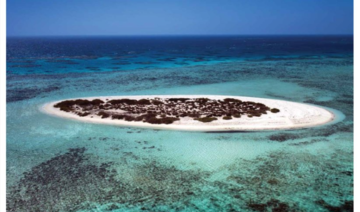
The Red Sea project is expected to include diving attractions, a nature reserve and luxury hotels.
The Public Investment Fund (PIF) said on Monday it would help to fund construction of the resort which was described as “a semi-autonomous area.”
Tourism is a key part of Saudi Arabia’s Vision 2030, which seeks to reduce the country’s reliance on oil and gas revenues by developing new sectors such as retail, hospitality and manufacturing.
Tourism chiefs hope to attract new visitors to the country while also encouraging more domestic travel and keeping more of the money within the economy that would otherwise be spent by Saudis overseas.
The Red Sea project aims to provide a SR15 billion ($4 billion) boost to the economy and create some 35,000 jobs.
Wild Frontiers is one of several specialist tour operators that have been eagerly awaiting the opening up of the Kingdom’s tourism sector.
It already has a waiting list for its first eight-day tour, which is priced at £4,895 ($6,468).
“This is the kind of thing that really doesn’t happen very often,” said Pullman.

UK tour operator has waiting list for Saudi Red Sea trip
AlUla’s ancient scripts come alive after dark at Ikmah
- Gen-Z local Omer Mohammad guided Arab News through the vast outdoor setting of ‘Secrets of the Scribe’
ALULA: Ikmah Mountain, also known as Jabal Ikmah, one of AlUla’s landmark archeological sites, is offering visitors a new experience this week as part of the Winter at Tantora programming, which ends on Jan. 10.
Near the ancient city of Dadan, Ikmah highlights AlUla’s role as a major cultural and religious center long before the rise of the Nabataeans. It is being activated under the stars in a brand new, old way.
The site, often described as “an open-air library” for its hundreds of ancient inscriptions carved on its canyon walls thousands of years ago, provides visitors with have a chance to etch their own names, using the ancient alphabet, on a block of stone they can take home.
Written mainly in Dadanitic and Lihyanite, the ancient texts once recorded religious dedications, laws, names of rulers and traced everyday life, providing rare insights into the beliefs and social structures of early Arabian kingdoms.
Arab News spoke with Gen-Z local Omer Mohammad, who guided us through the vast outdoor setting of the “Secrets of the Scribe — Ikmah After Dark” experience.
“When the guests arrive, we welcome them ... give them some tea to get refreshed. After that, if the group is big, we split them into two; some of the group goes to go to the carving where they are going to learn how to carve. And the other group is going to go to explore the gorge,” he said.
Storytelling was such an important thing here 3,000 years ago. People from all over the world used to bring their animals and rest here; it had a river so it had some water and everything.
Omer Mohammad, AlUla local
The gorge is an elevated path with candles lighting the way on both sides.
“In the scripts and descriptions you’re going to see (in the mountains), you will get to know more about Dadani lives and what they used to do here,” he said.
After the hike down, visitors from both groups join at the gathering point where everyone is encouraged to rest, mingle and enjoy small bites such as dates and other goodies, as well as tea.
While it is a new experience, the tradition is old.
“Storytelling was such an important thing here 3,000 years ago. People from all over the world used to bring their animals and rest here; it had a river so it had some water and everything,” he said.
Dressed in garb from olden times and speaking in poetic prose, Mohammad and his peers guided us to see the light in the dark night.
“It is significant to me personally to work on this project to get people to come here and get excited (about) what’s happening, enjoy our stories and know more about Dadani life,” he said.
On a personal note, Mohammad is grateful to know more about his own history and wants to continue passing on that newfound knowledge to all generations — both younger and older than his own — and be part of the unfolding story of the land and its people.
“I guess you can say that this is the land of my ancestors. I really love history, and I really would like to know more about history — and my history,” Mohammad said. “But I just learned about this ancient history three years ago when I started working here.
“I never had the experience before, so when I knew more about it, I was so happy. And it was so good. Everyone should come,” he said.