
RIYADH: While Saudi Arabia has long been feted for its ancient sites, distinctive culture and sweeping desert landscapes, recent strides in marine research and exploration could soon see scientists and tourists alike flocking to the Kingdom’s bluer regions.
In just the first year of a decade-long expedition led by Saudi Arabia’s National Center for Wildlife, 20 extremely deep underwater sinkholes, known as “blue holes,” were discovered along the Kingdom’s southern Red Sea coast.
Blue holes, named for their vibrant color, have long been recognized as havens for a diverse array of marine life, attracting researchers eager to study their remarkable biodiversity and leisure divers drawn to their profound natural beauty.


Mohammad Qurban, CEO of NCW, said that the discovery of blue holes marked a significant milestone in the Kingdom’s exploration of marine ecosystems.
“The blue holes’ discovery in Saudi Arabia was a result of the groundbreaking exploration effort in collaboration with the King Abdullah University of Science and Technology during the Red Sea Decade Expedition,” he told Arab News.
“Exploring the Wonders of the Red Sea: A Decade Expedition” is an unprecedented scientific research expedition launched last year by the NCW in partnership with OceanX and KAUST.
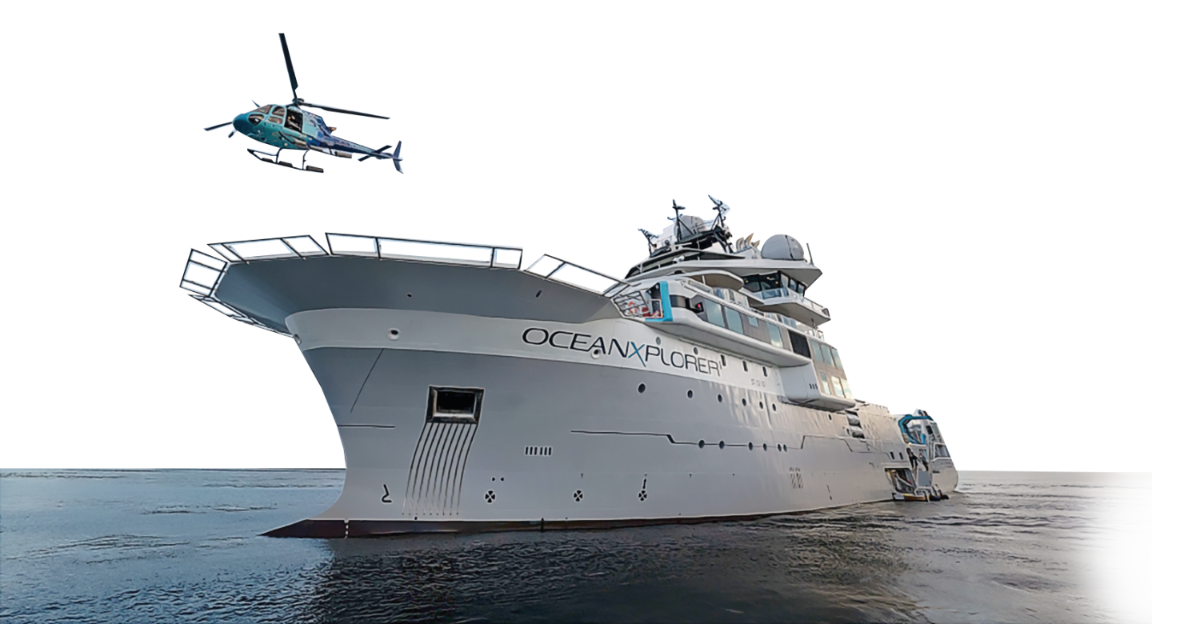
The OceanXplorer. (NCW photo)
Researchers are using advanced diving techniques, remote sensing technologies, remotely operated vehicles and autonomous underwater vehicles to examine the geology, hydrology, biology and chemistry of the blue holes to unravel the mysteries of these unique ecosystems.
“Scientific diving allows for direct observation and sample collection, while technology enables the mapping and study of blue holes’ deeper and more inaccessible parts,” Carlos Duarte, the expedition’s chief scientist and a distinguished professor of marine science at KAUST, told Arab News.
Duarte is credited with having identified a previously unexplored area of the Kingdom’s Red Sea coast, which extends north from Jazan to Al-Lith, as an area of potential interest for marine conservation.
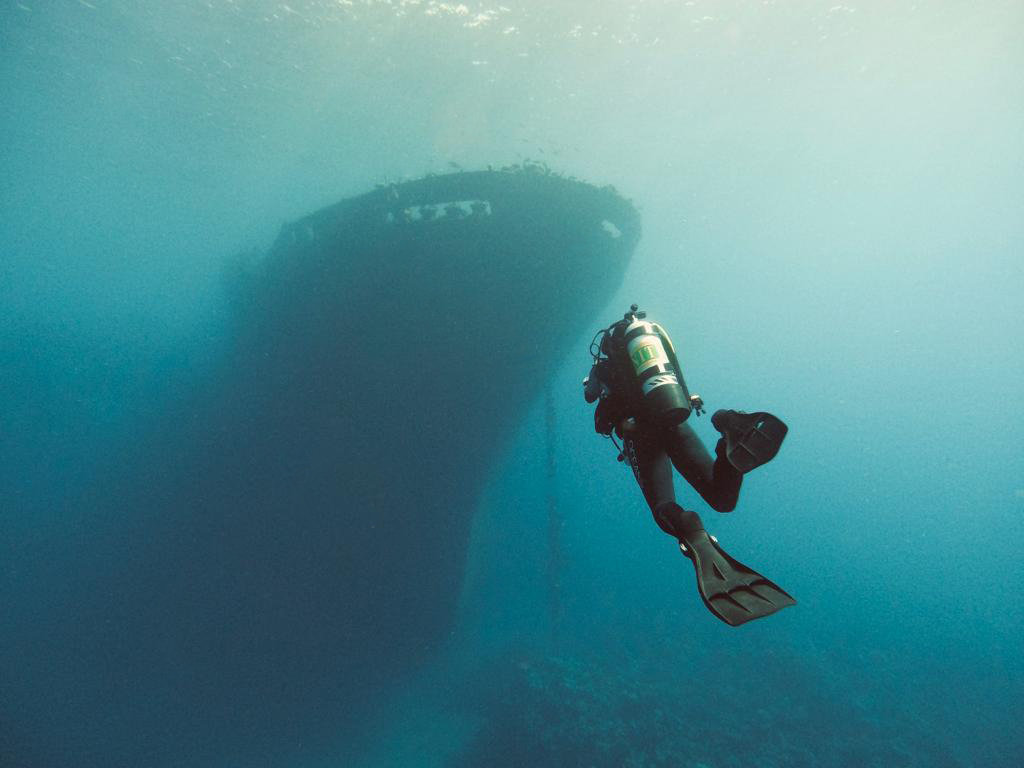
Researchers are using advanced diving techniques to examine the biology and chemistry of the blue holes. (NCW photo)
“This is a labyrinth of coral reefs, which I explored during a few years using a KAUST research vessel,” he said.
“Venturing through this labyrinth is a daunting task, as it has very shallow areas adjacent to deep areas. On one occasion, the bow of the vessel was just above an emerging coral reef, but the depth sounder, which is located 15 meters toward the stern of the vessel, read 750 meters.”
Duarte said that he must have been right next to a blue hole without even knowing it, “as we did not have the necessary mapping underwater equipment at the time.
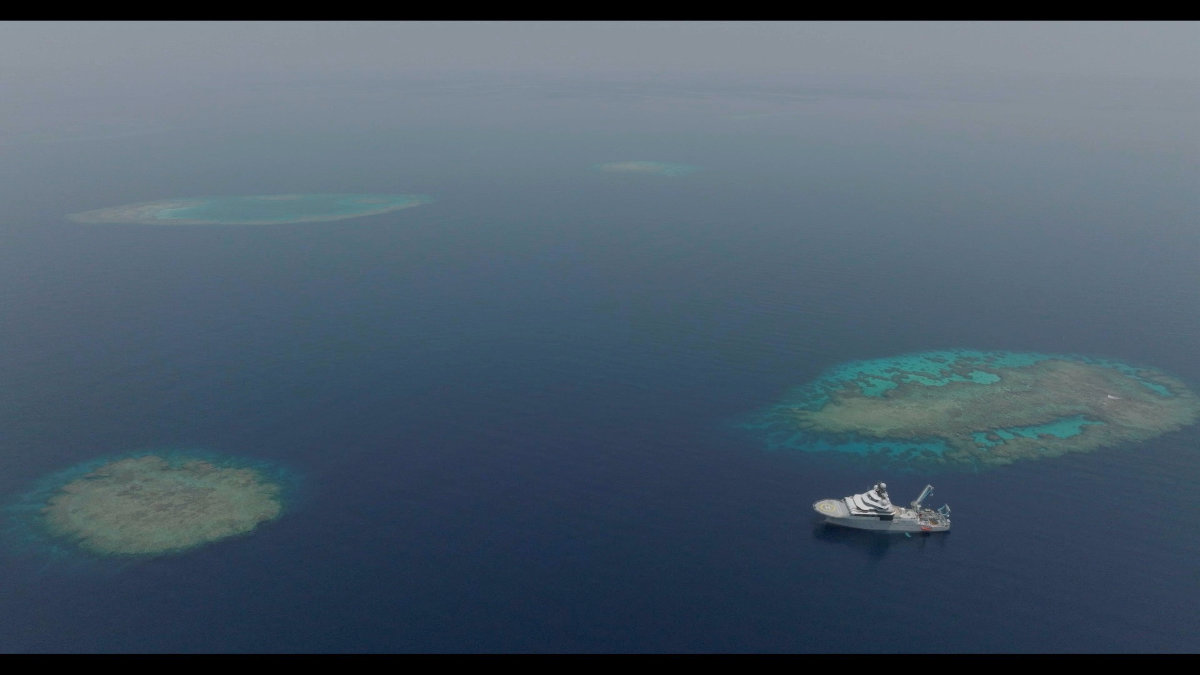
In a decade-long expedition led by Saudi Arabia’s National Center for Wildlife, 20 extremely deep underwater sinkholes, known as “blue holes,” were discovered along the Kingdom’s southern Red Sea coast. (NCW photo)
“Hence, I targeted this area in the design of the Red Sea Decade Expedition — the most ambitious exploration of the Saudi Red Sea to date, led by the National Center of Wildlife, where I served as chief scientist and we had the right platform, the advanced research vessel OceanX, to explore this region.”
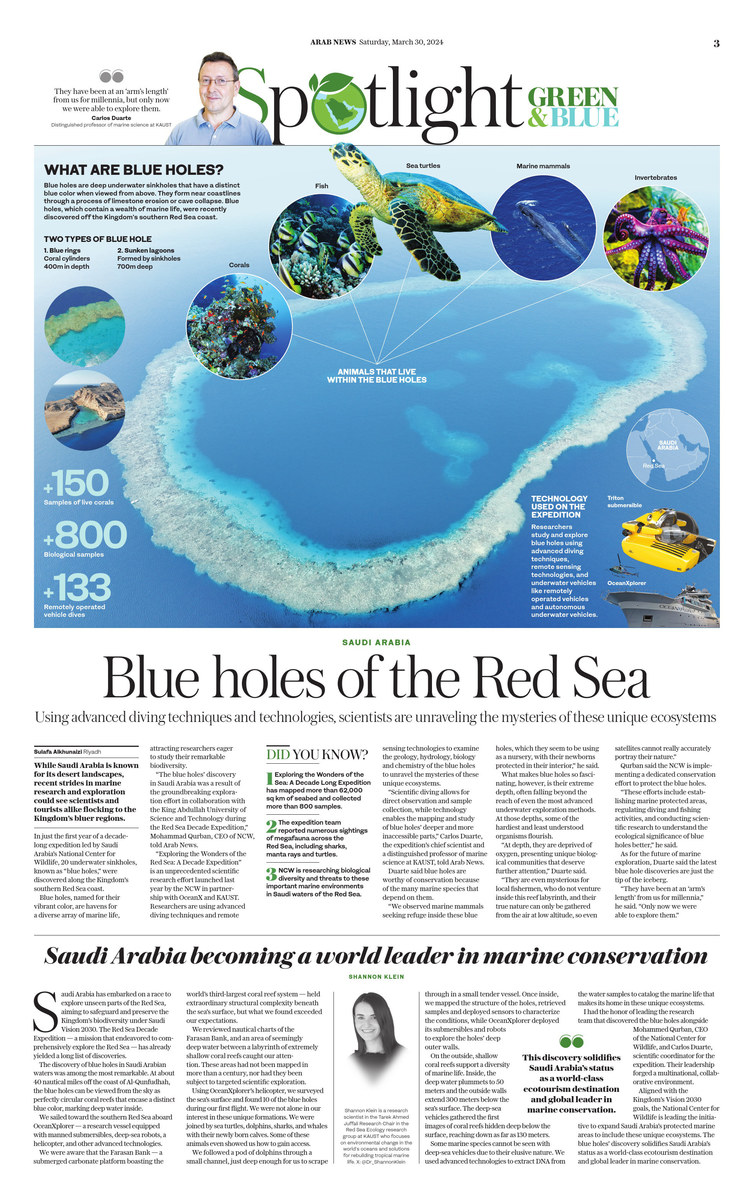
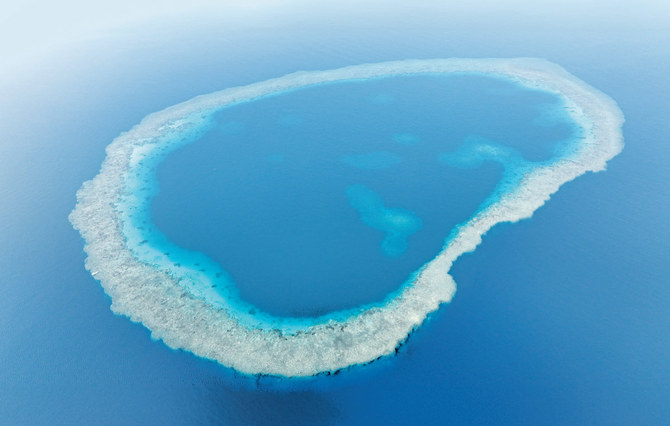
As a result of this latest expedition, researchers believe they have identified the existence of two types of blue holes — blue rings and sunken lagoons.
Blue rings are cylinders of coral that rise from about 400 meters deep and are topped by a ring of coral extending to the surface, whereas sunken lagoons are formed by the collapse of carbonate platforms and can be as deep as 700 meters — or perhaps even deeper.
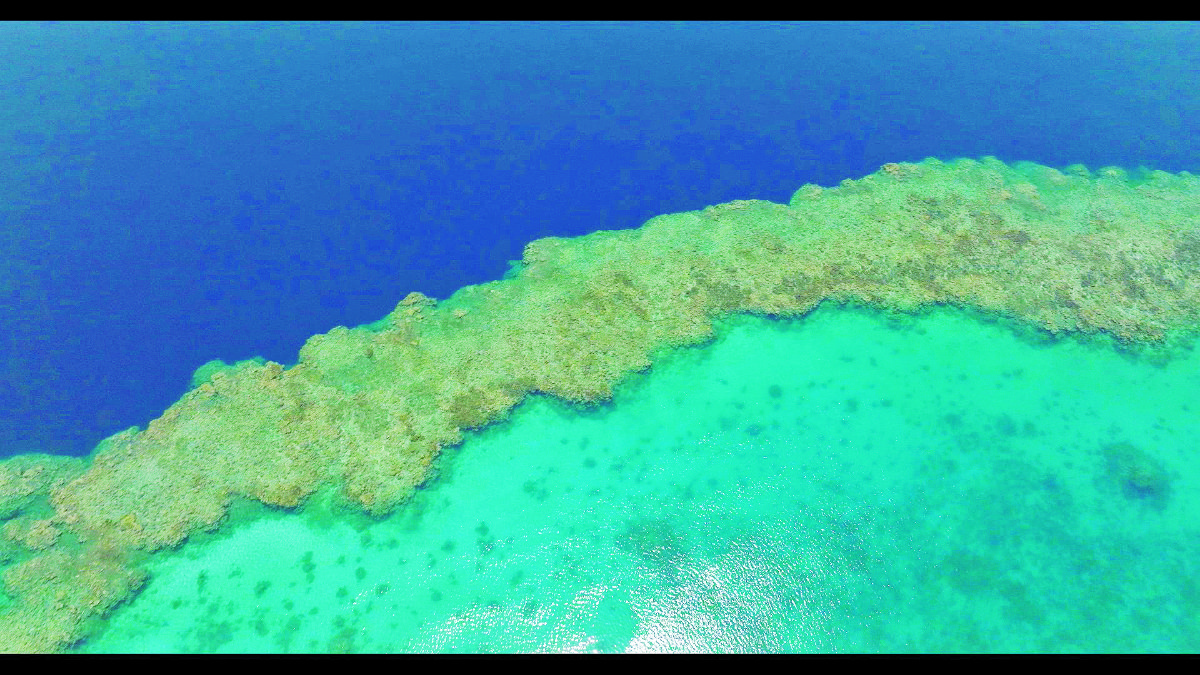
A closer view of a blue ring, composed of cylinders of coral that rise from about 400 meters deep. (NCW photo)
“We explored with an advanced vessel, submersibles, deep-water robots, a shallow-draft mapping vessel and a helicopter, coupled with advanced sequencing technology,” Duarte said.

Carlos Duarte
“The National Center of Wildlife is planning a subsequent expedition to explore and map the many blue holes that we could not explore, as conserving this natural treasure must be based on the best possible data.”
Duarte said that blue holes are worthy of particular attention by conservationists because of the many endangered marine species that depend on them.
“These are unique features, a few of which have been described elsewhere in the ocean, but not in the number and size of the blue holes in the Saudi Red Sea,” he said.
“We observed marine mammals seeking refuge inside these blue holes, which they seem to be using as a nursery, with their newborns protected in their interior.
“Blue holes contribute in a multifaceted way by uncovering geological processes driving the dynamics of carbonate platforms and expressing the limits of environments for marine life through the extreme conditions they present.
“They also provide evidence of the importance of physical shelter for vulnerable marine life, thereby informing conservation efforts.”
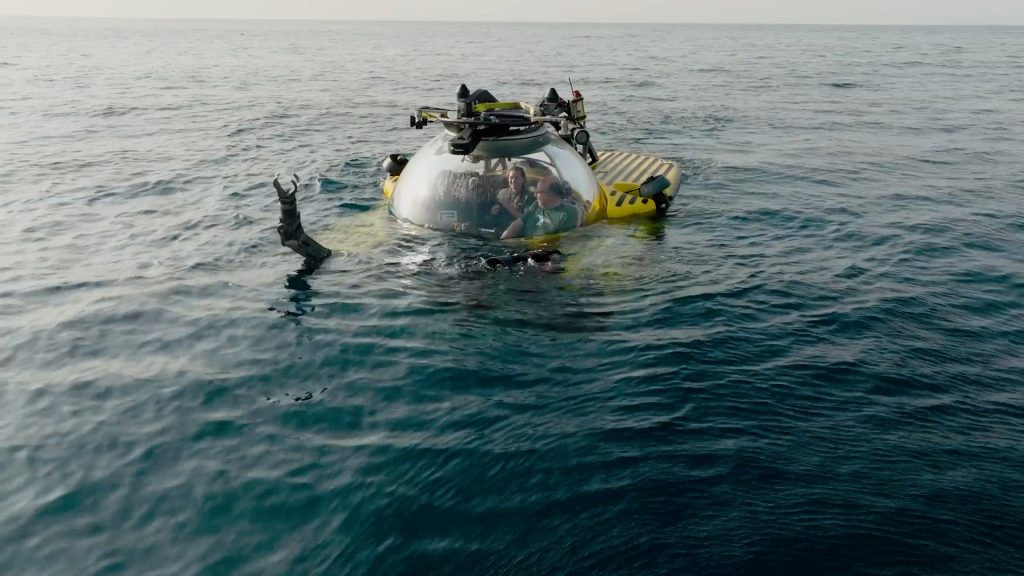
Researchers are also using remote sensing technologies, remotely operated vehicles and autonomous underwater vehicles to examine the biology and chemistry of the blue holes. (NCW photo)
What makes blue holes so fascinating, however, is their extreme depth, much of which is beyond the reach of even the most advanced underwater exploration methods. At those depths, some of the hardiest and least understood organisms flourish.
“At depth, they are deprived of oxygen, presenting unique biological communities that deserve further attention,” Duarte said.
“They are even mysterious for local fishermen, who do not venture inside this reef labyrinth, and their true nature can only be gathered from the air at low altitude, so even satellites cannot really accurately portray their nature.”
DID YOU KNOW?
• Exploring the Wonders of the Sea: A Decade Long Expedition has mapped more than 62,000 sq km of seabed and collected more than 800 samples.
• The expedition team reported numerous sightings of megafauna across the Red Sea, including sharks, manta rays and turtles.
• NCW is researching biological diversity and threats to these important marine environments in Saudi waters of the Red Sea.
Because of the rare characteristics of these environments and the precious species that depend on them, Qurban said that the NCW is implementing a dedicated conservation effort aimed at protecting blue holes.
“These efforts include establishing marine protected areas, regulating diving and fishing activities, and conducting scientific research to understand the ecological significance of blue holes better,” he said.
The environmental goals of these expeditions fall in line with the Kingdom’s Vision 2030 social reform and economic diversification plan, initiated by Crown Prince Mohammed bin Salman in 2016, and the Saudi Green Initiative, established in 2021.
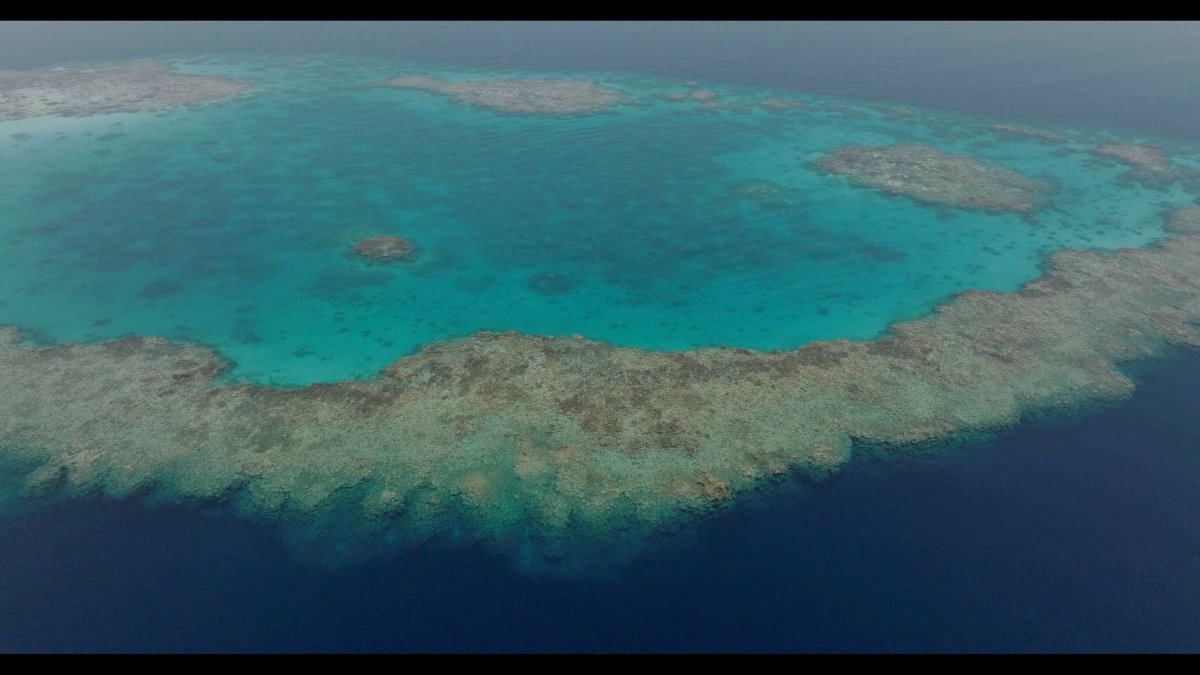
With the discovery that precious species depend on the blue holes, the NCW is implementing a dedicated conservation effort to protect them. (NCW)
“The National Center for Wildlife is working toward preserving 30 percent of the Red Sea waters as protected areas by 2030, in addition to closely collaborating with local environmental agencies, marine conservation organizations, research institutions and stakeholders to develop and implement a holistic conservation strategy aimed at safeguarding blue holes.”
As for the future of Saudi marine exploration in the Red Sea, Duarte said that the latest blue hole discoveries are just the tip of the iceberg.
“They have been at an ‘arm’s length’ from us for millennia, but only now we were able to explore them,” he said.
“What we found is simply the beginning, as many remain to be explored and those we were able to explore may not be the most remarkable ones.”