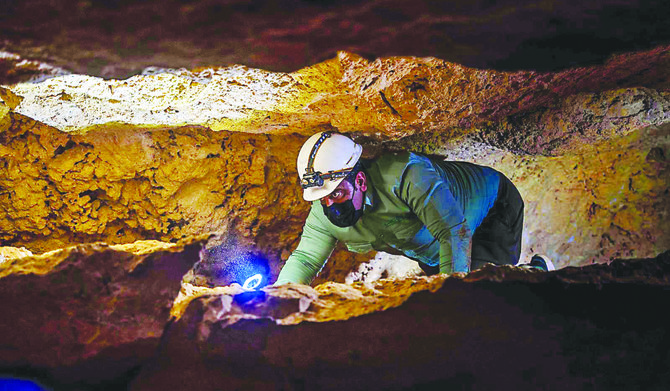
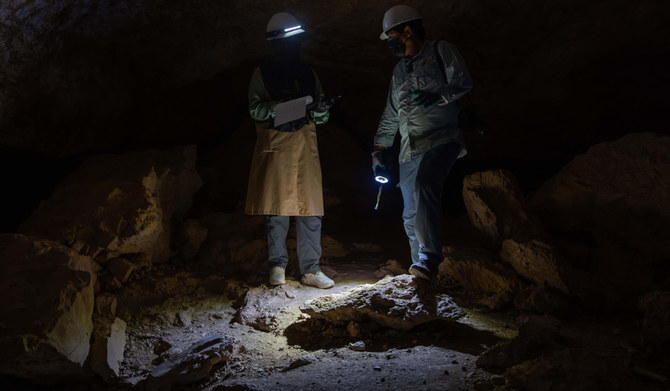

RIYADH: Teams from Saudi Arabia’s National Center for Wildlife will begin examining various caves in the Northern Borders region as part of the Caves Exploration Program, which began in 2022.
It comes as part of a larger program that monitors ecosystems and biodiversity throughout the Kingdom.
These sites will be added to an international map of biodiversity and natural heritage hotspots as historical ecosystems and natural biological museums.

Dr. Mohammed Ali Qurban, National Center for Wildlife CEO
Dr. Mohammed Ali Qurban, CEO of the center, explained that the discoveries in the caves hold significant historical environmental value for Saudi Arabia.
“The cave ecosystems serve as a historical museum, providing evidence of the biological diversity that has existed in the Kingdom throughout various historical eras, as well as the spatial, environmental, and climatic changes in the Arabian Peninsula,” he explained.
The cave ecosystems serve as a historical museum, providing evidence of the biological diversity that has existed in the Kingdom throughout various historical eras.
Dr. Mohammed Ali Qurban, National Center for Wildlife CEO
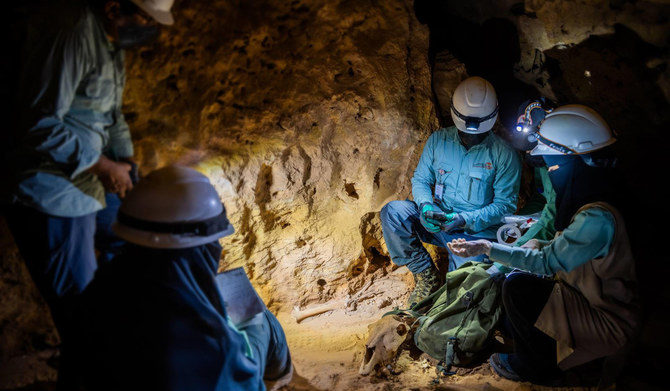
Qurban added that these unique ecosystems provide a suitable environment for a wide range of organisms, as evidenced by the discovery of numerous skeletons of different types of mammals.
The program to explore biodiversity in caves was launched “due to its environmental significance and positive impact on wildlife.”

The National Center for Wildlife’s program to explore biodiversity in caves was launched due to its positive impact on wildlife. (SPA)
The center is currently completing studies on the targeted cave sites and documenting their importance within an integrated program.
According to Qurban, the center’s earlier discovery of several Arabian cheetah mummies in a cave in the northern part of the Kingdom — with some skeletons estimated to be over 4,000 years old — provided the first evidence of the species’ presence in the Kingdom.
Consequently, the center plans to develop a program for the resettlement of the Arabian cheetah in the Kingdom, enabling it to play a crucial role in maintaining environmental balance.
Qurban noted that, among other significant discoveries, researchers from the center discovered rare bats and the remains of several extinct animals.
The center is currently working on classifying these finds and determining their ages. This effort will facilitate the resettlement of these extinct species or their closest genetic relatives, thereby restoring their role.
The cave ecosystem is one of the rarest and most important of its kind in the world, recognized as natural heritage by UNESCO.
There are 1,826 caves in the Kingdom, consisting of underground passages and tunnels formed by natural processes in dry limestone areas — evidence of a historical era that experienced prolonged rainy climatic conditions.