
RIYADH: Taif’s mountainous and famed rose farms have become a major fragrance production hub, producing over 550 million flowers annually and driving an economic engine worth millions.
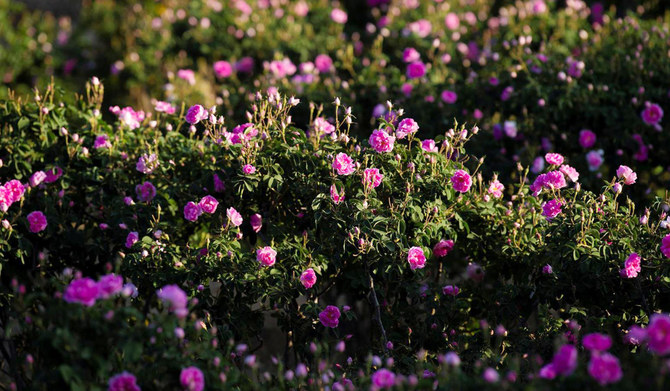
Spanning 270 hectares, some 910 rose farms nurture around 1.14 million bushes across areas like Al-Hada, Al-Shifa, Wadi Muharram, Al-Wahat, and Al-Wahit, the Saudi Press Agency reported.

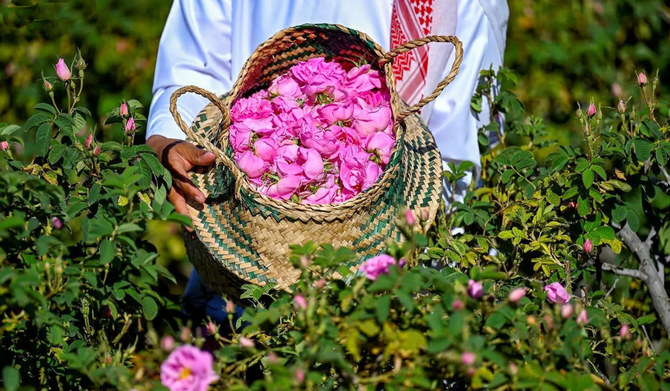
The fragrant crops have elevated the mountainous Taif region into a global rose capital. (SPA)
From March through to April, a kaleidoscope of petals unfurls across terraced fields, supplying over 70 factories and laboratories dedicated to extracting and producing over 80 sought-after derivatives that enjoy widespread popularity in the SR64 million ($17 million) domestic market.
The fragrant crops have elevated the mountainous governorate into a global rose capital which has even set a Guinness World Record with a basket of 84,450 roses.
NUMBER
550m
Some 910 rose farms in Taif nurture around 1.14 million bushes, resulting in production of over 550 million flowers annually.
“These roses represent our region’s heritage and competitive advantage,” said Majid Al-Khalif, director general of the Ministry of Environment, Water and Agriculture’s branch in the Makkah region, underscoring the ministry’s dedication to showcasing the agricultural prowess of each region through festivals and events.

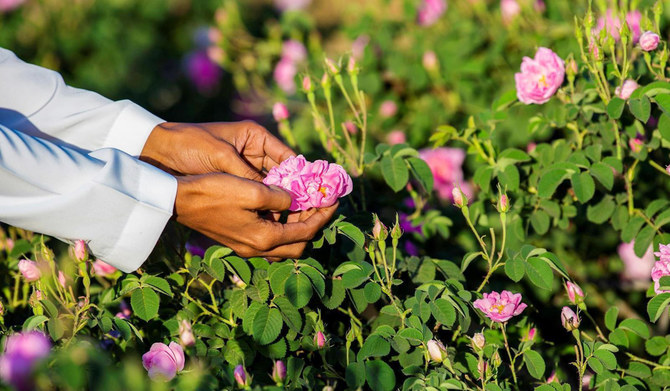
The fragrant crops have elevated the mountainous Taif region into a global rose capital. (SPA)
“These initiatives not only promote local products but also foster knowledge exchange among farmers.”
Al-Khalif acknowledges the pivotal role played by collaborative efforts with local authorities in ensuring the success of these events, particularly the Rose Festival, which draws significant tourist interest.

The fragrant crops have elevated the mountainous Taif region into a global rose capital. (SPA)
Visitors are treated to a firsthand experience of the rose distillation process, seminars, workshops, and other activities tailored to enthusiasts of Taif’s roses.
Hani bin Abdulrahman Al-Qadi, director of the Ministry of Environment, Water and Agriculture’s office in the Taif region, shed light on the significance of the Rose Festival, which features the participation of more than 60 farms and the families who run them, showcasing their products over five days of festivities.

The fragrant crops have elevated the mountainous Taif region into a global rose capital. (SPA)
Al-Qadi said that the Sustainable Agricultural Rural Development Program, also known as Reef, was a key initiative aimed at bolstering the rose farming sector. The program focuses on enhancing the productivity of vital agricultural crops, aiming for a balanced rural development strategy. It also seeks to diversify agricultural production across rural areas while ensuring optimal and sustainable use of natural agricultural and water resources.
A dedicated unit for Taif’s roses has been established within the ministry’s office in Taif. Additionally, the adoption of tissue culture propagation for seedlings and the formation of a cooperative association to advance Taif’s rose cultivation are part of Reef’s objectives.

The fragrant crops have elevated the mountainous Taif region into a global rose capital. (SPA)
The ministry is actively involved in guiding and educating rose farmers on modern techniques to increase their productivity, Al-Qadi explained. Last year, a select group of rose farmers was sent to Bulgaria under a joint cooperation effort between Saudi Arabia and Bulgaria.
This initiative, organized by the Ministry of Environment, Water and Agriculture, aimed at facilitating knowledge exchange, enhancing farmers’ skills, and promoting development in rose cultivation, distillation, and various applications in medicine and cosmetics.

The fragrant crops have elevated the mountainous Taif region into a global rose capital. (SPA)
The ministry’s office in Taif is actively engaged in providing crucial support services to local farmers, aimed at enhancing their productivity in rose farming. These services encompass agricultural guidance, initiatives to rehabilitate agricultural terraces, and rainwater harvesting schemes, tailored specifically to benefit Taif’s rose growers.
Farmers receive expert guidance on adopting best agricultural practices, with dedicated pest control teams responding promptly to requests for pesticide spraying to safeguard crops from potential threats.
The ministry also spearheads the construction of essential water infrastructure, including tanks and barriers, while also facilitating the establishment of irrigation networks to boost agricultural activities.
Emphasizing the importance of sustainable practices, the ministry encourages small-scale rose farmers to embrace and implement best agricultural methods, providing them with valuable insights into leveraging advanced technologies and optimizing rose production techniques, including essential oil extraction as part of a value chain development approach.