Croatia, so much more than Dubrovnik

1 / 5
Croatia’s Adriatic coast is a beachgoer’s delight.
2 / 5
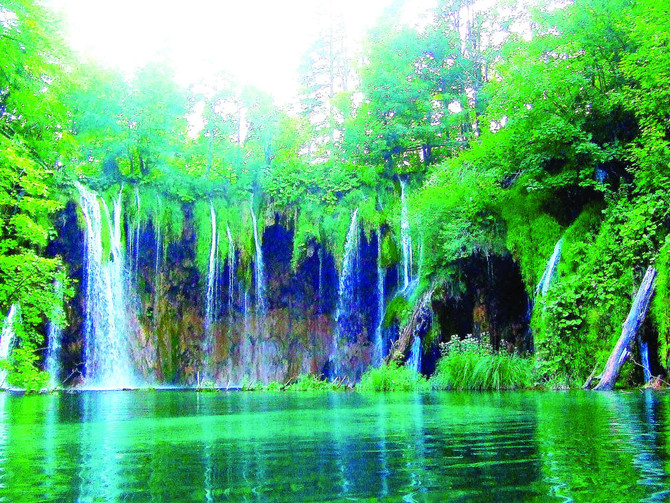
Waterfall at Plitvice National Park.
3 / 5
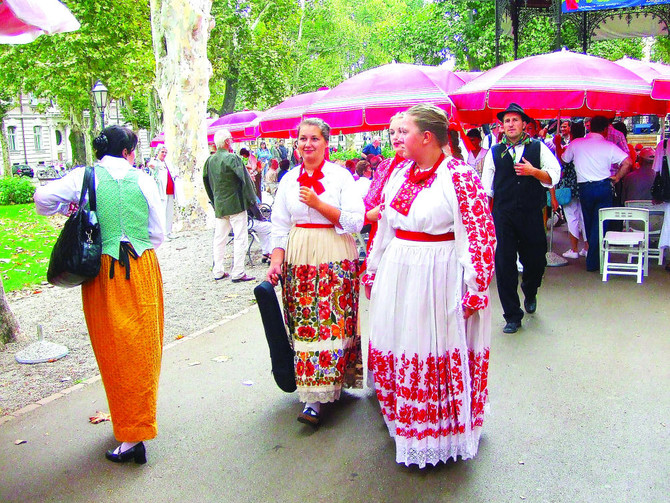
Croatian women in their national dress.
4 / 5
A spectacular view of the water from a resort.
5 / 5
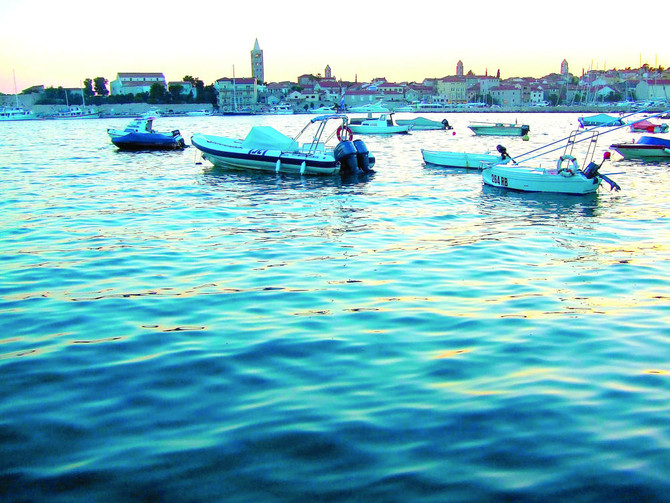
Boating on the water is a favourite pastime.
Updated 27 May 2017
Follow

Croatia, so much more than Dubrovnik

Mention Croatia and everyone will tell you they’ve been to Dubrovnik. But the famous walled city is not the reason Croatia was for so long a jealously guarded secret of the hipster traveler.
Dubrovnik is certainly worth a visit, but to think you have experienced this stunning Balkan nation just by popping into its most popular tourist trap is to do it a huge disservice. Starting in the north, before heading toward that dreamy blue coastline, we’ve listed five other fascinating Croatian experiences that will give Dubrovnik a run for its money.
Capital culture, art and architecture
Begin in the capital Zagreb, where Austro-Hungarian and Communist-era architecture rub shoulders, and bohemian quirky cafes, perfect for people-watching, serve up great coffee.
Zagreb has a host of elegant galleries including the Mimara museum where you can admire a Rembrandt and the Mestrovic Atelier museum, dedicated to Croatia’s greatest sculptor. In the evenings, it is all about the buzz of trendy Tkalciceva.
Zagreb is also famous for its great antique markets. British Square offers the most authentic Communist mementos, while those seeking a real old-fashioned flea market should head to Hrelic/Jakusevac, just outside the city center.
Magical Plitvice National Park
A UNESCO World Heritage Site, Plitvice is an idyllic stopover as you head south toward the Adriatic coast. There are 19.5 hectares to explore with 16 stunning turquoise lakes linked by serenely cascading waterfalls that will take your breath away.
Marked pathways, including 18km of wooden footbridges, allow you to walk on the lakes, pass behind waterfalls and wander through dense woodland. Take the family with you and see if they can spot the tracks of bears, wolves, deer or boar — all of whom call Plitvice home. Later, at one of the large upper lakes, hand them a fishing net and watch the delight on their faces as they catch some of the little stickleback fish swimming freely in the aqua blue waters.
Adriatic island hopping
Croatia is home to Europe’s finest archipelago, and each island has its own stunning character. Island hopping is a no brainer if you make it this far south.
Mljet has swimmable salt lakes and a national park made for trekking; those wanting to party on the beach all night should head to Pag; for pristine nature lovers exploring northernmost Cres’ primeval forest is a real treat, while quiet Vis has the finest fish cuisine of them all.
For families though, the little Island of Rab, with its child-friendly beaches where the shallow, crystal clear Adriatic laps at your feet, is a must. In the evenings wander through the cobbled streets of the medieval town before grabbing an ice cream so you can sit by the quayside and watch the sun dip behind the quaint bell towers.
Latin charm in Opatija
Opatija reached its cultural zenith during the Austro-Hungarian Empire when the bourgeoisie built houses all over the town.
The agreeable all-year-round climate they loved so much now attracts bronzed Italians who regularly drive across the border to stay in the hotels that were once their grand residencies. Chic, and boasting a delightful local cuisine, Opatija is a jewel of a place.
Dictator’s playground; Brijuni National Park
Now a national park, Brijuni was once the playground of former Yugoslavian dictator Josip Broz, known as “Tito.” During his 35-year grip on the nation between 1945 and 1980, Tito held many of his lavish parties on his private island retreats.
Both Veli Brijun and Mali Brijun islands are now open to the public. Veli was once Tito’s exotic zoo, filled with elephants, blue antelope, lamas, mountain zebras, Indian holy cattle and Somali sheep — all gifts from his famous foreign friends and leaders. Now it is a safari park that can be taken in as part of the island’s three-hour tour, or by yourself on a hired bike.
Finally, there is the Tito Museum, littered with pictures of the dictator with his famous guests. These include film stars Elizabeth Taylor and Sophia Loren, as well as world leaders Indira Gandhi and Fidel Castro. You can’t miss it, it’s the only place in Croatia with a black convertible Cadillac parked outside.

About the writer

Tharik Hussain is an award-winning broadcaster and travel writer specializing in Muslim heritage of the West and Muslim (halal) travel. A guidebook writer for Lonely Planet, Tharik's work is regularly published across the globe. To see more visit www.tharikhussain.co.uk.


[email protected]


Russian cyclist finds warm welcome on Saudi Arabia’s roads 

Updated 20 January 2026
Follow

Russian cyclist finds warm welcome on Saudi Arabia’s roads 

  • Anna Rodnishcheva’s ride through Kingdom is defining chapter in solo expedition
  • Rodnishcheva cycled to Aqaba, crossed the border into Saudi Arabia, and has since traveled through Tabuk, AlUla, Madinah, Jeddah, and Taif on her way to Riyadh

MAKKAH: Solo adventurer Anna Rodnishcheva, 27, has undertaken an ambitious journey that spans countries, climates and cultures — on a bicycle. 

Born and raised in Moscow and trained as a biologist before becoming an event photographer, she now finds herself pedaling thousands of kilometers across unfamiliar landscapes in pursuit of discovery, connection, and the simple joy of movement.

In her conversation with Arab News, Rodnishcheva offered a detailed account of her ongoing route in Saudi Arabia, describing how the expedition is her third major cycling adventure.

After previously riding from Moscow to Sochi and later from Vladivostok to Sochi — a route that stretches across the entirety of Russia — she felt compelled to explore foreign lands by bicycle.

She set off from Moscow heading south last June, passing through Russia, Georgia, and Turkiye before flying from Antalya to Amman. She cycled to Aqaba, crossed the border into Saudi Arabia, and has since traveled through Tabuk, AlUla, Madinah, Jeddah, and Taif on her way to Riyadh.

Rodnishcheva explained that physical preparation played only a small role in her planning. She began slowly and allowed her body to adapt naturally over the first month. 

The true challenge, she said, was in the mental and financial preparation. She spent a year and a half planning the journey, even though she originally intended to postpone it for several more years. 

Ultimately, her belief that “life is short” convinced her to start with the resources she already had. Although she sought medical evaluations and additional vaccinations, she was unable to complete them all and decided to continue regardless.

Her journey through Georgia and Turkiye presented unexpected difficulties. Simple tasks such as finding groceries or locating bicycle repair shops became more challenging outside of Russia, where she knew how to navigate on a budget. 

She also encountered language barriers, though the situation improved when a local cyclist joined her in Georgia. The intense midsummer heat added another layer of difficulty, but she had prepared herself for such conditions.

One of the most striking moments of her trip occurred as she crossed from Jordan into Saudi Arabia. She described the experience as surreal and emotionally overwhelming, likening it to the adventures of a literary hero traveling across the Arabian Peninsula. 

Her anxiety eased unexpectedly when she got a flat tire at the border, bringing her back to the present. 

Despite being warned that crossing by bicycle would be prohibited, the process went smoothly, and she was struck by the friendliness of both Jordanian and Saudi officials. She expressed particular surprise at meeting a female Saudi passport officer, an encounter that challenged her previous assumptions about women’s roles in the Kingdom.

Rodnishcheva said the hospitality she had experienced in Saudi Arabia surpassed anything she had encountered on previous journeys. Drivers frequently stop to offer her water, fruit, or sweets, and several families have generously hosted her in their homes or guest flats. 

She emphasized that she feels completely safe traveling across the Kingdom, especially on the open roads between cities, noting the strong and visible security presence.

She has also observed significant differences in weather. While the stretch from the border to Jeddah was hot despite being winter, the climate changed dramatically after climbing Al-Hada in Taif, turning cooler and windier — a climate she compared to Russian summers.

Rodnishcheva documents her travels primarily through Russian-language platforms such as VK and Telegram. Although she maintains YouTube and Instagram accounts, she explained that her schedule left little time for frequent updates.

Offering a message to women around the world who dream of embarking on similar adventures, she said such journeys were “not as scary as they seem before you start,” though they may not suit everyone.

Her closing advice? “Listen to your heart.”