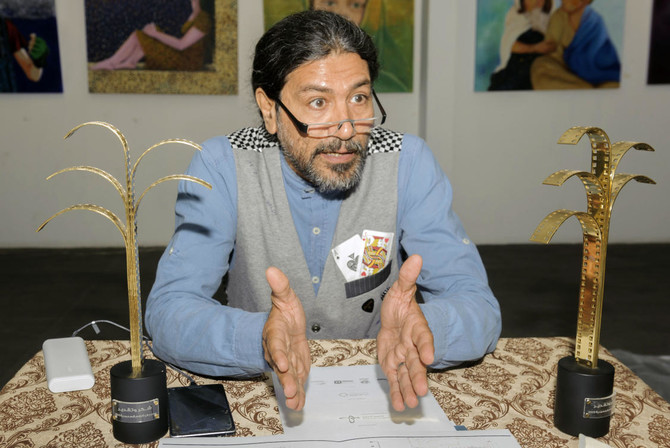
RIYADH: The head of the main film festival in Saudi Arabia, where cinemas are banned, wants the government to invest in the sector as part of its campaign to encourage entertainment.
Ahmed AlMulla made the comments in an interview with AFP ahead of the fourth Saudi Film Festival, which runs from March 23-28 in the Gulf coastal city of Dhahran.
This year’s festival is the first since the kingdom late last year began a cautious push to introduce entertainment, despite opposition from conservative groups.
Among the events on offer for Saudi spectators have been the New York theatrical group iLuminate, the Comic-Con pop culture festival, and WWE wrestling.
“It’s nice to see all kinds of events here and people coming from outside,” AlMulla said.
But local talent needs to be trained, with support from the government, he said in a telephone interview.
“I think they must” fund it, he said, “because this is investment, the real investment.”
Among directors of the 59 Saudi films to be screened at this year’s festival are some who trained overseas, he said.
Saudi Arabia has created a government agency to support private firms organizing entertainment events, under a wideranging “Vision 2030” plan for economic and social reform.
The plan also calls for development of an arts and media industry, but with public theaters and cinemas banned, the sector is starting from a low base.
“We are waiting for the change, really. We want to create it from inside, not hosting events only,” AlMulla said.
“We have lots of talent working underground and nobody knows about them.”
Despite the annual film festival, Saudi Arabia lacks a film industry although female students can study filmmaking at a women’s university in Jeddah.
Saudi films have also won international recognition.
The romantic comedy “Barakah Meets Barakah” by Mahmoud Sabbagh was screened at last year’s Berlinale, and in 2013 Haifaa Al-Mansour’s “Wadjda” became the first Saudi film listed as a candidate for a foreign-language Oscar.
Saudis are voracious consumers of online videos and rank among the world’s top viewers of YouTube.
Private film screenings are also held in the kingdom, but Saudi Arabia’s highest-ranking cleric warned in January of the “depravity” of cinemas and music concerts.
This is the third consecutive annual film festival after it resumed in 2015 following an absence of seven years.
The event is organized by Dammam’s Society of Culture and Arts, and last year went ahead with permission from the local government.
AlMulla says this year’s festival will be bigger than ever, even though he laughs off a question about how it will be financed.
“We’ll arrange for that,” he says, adding that some sponsors have been found.
The festival moves this year from cramped quarters at the arts society to larger grounds near a new cultural center run by Saudi state oil giant Aramco.
The indoor and outdoor screening areas can hold almost 2,000 people.
Aside from the new venue, this year’s festival will feature a “production market” where filmmakers can meet with local production houses “to make deals,” AlMulla said.
The festival is also increasing its public education effort.
Students will be brought in to watch children’s films, local and international experts will hold panel discussions, and the festival is to issue a book on late Japanese filmmaker Akira Kurosawa.
The number of films and scripts vying for competition has increased but fewer applicants were accepted for screening in an effort to raise quality, AlMulla said.
The festival opens with a drama that resonates as the kingdom’s efforts to expand entertainment face resistance from conservatives.
“Wasati” directed by Ali Alkalthami is based on the true story of extremists trying to disrupt a play at a university theater in Riyadh 10 years ago.


![]()
Saudi film fest head says cinema needs state funding
Saudi film fest head says cinema needs state funding
Related


Latest updates


© 2026 SAUDI RESEARCH & PUBLISHING COMPANY, All Rights Reserved And subject to Terms of Use Agreement.