- Houthi attacks on the Red Sea export route put Gulf security and Europe’s energy supplies at risk
- Paris’s move could spur wider European support, advance its ambitions as a reliable Gulf partner
The news that France is to send troops and equipment to Saudi Arabia to defend the strategically important oil port of Yanbu followed a little noticed but, in hindsight, rather important mini-summit that took place this week on the sidelines of the UN General Assembly in New York.
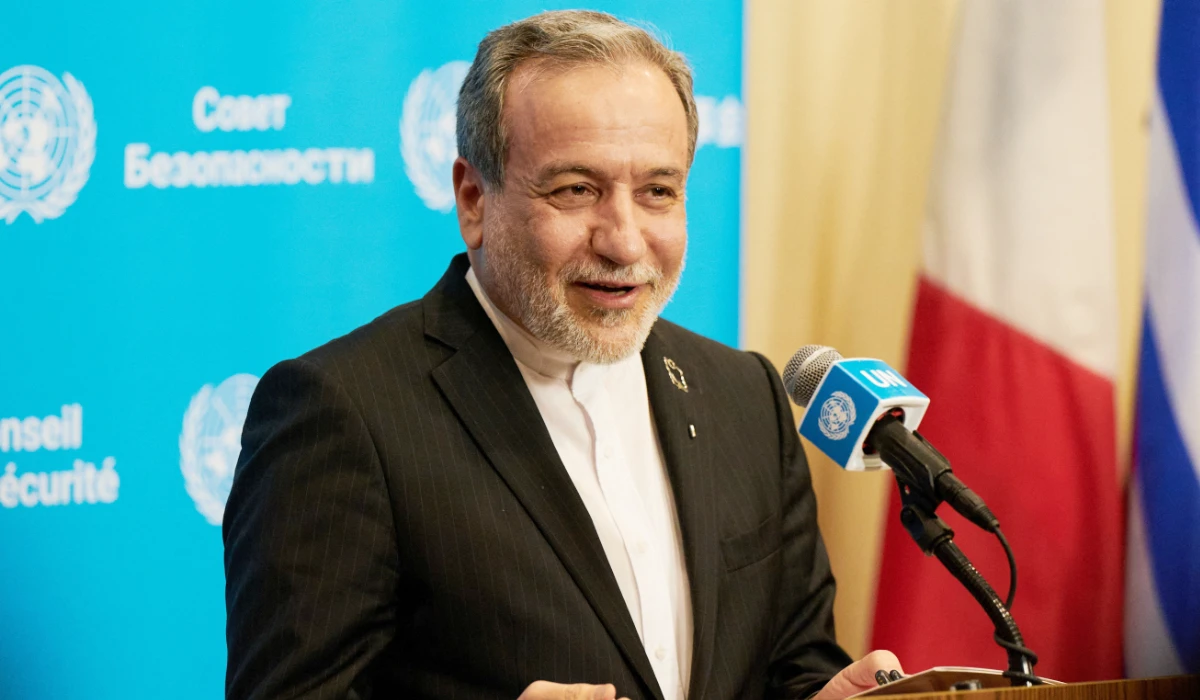
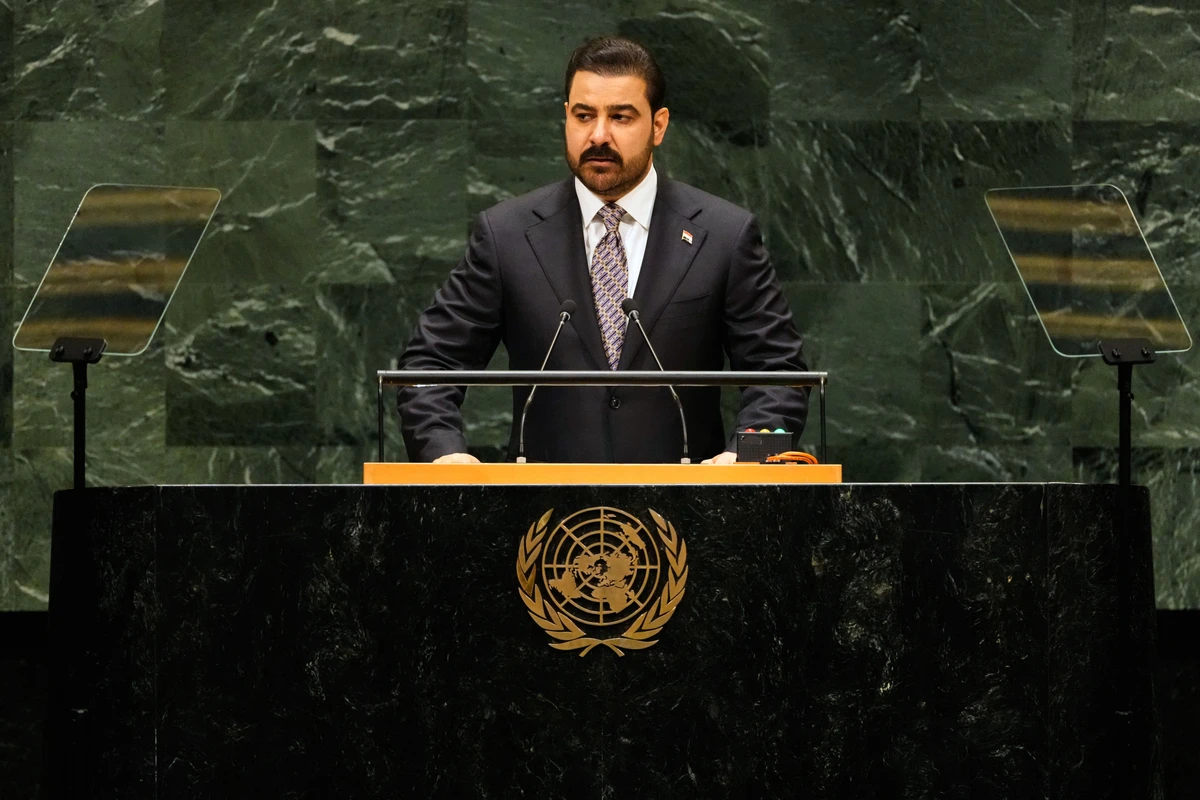
The occasion was a joint ministerial meeting on Tuesday between the Gulf Cooperation Council and France, attended by all six GCC foreign ministers, including Saudi Arabia’s Prince Faisal bin Farhan Al-Saud.
Inevitably, the meeting, co-chaired by Jean-Noel Barrot, France’s minister for Europe and foreign affairs, and Kuwait’s foreign minister, Abdullah Ali Al Yahya, was focused sharply on events in the Gulf and the Red Sea since the outbreak of the war with Iran.
In July, the Houthi rebels in Yemen declared a naval blockade on Saudi shipping in the Red Sea, opening up another front in the Iran war and potentially threatening the flow of oil from the Kingdom to the wider world.
On Thursday, Saudi Arabia said it had intercepted six ballistic missiles fired by the Iran-backed Houthis, aimed at Yanbu and the city of Taif, southeast of Makkah.
Jasem Mohamed Albudaiwi, the secretary-general of the GCC, began the meeting by highlighting the relations between France and the Gulf states, which were “built on a solid strategic partnership, as well as shared interests and visions.”
Then he turned his attention to the Iranian attacks that had targeted vital installations in and around the Gulf since Feb. 28, and commended France’s statements rejecting the attacks and its participation in international efforts aimed at reopening the Strait of Hormuz.
Two days later, in an interview on Thursday with Fox News, Prince Faisal spoke of the necessity for the wider international community to engage with the threat Yemen’s Houthi rebels were posing to global shipping in the Red Sea.
“We are, of course, defending ourselves,” he said, “and we are responding as necessary to the attacks by the Houthis.
“But we are also, of course, coordinating with all of our international allies, because this is not just about Saudi Arabia.”
Prince Faisal added: “The fact that the Houthis are threatening the Bab Al-Mandab, threatening international shipping, is a risk to international security stability. That means that the responsibility of dealing with this threat is not just on Saudi Arabia, it is also on the whole international community.”
Then, later that same day, came the announcement that France, one of the Kingdom’s oldest and most valued partners, was answering the call for assistance.
The news came during an interview on French TV with French President Emmanuel Macron.
The conversation began with a discussion about rising fuel prices in France and Europe. “We must not simply resign ourselves to a situation of supply shortages,” said Macron.
Oil and petrol prices had already risen by around 20 to 30 percent over the summer, he said, and had since increased further “because of the tensions.”
He added: “We must give ourselves every possible chance through negotiation. Then, we have released reserves, and we have our gas storage facilities, meaning we have stocks that can cover several weeks or months.
“What we must continue to do in the coming days is manage these volumes and continue the diplomatic effort. Above all, we must maintain discussions with the Iranians and others in order to reopen the routes.”
But it was then that he revealed that France was preparing to take action beyond diplomacy.
“Several million barrels pass through the Red Sea and through the Yanbu route in Saudi Arabia every day,” he said.
“That route has been heavily affected by attacks and we have committed ourselves to helping secure it.”
He added: “Today, this is the discussion we have finalized with the Saudis. We are going to send military assets — soldiers, radar systems and defense systems — to protect these sites. We are committed to that effort.
“We must protect strategic infrastructure.”
Yasmine Farouk, director of the Gulf and Arabian Peninsula Project at the International Crisis Group, believes that other European nations might follow France’s lead.
“It’s not that the Europeans in general are against deployment to defend Saudi Arabia,” she told Arab News.
“But it’s been a matter of availability and means within a context of war in Europe between Russia and Ukraine, where they are already supporting the Ukrainians, but also a matter of not wanting to get entangled.
“We have seen them being very cautious. But I think the fact that the French have acted might help operationalize that European will to help the Kingdom.”
Two days before Macron’s announcement, the UK said it was providing “defensive military support to the Kingdom of Saudi Arabia following renewed Houthi attacks.”
The Ministry of Defense in London said that “following a request from the Saudi Arabian Government, the UK has agreed to provide an RAF Voyager air-to-air refueling aircraft to support Saudi defensive activity in support of the legitimate government of Yemen.”
The support builds on the UK’s existing military contribution to Saudi Arabia’s air defense, including the deployment of air defense equipment and UK personnel who are helping to protect against missile and drone attacks.
In April, the UK deployed a Sky Sabre air defense system to Saudi Arabia’s King Fahd Air Base, along with operators from the Royal Artillery.
“The Houthis are a dangerous threat to regional stability in the Middle East,” the UK government said at the time, “and it is in the UK’s national economic and security interest that they do not succeed.”
Since March, Italy has also had a detachment of Typhoon jets operating in a defensive role in the Gulf. On Sept. 17, one of the Italian Typhoons was struck on the ground by a missile during an attack on King Fahd Air Base outside Taif in western Saudi Arabia.
On Friday, military chiefs from the Kingdom, Pakistan and Turkiye met in Riyadh for “technical-level negotiations aimed at institutionalizing cooperation” under the new Makkah Joint Defense Agreement, which was signed between the three countries on Aug. 7.
Also on Friday, the UN Security Council affirmed Saudi Arabia’s “inherent right” to self-defense and condemned “in the strongest terms” continued Houthi attacks against the Kingdom, demanding that the Iran-backed militia immediately end its military escalation.
Jerome Bonnafont, France’s permanent representative to the UN, said the 15 members expressed solidarity with Saudi Arabia “in the face of attacks impacting civilians and civilian objects on its territory.”
France is particularly well placed to intervene in and around the Red Sea. It has a strategically important air and naval base in Djibouti, at the mouth of the Bab Al-Mandab Strait.
According to the French Ministry of Defense, France currently has about 30,000 soldiers deployed overseas in various countries, including 1,500 personnel in Djibouti and 750 in the UAE.
The French navy is also a part of the European Union’s Operation Aspides, a naval mission set up in 2024 to prevent attacks on merchant shipping in the Red Sea by the Houthis.
The deployment to Yanbu reflects the fact that France is one of Saudi Arabia’s oldest partners. It established a consulate in Jeddah in 1839 and in 1932 became one of the first countries in the world to recognize the Kingdom of Saudi Arabia, founded on Sept. 23 that year by King Abdulaziz.
Since then, the relationship has only gone from strength to strength, marked over the decades by a series of two-way state visits and agreements focused on deepening ties in fields from trade and culture to defense and tourism.
Over the past five years, trade between the two countries has witnessed significant growth.
The volume of trade between the two countries during the period 2021 to 2025 reached approximately $53.7 billion, with Saudi exports to France accounting for 53.4 percent of the total.
Bilateral trade recorded growth of approximately 43.8 percent in 2025 compared to 2021, reaching nearly $12 billion.
France has not been afraid to show its support for the Kingdom. In November 2017, President Macron made a surprise visit to Riyadh in the wake of an attempt by the Houthis to hit the capital with a ballistic missile.
The missile, which may have been aimed at Riyadh’s international airport, was intercepted.
After flying in to meet Crown Prince Mohammed bin Salman, Macron condemned the attack and added: “I believe it’s important that we work with Saudi Arabia for the purpose of guaranteeing stability in the region and the fight against terrorism.”
In April the following year, the Saudi crown prince made his first official visit to France, where he and Macron secured commercial contracts between Saudi and French companies valued at $18 billion.
During the visit, the two countries also established a landmark partnership to develop AlUla, the ancient oasis city centered on the Kingdom’s first UNESCO World Heritage site, into a major destination for culture, heritage and sustainable tourism.
In December 2024, Macron returned to Saudi Arabia for a state visit during which the two countries signed a “strategic partnership” agreement, increasing cooperation in multiple spheres, including defense.
In August 2026, the crown prince and French president met again in Paris, where, in the words of the Elysee Palace, “they reaffirmed their ambition for the strategic partnership that now binds the French Republic and the Kingdom of Saudi Arabia” and “emphasized the historic depth of the relationship” between the two countries.
The two leaders presided over the first meeting of a new French-Saudi Strategic Partnership Council, set up to strengthen ties in all areas of cooperation.
They also “expressed their shared vision for stability in the Middle East, based on the sovereignty of States, respect for international law, and the pursuit of political and diplomatic solutions to conflicts and security threats.”
Aside from concern over the price of oil, France has its own motives for intervening to defend Saudi Arabia, said Farouk.
“This comes within a general French policy that started even before this war, with France pushing for the development of more strategic defense relations with the Kingdom and wanting to show that it is a reliable partner that Gulf countries can count on.
“France already has very developed defense and strategic relations with the UAE, Kuwait and Qatar, and (the Yanbu deployment) goes with the long-term foreign policy of France wanting to become a power in the Gulf.”