- President Donald Trump will meet with Qatar’s prime minister at the White House on Monday
- Qatar has played a central role as an intermediary between Washington and Tehran
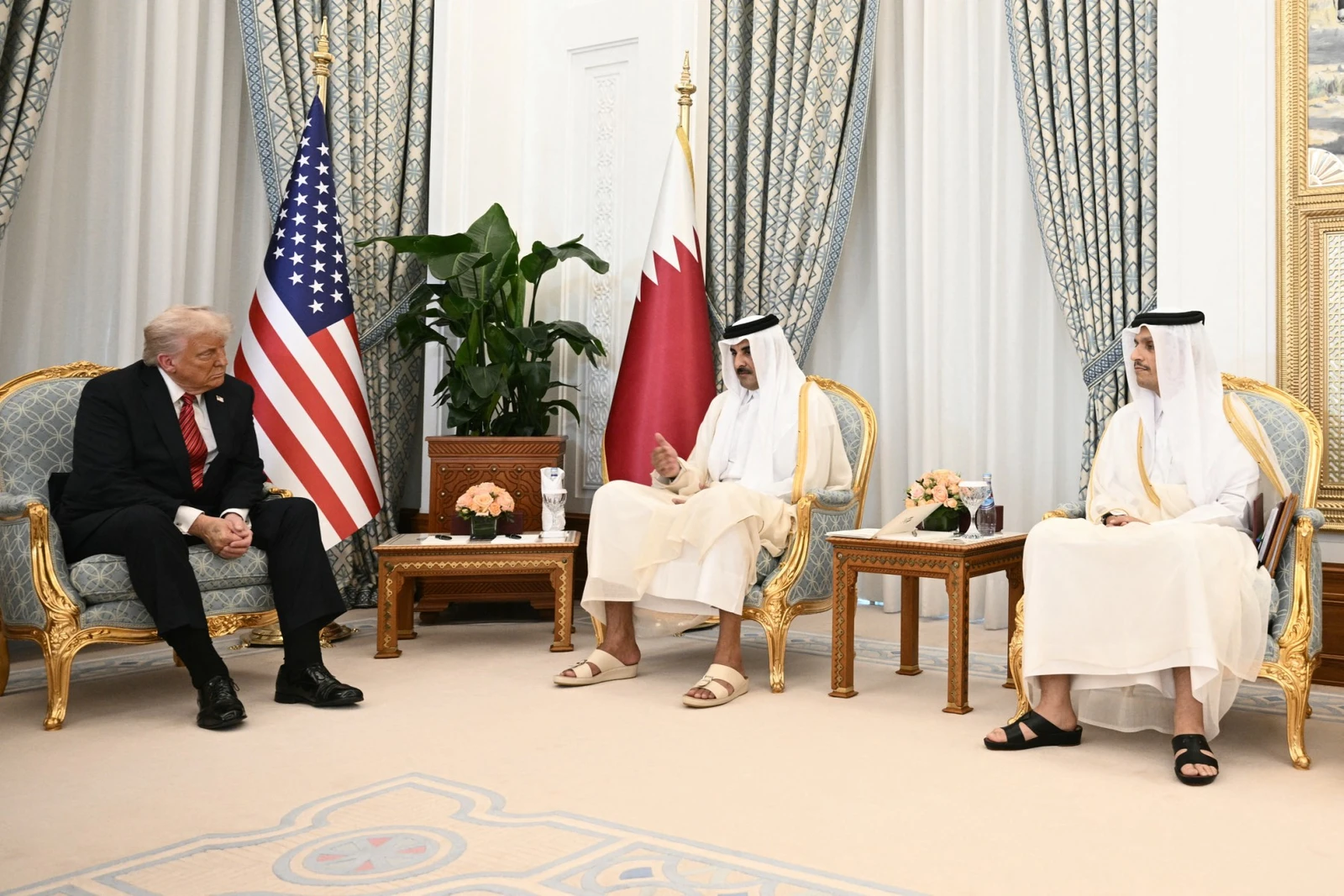
CAIRO/ABU DHABI: US President Donald Trump will meet the prime minister of key mediator Qatar on Monday as efforts to end the Iran war ramp up following last week’s midterm elections, though senior US and Gulf officials cast doubt on the chances of an imminent deal.
With no victory in sight more than eight months into the conflict he launched alongside Israel on February 28, Trump has played down the likelihood of major warfare restarting soon, but remains unwilling to accept an existing Iranian truce plan.
Mutual attacks continue, with the US striking Iran’s Qeshm island overnight, according to Iranian state media, and Iran attacking tankers in the Gulf and Strait of Hormuz this month while its Yemeni Houthi allies have hit Saudi Arabia.
Diplomatic moves
Sheikh Mohammed bin Abdulrahman Al-Thani, who is both prime minister and foreign minister of Qatar, will meet Trump and Vice President JD Vance in Washington later on Monday after having visited Tehran last week.
Iran’s proposal to end the war involves an end to the US blockade of its ports, the lifting of some sanctions and a halt to bombing in return for Tehran stopping its own blockade of the Strait of Hormuz, with talks on its nuclear program and other sanctions to follow.
The US has repeatedly rejected that plan, which Iran has said could be condensed to a two-day timeframe, with Secretary of State Marco Rubio on Sunday describing Tehran’s conditions as “outrageous and ridiculous and really not realistic.”
Iran’s Foreign Ministry spokesperson Esmaeil Baghaei defended the plan on Monday as the most reasonable offer on the table.
Senior US Republicans including Vance have blamed their party’s dire showing in last week’s elections on the Iran war, but despite growing domestic political pressure to end the conflict, Rubio said he did not believe a diplomatic breakthrough was imminent.
A senior United Arab Emirates official, Anwar Gargash, echoed that view on Monday, saying a comprehensive political settlement between the US and Iran appeared difficult.
“We should... prepare for a long period of uncertainty in which neither a decisive resolution nor stable regional order can be taken for granted,” he said.
Vance, who led the negotiations for a short-lived truce in June, will also meet Al-Thani, whose country has been a prime mediator since early in the war, conveying messages between the sides and proposing ways to bridge their differences.
Military action
Sunday night’s strikes on Qeshm island did not impact vital infrastructure or services, a provincial official told Iran’s semi-official Fars news agency on Monday. The US has not commented on the Iranian media reports.
Attacks on tankers in the Gulf and Strait of Hormuz ramped up sharply in October and have continued at the highest rate since the start of the war, figures from international maritime agencies showed last week.
On Sunday Iran, which typically does not acknowledge striking vessels that report being hit by projectiles, said a tanker had hit a mine east of the Strait of Hormuz.
The war has triggered a global energy shortage, prompted Iranian strikes on Gulf Arab countries, spilled over into a major Israeli offensive in Lebanon during the spring and summer, and has reignited Yemen’s long-frozen civil war.
On Sunday, the Saudi energy ministry said an attack had damaged an Aramco building in Riyadh’s financial district, without assigning responsibility.