- The findings give fresh weight to the long‑standing hunt for the hidden tomb of Queen Nefertiti, one of ancient Egypt’s most famous figures
- Reaction has been mixed, with Egyptologist Dr. Zahi Hawass telling Arab News it is ‘more probable’ that Tutankhamun’s burial site was originally a small tomb intended for Pharaoh Ay
LUXOR: The mystery of Nefertiti’s tomb is back in the spotlight.
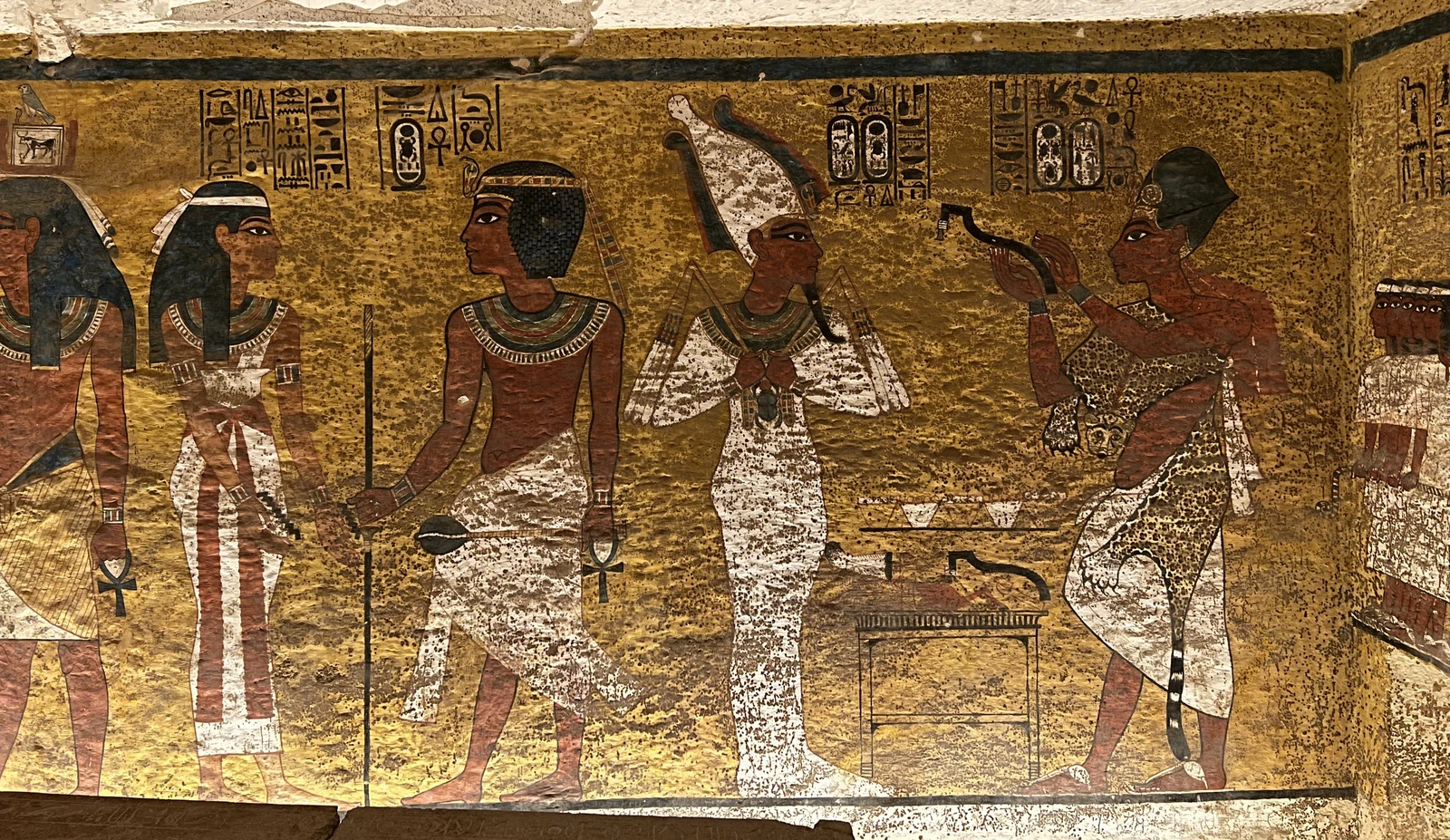
A new geophysical survey of Tutankhamun’s tomb — known as KV62 — in the Valley of the Kings, published earlier in September in Nature, points to the possible existence of hidden corridors and chambers behind the burial chamber.
Led by former Egyptian antiquities minister, Mamdouh Eldamaty, the study focuses on anomalies detected behind the walls of Tutankhamun’s burial chamber.
The data suggest hidden passageways and possibly sealed chambers adjacent to the known rooms, extending 25-30 meters north of KV62.
The findings have revived the long‑standing hypothesis that part of Queen Nefertiti’s tomb may lie concealed behind or within the same complex.
Reaction to the research has been mixed, in part because it reopens a debate that began in 2015, when British Egyptologist Nicholas Reeves argued that secret chambers and corridors behind Tutankhamun’s burial chamber could in fact be the long‑lost tomb of Nefertiti, wife of Akhenaten.
Dr. Zahi Hawass, the prominent Egyptologist and former antiquities minister, told Arab News he considers it highly unlikely that Tutankhamun was buried inside Nefertiti’s tomb.
“It is more probable that KV62 was originally a small tomb intended for Ay,” an ancient Egyptian official who became pharaoh after Tutankhamun’s death, he said.
“Given Tutankhamun’s sudden death, it was adapted and expanded for his burial.”
Hawass cited architectural evidence from the tomb.
“The floor level of the burial chamber in KV62 shows that the doorway into the Treasury was originally created at a height of 60-75 cm above the current floor level,” he said.
“It was lowered, along with the floor of the entire room, to accommodate the height of Tutankhamun’s shrines.”
In a comment to London’s The Times, Eldamaty appeared more optimistic about the discovery, suggesting it “could potentially rank among the most transformative archaeological discoveries of the modern era.”
The study, which follows a number of surveys by Japanese and Italian teams that produced conflicting results, used non‑invasive geophysical techniques to scan the structure of KV62.
By measuring variations in density and subsurface features behind the tomb’s walls and floors, the team identified patterns consistent with voids or man‑made spaces.
They say these warrant further investigation to determine whether they are natural fractures or architectural features such as blocked doorways and chambers.
Eldamaty and his British colleagues are now applying for permission to drill a narrow borehole down to the suspected chambers, in a bid to settle the matter once and for all.
Professor of Egyptology at the American University in Cairo, Selima Ekram, told Arab News that “the new work, once again, raises the possibility that there are rooms behind Tutankhamun’s burial chamber. It would be good to use the same technology but have a different group carry out the work to see if they come up with the same results.”
She said that “if very sensitive coring or drilling equipment can be found, maybe it is time to make a hole through the undecorated treasury wall into the rock behind the burial chamber to see if there is indeed a void.”
The quest for Nefertiti’s tomb gained fresh attention after the Egyptian newspaper Al‑Ahram republished a 1939 article about a letter from Howard Carter, who discovered Tutankhamun’s tomb in 1922, to his assistant Ahmed Gorgar.
In the letter, Carter suggested that a second tomb likely existed near Tutankhamun’s, possibly belonging to either Nefertiti or Ankhesenamun, the wife of the “Golden King.” Carter noted that this information was to be kept secret.
Nefertiti, wife of the “heretic” pharaoh Akhenaten, is one of the most famous figures of ancient Egypt, known for her iconic bust and her central role in a radical religious revolution that briefly shifted Egypt’s capital to Amarna.
Despite her prominence, her final resting place has never been found, making her tomb one of Egyptology’s great missing prizes and a potential treasure trove for understanding the end of the 18th Dynasty and the transition back to traditional rule.