- Israel continues to signal it has no intention of relinquishing its positions in the south
- Hezbollah refuses to disarm, describing such an arrangement as surrender
DUBAI: The future of Hezbollah’s weapons and Israel’s continued military presence in southern Lebanon are emerging as increasingly difficult issues to reconcile. As Washington presses Beirut to restore state control over arms, Israel continues to signal it has no intention of relinquishing its positions in the south.
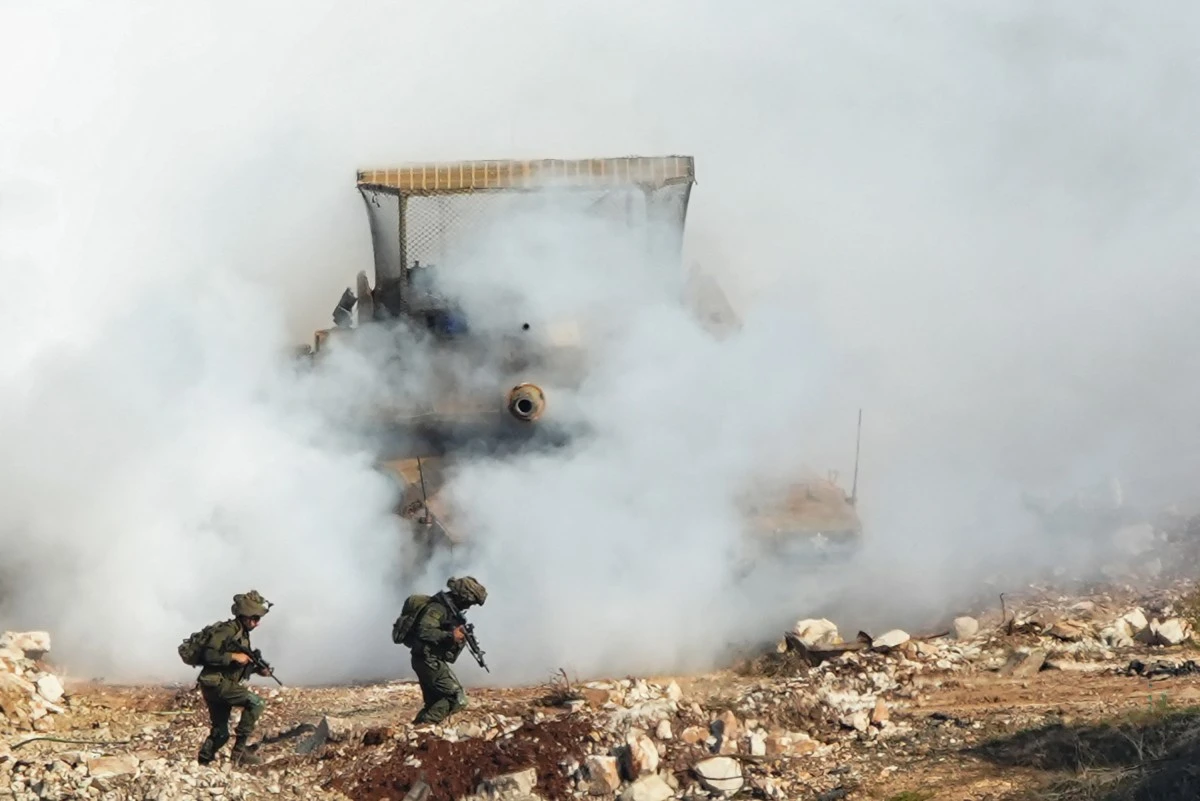
Israeli Defense Minister Israel Katz said Israel would not withdraw from its current positions or redeploy its forces until Hezbollah was disarmed, Hamas was dismantled and threats from Syria were eliminated, maintaining that the Israeli Defense Forces will remain in their position in their established security zones indefinitely.
He also warned that Israel was prepared to seize additional territory if hostilities escalated, saying the military could occupy more land, evacuate residents and destroy what it described as militant infrastructure.
The statements came as Israeli military activity continued across southern Lebanon, most recently targeting an area in the Bekaa Valley where the IDF said Hezbollah was attempting to re-establish a missile-production and weapons-storage facility. The attack came days after Israel said it had targeted a weapons shipment intended for Hezbollah near the Syrian border.
The developments have added to pressure on the Lebanese government to address Hezbollah’s military capabilities, particularly following a visit to Beirut by US Ambassador to the UN Mike Waltz.
Waltz called on Hezbollah to surrender its weapons voluntarily and place them under state control, arguing that Lebanon could not function with two armies.
“I hope and pray Hezbollah will disarm. They should do that voluntarily,” he said, adding that “no country can have two armies” and describing the Lebanese Armed Forces as the mechanism through which state sovereignty should be restored.
Waltz also called for a change in the UN’s role in Lebanon, saying its mission needed to evolve as the mandate of the United Nations Interim Force in Lebanon approaches its scheduled expiration on Dec. 31. Washington has been discussing alternative security arrangements, including a possible international monitoring presence to support the Lebanese army.
However, the reality on the ground proves more complex.
Mohanad Hage Ali, senior fellow at Carnegie, explained to Arab News: “What Waltz intentionally or unintentionally misses is that the Shia community should be offered an off ramp from Hezbollah’s grip, in the form of a withdrawal timeline or step by step framework and that is not on the table.
“In fact, the Israeli approach is based on considering a whole community which harbors groups, a threat. This is the case in Gaza, the West Bank and in southern Lebanon. The security solution of ethnically cleansing border regions to eliminate threats is non-negotiable for Israel, a sort of ‘beyond politics’ principled stance.
“From Lebanon’s perspective, this services Hezbollah’s attempt to keep its weapons and resistance status and misses a great opportunity for a grand shift. For Israel, their cynical view leaves little room for tactical maneuvers or even believing in historical opportunities.”
A US-mediated framework agreed in June envisaged the Lebanese army gradually assuming control and disarming Hezbollah, with Israel eventually withdrawing once the group had been disarmed. Implementation has remained stalled, with Hezbollah rejecting the arrangement as surrender.
The result is a difficult position for Beirut. Washington is demanding that the state establish a monopoly on weapons, while Israel is maintaining its military presence and threatening further territorial expansion. With UNIFIL’s future also uncertain, the question of who guarantees security in southern Lebanon remains unresolved.
For 42-year-old Ali, who left his home in southern Lebanon and now lives in a shared house in the outskirts of Beirut, the war has taken a toll far more than he can continue to bear. Struggling to get work in an already failing economy, he now does random manual labor and deliveries to get by.
“Our mental health is flailing. I do not know how much longer we can resist or believe in such messaging. We’re out of work, the country continues to fall into an abyss, and none, none of the people in power truly represent us anymore. We used to feel proud, now we’re haunted by hunger and idleness. One cannot resist on an empty stomach” he said.