- Saudi Arabia expressed solidarity with the Syrian government, strongly condemning the violence and extending condolences to victims’ families
- The assault involved a coordinated attack by four Daesh militants who used motorcycles and explosives, raising concerns about security vulnerabilities in the region
RIYADH/DAMASCUS: Arab governments and regional organizations have rallied behind Syria following a Daesh-linked attack on an Interior Ministry facility in Hasakah that killed two security personnel and wounded five others, amid concerns over the militant group’s ability to exploit security vulnerabilities during the country’s fragile postwar transition.
Saudi Arabia was among the countries condemning Wednesday’s assault, with the Kingdom expressing solidarity with the Syrian government and people as they work to preserve the country’s security and stability, the Syrian Arab News Agency (SANA) reported.
In a statement, the Saudi Foreign Ministry strongly condemned the attack and reiterated the Kingdom’s rejection of violence, terrorism and extremism in all forms. Riyadh also extended condolences to the families of those killed.
Jordan joined the condemnation, expressing full support for the Syrian government and people and reaffirming its commitment to Syria’s security, stability, sovereignty and territorial integrity.
Bahrain, Egypt, the UAE, Qatar and Yemen also issued statements denouncing the attack, rejecting terrorism and extremism and expressing solidarity with Syria as it confronts security challenges.
Regional organizations also voiced support. The Arab League, the Organization of Islamic Cooperation and the Arab Parliament condemned the assault and reaffirmed their backing for Syria’s efforts to combat terrorism, safeguard its sovereignty and maintain security.
The Arab Parliament called for stronger Arab and international cooperation to confront terrorist organizations, cut off their sources of support and counter extremist ideologies.
Coordinated assault on security facility
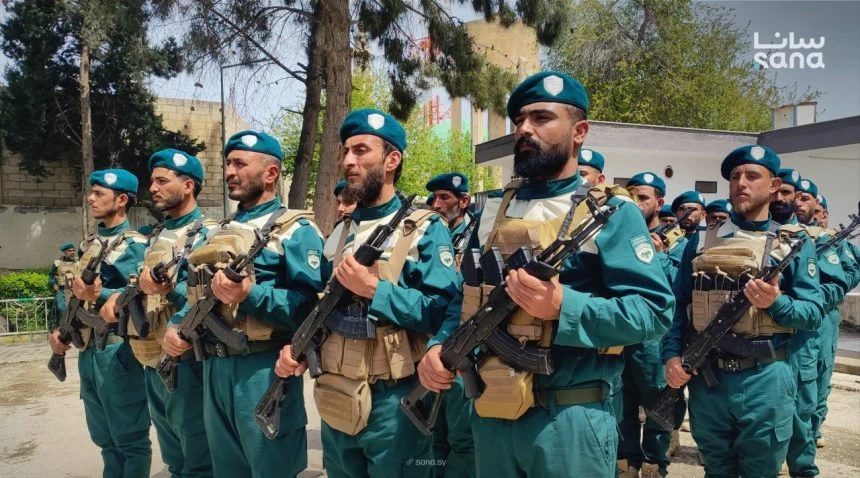
The attack targeted an Interior Ministry facility in the Al-Mushairifah neighborhood, west of Hasakah city, on Wednesday evening.
Hasakah Internal Security Commander Brig. Gen. Marwan Al-Ali said four Daesh militants on motorcycles carried out the assault. One attacker detonated explosives at the facility’s entrance, triggering clashes with security personnel.
Security forces killed two of the assailants during the confrontation, while the other two detonated explosive belts, authorities said.
Preliminary investigations indicated that the attackers belonged to a Daesh cell operating in the region.
Security challenges in northeast Syria
Although the casualty toll was relatively limited compared with some of the deadliest attacks during Syria’s years of conflict, the assault raised concerns because of its potential strategic implications.
The attack comes as the government of President Ahmed Al-Sharaa seeks to consolidate authority across the country and integrate various security structures after years of conflict.
Northeastern Syria, particularly Hasakah province, remains one of the most sensitive areas in that process. Any successful attack against state institutions there carries significance beyond its immediate casualties.
The province is also home to detention facilities and camps holding thousands of Daesh fighters and their family members. Security disruptions could create opportunities for prison breaks, recruitment and the reactivation of dormant extremist networks.
The assault also appeared to depart from the low-level guerrilla tactics and isolated shootings frequently employed by Daesh cells in recent months. The coordinated deployment of multiple attackers, suicide tactics and a direct assault on a government security compound suggested a greater degree of planning and operational confidence.
The incident also challenges Syria’s efforts to establish itself as a stable environment for reconstruction, economic recovery and deeper regional engagement.
Security experts say such attacks, even when quickly contained, are intended to undermine public confidence in state institutions and raise doubts about the durability of recent security gains.
Daesh lost its last territorial stronghold in Syria in 2019, but remnants of the organization continue to operate through clandestine cells, particularly in the country’s north and east.