ISLAMABAD: Deputy Assistant to the President and US National Security Council Senior Director for South and Central Asia Lisa Curtis has conveyed Washington’s desire to “move toward a new relationship with Pakistan.”
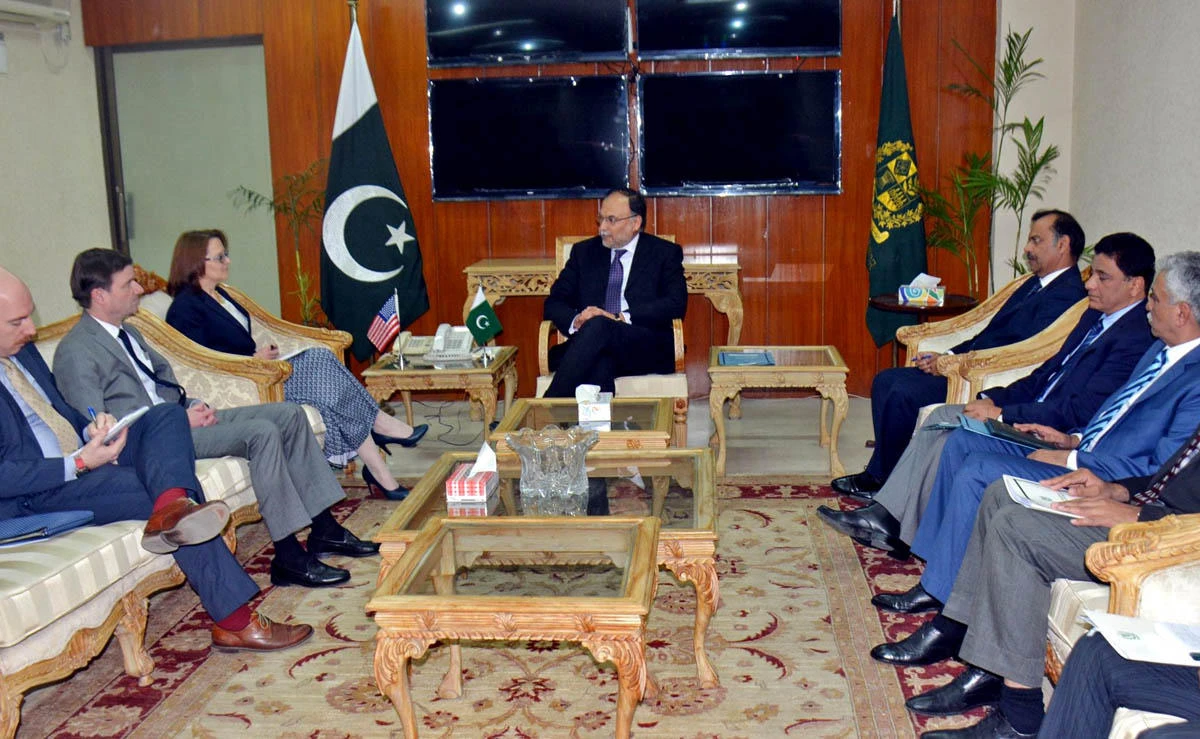
Curtis concluded her two-day visit to Islamabad on Tuesday. Leading a delegation accompanied by US Ambassador to Pakistan David Hale, she met Foreign Secretary Tehmina Janjua, Interior Minister Ahsan Iqbal, and Chief of the General Staff Lt. Gen. Bilal Akbar, according to a US Embassy statement.
Curtis, a former Central Intelligence Agency (CIA) official, is credited with making a significant contribution to US President Donald Trump’s Afghan and South Asia policy, which was unveiled in August.
Curtis acknowledged Pakistan’s efforts to combat terrorism and said America was looking to forge a new relationship “based on a shared commitment to defeat all terrorist groups that threaten regional stability and security as well as on a shared vision of a peaceful future for Afghanistan.”
Iqbal reportedly told the US delegation, “Pakistan and US relations shouldn’t be based only on security matters, but should also contribute toward the progression of both countries. Both countries can work toward peace on equal (terms).”
He added that, to defeat terrorism, both countries need to form a united front.
The two sides discussed issues affecting relations, which deteriorated further in January after Trump’s diatribe discrediting Pakistan’s efforts in the war on terror. Washington claims Pakistan is trying to squeeze further funding from the US.
But Curtis said that Trump’s South Asia policy has created an opportunity for the two estranged allies to work together to bring stability and peace to Afghanistan and “enable the dignified return of Afghan refugees to their homeland; the defeat of ISIS in South Asia; and the elimination of terrorist groups that threaten both Pakistan and the United States.”
Curtis highlighted the Trump administration’s concerns about the Haqqani Network and other terror groups operating in Pakistan’s backyard. She also stressed the international community’s “long-standing concern about ongoing deficiencies in Pakistan’s implementation of its anti-money laundering/counterterrorism finance regime.”
Curtis’ visit to Pakistan came a week after the Financial Action Task Force (FATF) concluded its plenary session in Paris. Pakistan is expected to be placed back on the FATF’s list of countries with “strategic deficiencies” that could pose a risk to global financial systems, following a motion co-sponsored by the US in another blow to the fragile relationship between Pakistan and America.
Foreign-relations expert Qamar Cheema told Arab News that the timing of Curtis’ visit suggests America is “desperate to engage Pakistan.” He added that the civil and military wings in Washington are divided on the matter, with the latter wanting to take tougher measures.
Cheema said that while regular meetings between the two sides are necessary to keep each other apprised of a “wide range of issues,” but that the “real point” of Curtis’ visit was “to gauge Pakistan’s position on the Haqqani Network.”
Curtis concluded her two-day visit to Islamabad on Tuesday. Leading a delegation accompanied by US Ambassador to Pakistan David Hale, she met Foreign Secretary Tehmina Janjua, Interior Minister Ahsan Iqbal, and Chief of the General Staff Lt. Gen. Bilal Akbar, according to a US Embassy statement.
Curtis, a former Central Intelligence Agency (CIA) official, is credited with making a significant contribution to US President Donald Trump’s Afghan and South Asia policy, which was unveiled in August.
Curtis acknowledged Pakistan’s efforts to combat terrorism and said America was looking to forge a new relationship “based on a shared commitment to defeat all terrorist groups that threaten regional stability and security as well as on a shared vision of a peaceful future for Afghanistan.”
Iqbal reportedly told the US delegation, “Pakistan and US relations shouldn’t be based only on security matters, but should also contribute toward the progression of both countries. Both countries can work toward peace on equal (terms).”
He added that, to defeat terrorism, both countries need to form a united front.
The two sides discussed issues affecting relations, which deteriorated further in January after Trump’s diatribe discrediting Pakistan’s efforts in the war on terror. Washington claims Pakistan is trying to squeeze further funding from the US.
But Curtis said that Trump’s South Asia policy has created an opportunity for the two estranged allies to work together to bring stability and peace to Afghanistan and “enable the dignified return of Afghan refugees to their homeland; the defeat of ISIS in South Asia; and the elimination of terrorist groups that threaten both Pakistan and the United States.”
Curtis highlighted the Trump administration’s concerns about the Haqqani Network and other terror groups operating in Pakistan’s backyard. She also stressed the international community’s “long-standing concern about ongoing deficiencies in Pakistan’s implementation of its anti-money laundering/counterterrorism finance regime.”
Curtis’ visit to Pakistan came a week after the Financial Action Task Force (FATF) concluded its plenary session in Paris. Pakistan is expected to be placed back on the FATF’s list of countries with “strategic deficiencies” that could pose a risk to global financial systems, following a motion co-sponsored by the US in another blow to the fragile relationship between Pakistan and America.
Foreign-relations expert Qamar Cheema told Arab News that the timing of Curtis’ visit suggests America is “desperate to engage Pakistan.” He added that the civil and military wings in Washington are divided on the matter, with the latter wanting to take tougher measures.
Cheema said that while regular meetings between the two sides are necessary to keep each other apprised of a “wide range of issues,” but that the “real point” of Curtis’ visit was “to gauge Pakistan’s position on the Haqqani Network.”