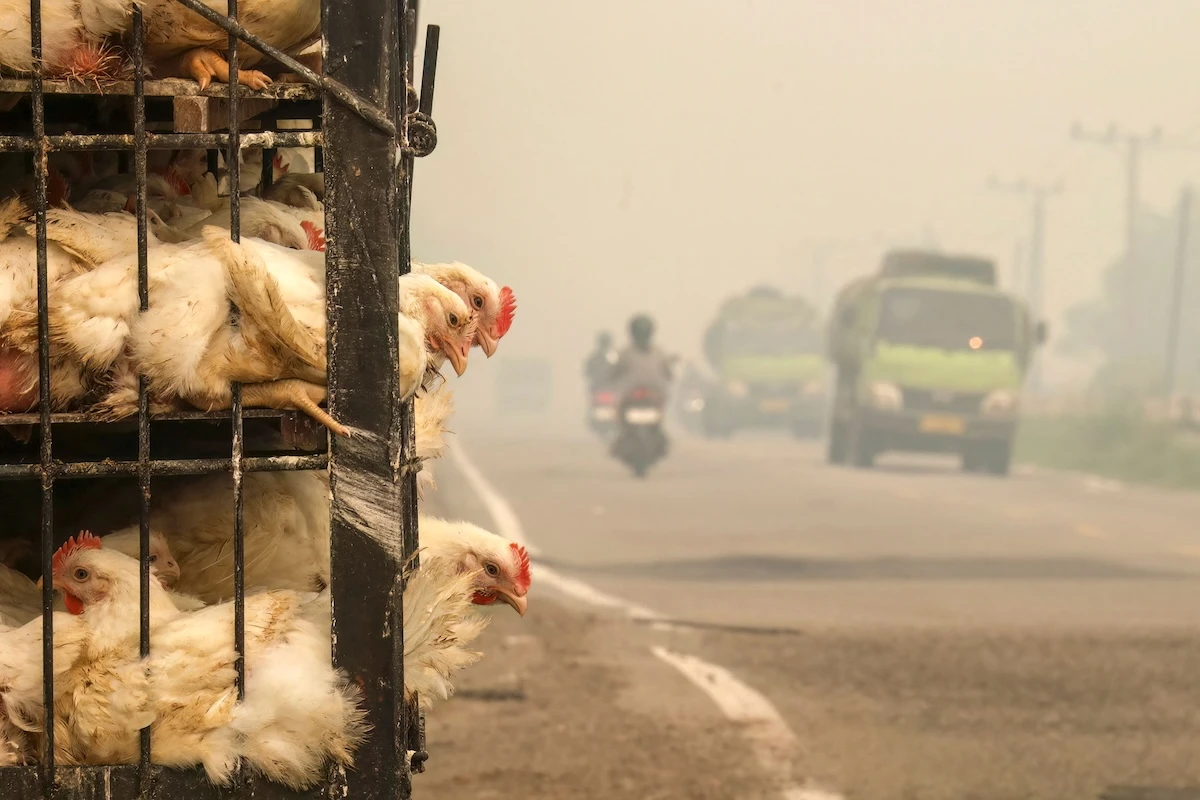
- More than 91,000 of recorded cases were of children aged 5 and younger, ministry says
- Toxic smoke from wildfires also killed 3,500 people in September alone, report shows
More than 400,000 people in Indonesia have suffered from haze-linked respiratory illness since August, its health ministry said, raising concerns over the long-term health implications of toxic smoke from wildfires that have been raging for months in the Southeast Asian country.
Thick haze, caused by forest and land fires in Borneo, Sumatra and Papua, have blanketed parts of Indonesia since August, sending smoke also into neighboring Malaysia, Singapore, the Philippines, Brunei and Timor Leste, while pushing air quality indices into “unhealthy” levels.
Indonesian health authorities recorded 401,686 cases of acute respiratory infection between Aug. 18 and Nov. 2 in seven provinces of Sumatra and Borneo, which are hardest-hit by wildfires.
More than 91,000 of the cases were of children aged 5 and younger, while some 87,000 involved those aged between 6 and 9, health ministry spokesperson Widyawati told a press conference earlier this week.
Toxic pollution from the wildfires has led patients to seek treatment not only for respiratory infection, but also pneumonia, acute diarrhea, eye infection, skin issues and heat stroke, official data showed.
In some of the worst-affected regions, such as the city of Palangkaraya in Central Kalimantan, PM 2.5 levels — the fine pollution particles linked to higher rates of chronic bronchitis, lung cancer and heart disease — reached as high as 3,340 in October, as residents face months of thick, orange haze on the daily.
Levels between 301 and 500 are classified as “hazardous,” while anything over 500 is beyond the official index. The World Health Organization’s guidelines say 25 is the maximum level of PM 2.5 anyone can safely be exposed to over a 24-hour period.
In September, toxic smoke caused by Indonesia’s forest and land fires contributed to an estimated 3,560 deaths in the country, the non-profit Center for Research on Energy and Clean Air said in a report issued on Oct. 29.
It was the same month when Kalimantan, another name for Borneo, only had one day when no exposure to hazardous air was recorded, according to CREA, as it highlighted provinces of Central Kalimantan, South Kalimantan and West Kalimantan for having the highest mortality risk in September due to “the uncontrollable release of fire smoke” from the forest and land fires.
Though Indonesia regularly battles wildfires in the dry season, the blazes this year are the most intense in over a decade, with about 1.9 million acres, or more than 7,800 sq. km, of land burned between January and September 2026, according to deforestation monitor Nusantara Atlas.
“... the National Disaster Management Agency’s ability to deliver emergency response is severely constrained, thanks to a 75 percent budget cut for 2026,” CREA said.
“As a result, the toxic smoke continues to choke citizens and spread beyond Indonesia’s borders.”