- Thousands of women and children from Niger beg on West African streets
- Human trafficking networks run begging rings across the region
ABIDJAN: Fatiya and her younger sister Rackya spent the morning sat on a pavement near a Dakar bus station in the hot sun, hoping for a few coins from passersby.
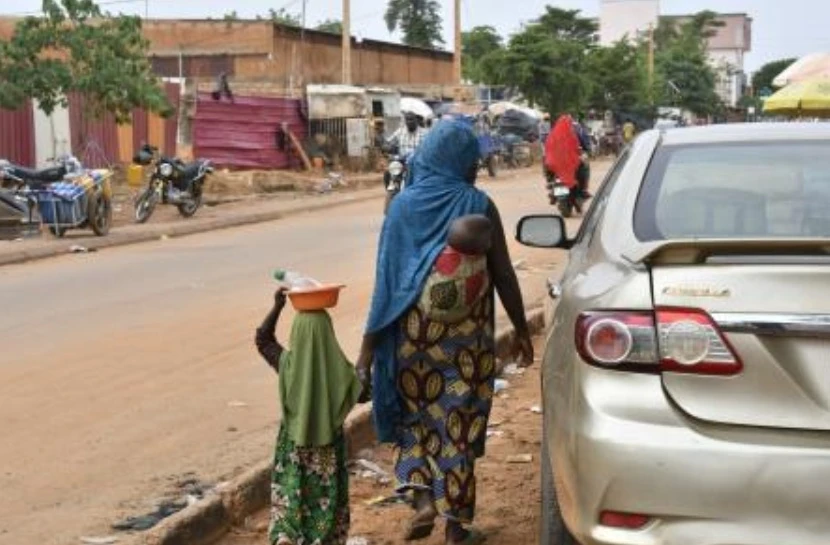
They are among thousands of women and children who have fled poverty and conflict in Niger to go and beg on the streets of Senegal, Ghana, Ivory Coast and Algeria.
Human trafficking networks have for years run begging rings across west Africa and beyond, official, police and NGO sources said.
More than 60 percent of trafficking victims in the region are children, according to the United Nations, which says that begging is the most widespread form of exploitation.
Thirty-somethings Fatiya and Rackya arrived from Niger by bus six months ago.
In a mix of hesitant French and Wolof, they recounted how they had fled the southern town of Guidan Kaji due to “conflicts” and a “hard life.”
Now every day at dawn, they leave the working-class neighborhood of Keur Massar in the Senegalese capital to beg in the city center about 20 kilometers (12 miles) away.
With her one-year-old daughter sat on her lap further along, Adjiza, 31, said she had left the Nigerien capital Niamey “because of poverty.”
“There was nothing for us,” she said.
- Same modus operandi -
Several officials from NGOs told AFP the model was the same regardless of where Nigeriens end up begging.
At major road junctions where cars have to pull up at traffic lights, youngsters, often girls, press their faces up against the vehicle windows asking passengers for money.
Often they do not speak French. They might speak Hausa, which is widely used in Niger and Chad, but communicate mostly by gesturing.
It is common to see a woman — rarely a man — discreetly sat waiting for them a few meters away.
“These Nigerien children don’t get up on their own to come and beg; there’s always an adult behind them,” who may be a parent, said Rachel Otto, an educator at a shelter for child victims of abuse in Abidjan, Ivory Coast’s economic capital.
Otto said she believed they “have certainly been given instructions” because when she offers to buy them food instead of giving them money, “they immediately back off.”
Ivory Coast has a “very large representation” of Nigeriens among child beggars, she added.
When they are arrested in Abidjan, police notify reception centers which are required to look after them, such as the center run by Dignity and Rights for Children Ivory Coast (DDE-CI), where Otto works.
Begging by Nigeriens dates back to the 1980s, a period of economic difficulty and severe drought in the country, Kouassi Konan, executive director of the Movement for Education, Health and Development (Mesad) NGO, said.
- Repatriation, roundups -
Thousands of Nigerien beggars have regularly been sent home from Algeria since 2014 under an agreement with Niamey.
The same has happened with Ghana, which chartered a special flight in August.
Senegal and Ivory Coast have at times rounded up beggars, as has Niger, where a new criminal code punishes the parent of a child arrested for begging with five to 10 years in prison.
But NGOs say repressive measures are not a lasting solution.
In Senegal, Action for Human Rights and Friendship (ADHA) called this year for the protection and support of beggars, raising the alarm about situations of “organized begging” and “exploitation” within “networks.”
In 2022, Niger’s government said that “organized mafia networks” were behind the begging problem.
“It is the illicit trafficking of people, organized by criminal groups, and nothing else,” a retired Niger police officer insisted to AFP, speaking on condition of anonymity.
A Niamey-based NGO official said that large numbers of people leave the country for other capitals viewed as the “promised land” but in reality are “tracked down.”
Another NGO official in Abidjan said Nigeriens transport whole families by bus to Ivory Coast after having “sold the dream” of a better future.
On arrival, “these families must reimburse them for the transport, and it turns into a network,” the source added.
Interpol said in 2020 it had rescued more than 200 victims of human trafficking in Niamey, including 46 under the age of 18, who had been forced to beg or were being sexually exploited.