- Undas is observed by Filipinos on All Saints’ Day and All Souls’ Day
- Those abroad set up home altars, connect with relatives via video calls
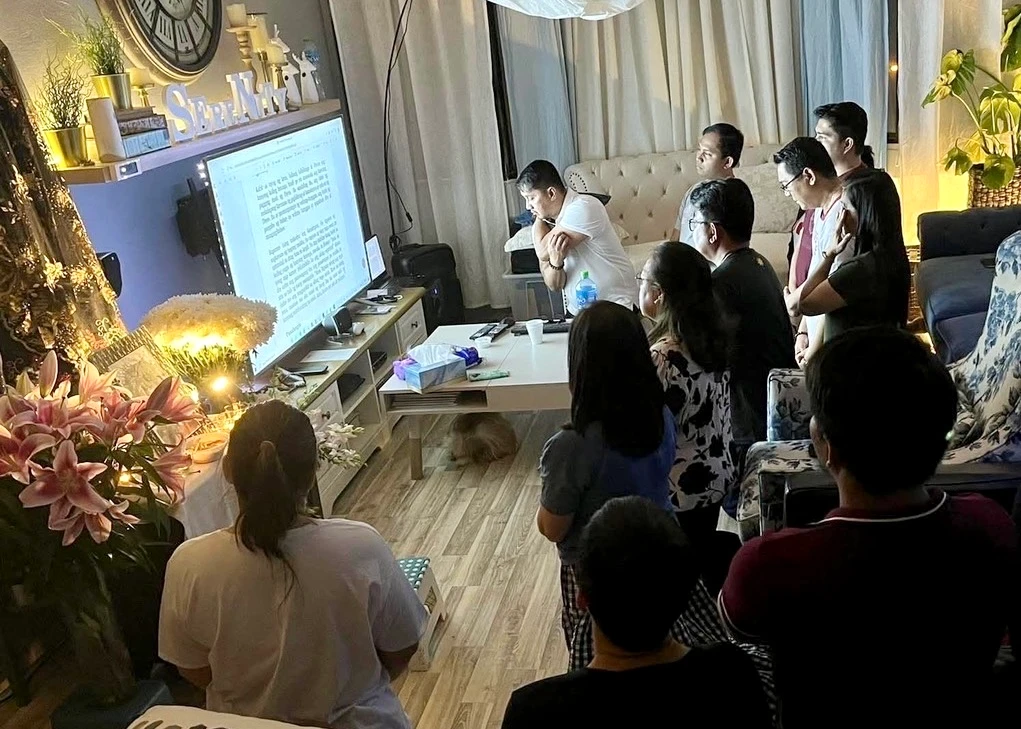
MANILA: Without the usual cemetery visits and family gatherings, Filipinos working in Gulf countries found their own ways to observe Undas on Sunday, remembering their departed through candles, prayers, food and video calls to loved ones back home.
Undas is a major holiday in the Philippines, observed on All Saints’ Day on Nov. 1 and All Souls’ Day on Nov. 2, when families clean and decorate graves, offer flowers and prayers to honor their ancestors.
Those who live abroad, thousands of miles away from their hometowns, try to continue the traditions of their regions and ethnic groups.
Salvador Cabanilla III from Antipolo City, who has been working in Saudi Arabia for nearly 20 years, observes atang, the Ilocano custom of offering food to the departed.
Every Oct. 31, he prepares his parents’ favorite kakanin, or rice cakes. He sets them on a table with their pictures, lights a candle, and says a prayer.
“I also play their old videos and look at their pictures to remember the happy moments we shared. It’s my way of reliving those memories,” he told Arab News. “I was really close to both my parents.”
Later, he calls his relatives as they visit the cemetery in the Philippines.
“I join them through video call, and we talk, share stories, and laugh together. That’s usually how I spend Undas,” he said.
“Ever since Facebook became available, that has really been one of the ways we’ve stayed connected. My father passed away in 1997, and my mother passed away two years ago. Whenever I’m in the Philippines during this time of the year, I never miss going to the cemetery.”
For Ronald Manengo, an accountant who has been working in Alkhobar, the way he observes Undas changed after his mother passed in 2016.
“I started doing things differently. I have a picture of my mom with me. I would buy flowers from a flower shop, then set up an altar with my mom’s photo in my room. That’s where I place the flowers and light a candle,” he said.
“Before, I simply joined my family virtually. But now, I also have a physical offering here.”
In 2022, when his father’s picture joined the altar, Manengo decided to continue his tradition of buying candles for other departed relatives whose graves the family can no longer visit regularly.
“I set aside a budget for my grandparents, aunts, and uncles on both sides of the family, and send the money to the Philippines to continue what my father used to do when he was still alive,” he said.
“The most important thing for me is still being part of the tradition to remember our departed loved ones, to show them that we love them even though they’re no longer with us.”
In Kuwait, Maria Nina Del Mundo, has not been able to go home for Undas since she started working abroad 12 years ago.
Living in Salmiya City with her own family, she celebrates the holiday in the typical Filipino way, making time for church masses, preparing rice noodles and kakanin, and lighting candles to remember their elders.
“They would tell us: ‘Even when we're no longer around, continue lighting candles and remembering us,’” she said.
“It has become part of our way of life. Even though we're now far from home, we still make time for our departed loved ones every Undas.”
Raymund Recamades, who works in Kuwait while all his family is back in the Philippines, observes the holiday with his housemates.
“The people I live with have become my family here. And we still continue that part of the tradition, especially preparing food,” he told Arab News.
“We prepare whatever food our departed loved ones used to enjoy. For example, my grandfather loved adobo, so that’s what I cook. Others prefer traditional Filipino rice cakes or kakanin.”
And like others, what allows him to stay connected with family is technology.
“I tell them that even though I’m not physically there, the only way I can feel like I’m with them is through a video call,” he said.
“Undas is not just about visiting the cemetery. What’s most important is remembering the love and the lessons our departed loved ones left behind.”