- All 73 new amendments drafted around 2 principles, ensuring laws are fit for modern game, inclusive for players, officials at all levels
- Global audience is keeping lawmakers on their toes
In mid-February this year, my column focused on changes to the Laws of Cricket that had been announced by their custodian, the Marylebone Cricket Club.
Although the amendments would not be fully incorporated until Oct. 1, 2026, they had been announced early so that those involved in playing and administering the game had good time to become familiar with them.
During those months, some of the amendments were implemented by the International Cricket Council and other governing bodies through tournament playing conditions, as distinct from laws. According to the MCC, all of the 73 amendments had been drafted around two principles: ensuring that the laws are fit for the modern game and are inclusive for players and officials at all levels.
In the February column I focused on those updates which appeared to be the most significant. The first related to the extension of permission to use laminated bats in all age groups in recreational cricket, not just for juniors, as had been the case since 2017. This will release the pressure on shortages of English willow.
Secondly, clearer, standardised categories have been established for cricket ball sizes and weights in men’s, women’s and junior cricket.
Thirdly, a change to end-of-day procedures in multi-day matches has been introduced, whereby play will not end if a wicket falls in the final over of the day.
Fourthly, the law covering overthrows and misfields has been rewritten to distinguish them from each other. An overthrow is now defined as an attempt to direct the ball toward the stumps to stop runs being scored or to attempt a run out. A misfield, including an attempt to stop the ball or pass it to another fielder near the boundary, is no longer treated as an overthrow.
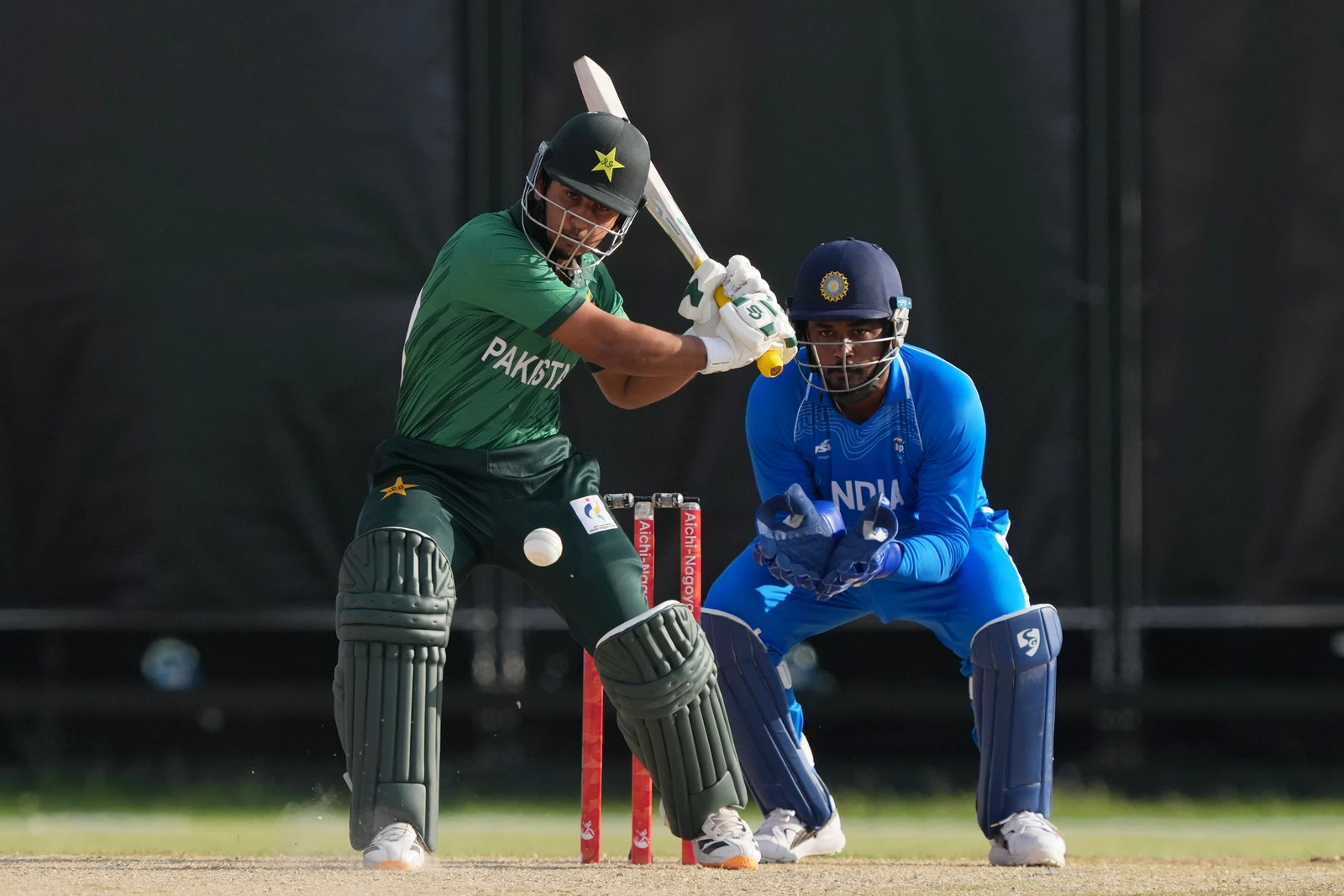
The fifth change relates to the so-called “bunny-hop” catch, which entered the game, especially in the T20 format, in spectacular fashion. A fielder catches the ball near the boundary but, realizing that momentum is going to carry him or her over the boundary, tosses the ball in the air. In some cases the ball descends outside the boundary and the fielder intercepts the ball while airborne, pushing it back into the field of play, before jumping back over the boundary to catch the ball before it hits the ground. This loophole has been closed by limiting any fielder who jumps from beyond the boundary to only one airborne touch of the ball. After that, every landing before the ball becomes dead must take place inside the field of play. The ICC began applying the change in international cricket prior to Oct. 1.
Not everyone appreciates this change, on the basis that it penalizes genuine skill and modern athleticism, as well as denying exciting moments which appeal to the new and younger generation that cricket strives to attract. A boundary is a line which marks the limits of an area. Those who are more traditionally minded are likely to feel, intuitively, that for a catch to be fair, the points of contact with the ground, immediately preceding and following every contact with the ball, should be within the field of play and inside the boundary.
The same people are also likely to welcome the law which is directed at batters who are time-wasting. Generally, a batter is expected to be ready by the time that it takes for the fielding team and bowler to be ready for the next delivery. A warning is to be issued by the bowler’s end umpire for the first offense, a final warning for the second and five penalty runs awarded to the fielding side for the third and each subsequent offense within an 80-over block. Clearly, this is a change which relates to multi-day cricket, but it is one which batters at all levels should respect.
In reading through the 73 changes, it did occur to me that it might prove difficult for all of them to be absorbed, understood and correctly implemented at local club level.
A simple categorization of which ones applied at all levels and which ones apply to specific levels would have been useful.
The MCC is aware of the need to educate the cricketing world about the changes. Fraser Stewart, its head of cricket, and Jonny Singer, Laws of Cricket adviser, completed a whirlwind tour of five Indian cities on Oct. 7. They met administrators, players, coaches, umpires and media to explain the changes and answer questions. Stewart highlighted that it was crucial for cricket to maintain a fair balance between bat and ball, one which has tilted increasingly toward the bat in recent years. He said that some of the latest law changes were aimed at rewarding the fielding side more.
Singer said that it was the “first time that we have managed to make the laws quite so global.”
This process is greatly enhanced by the release of a multilingual app. Through a collaboration with the ICC, it will be available in six languages, with Hindi, Urdu, Bangla, Marathi and Kannada versions published alongside English in the first phase and more languages following by the end of 2026.
The app will have a full search function, quizzes and topical updates, while the laws section of MCC’s website has also had improvements to make its use more intuitive. I have visions of it being checked at club grounds around the world whenever a dispute arises.
As cricket has grown and spread around the world, the challenges for its lawmakers have become even more complex. It is the third time that the MCC’s laws sub-committee has amended the 2017 code, following earlier revisions in 2019 and 2022.
The release of the laws in languages other than English carries linguistic challenges. One example of this is how the word “pitch” is understood in different languages, including English. Cricket’s first six laws were written in 1744, printed on a silk handkerchief. The authors wrote “The pitching (of) the first wicket is to be determined by the cast of a piece of money. The other wicket is to be pitched directly opposite, at 22 yards’ distance.” This distance is still variously and inconsistently referred to as either pitch or wicket. No one seems to be much bothered.
Now, in order to accommodate different languages, the word pitch has been removed from the laws wherever it is not used to describe the physical distance of 22 yards between the stumps. This distance has not changed in almost 300 years, nor has the act of a bowler sending down a ball to a batter defending a set of stumps.
The challenge of updating and writing laws in a manner accessible and understandable to all has not changed either. A global audience of both men and women from different cultures is keeping lawmakers on their toes.