- Saudi military chief warns against using international straits as tools of political and military pressure at Manama Dialogue
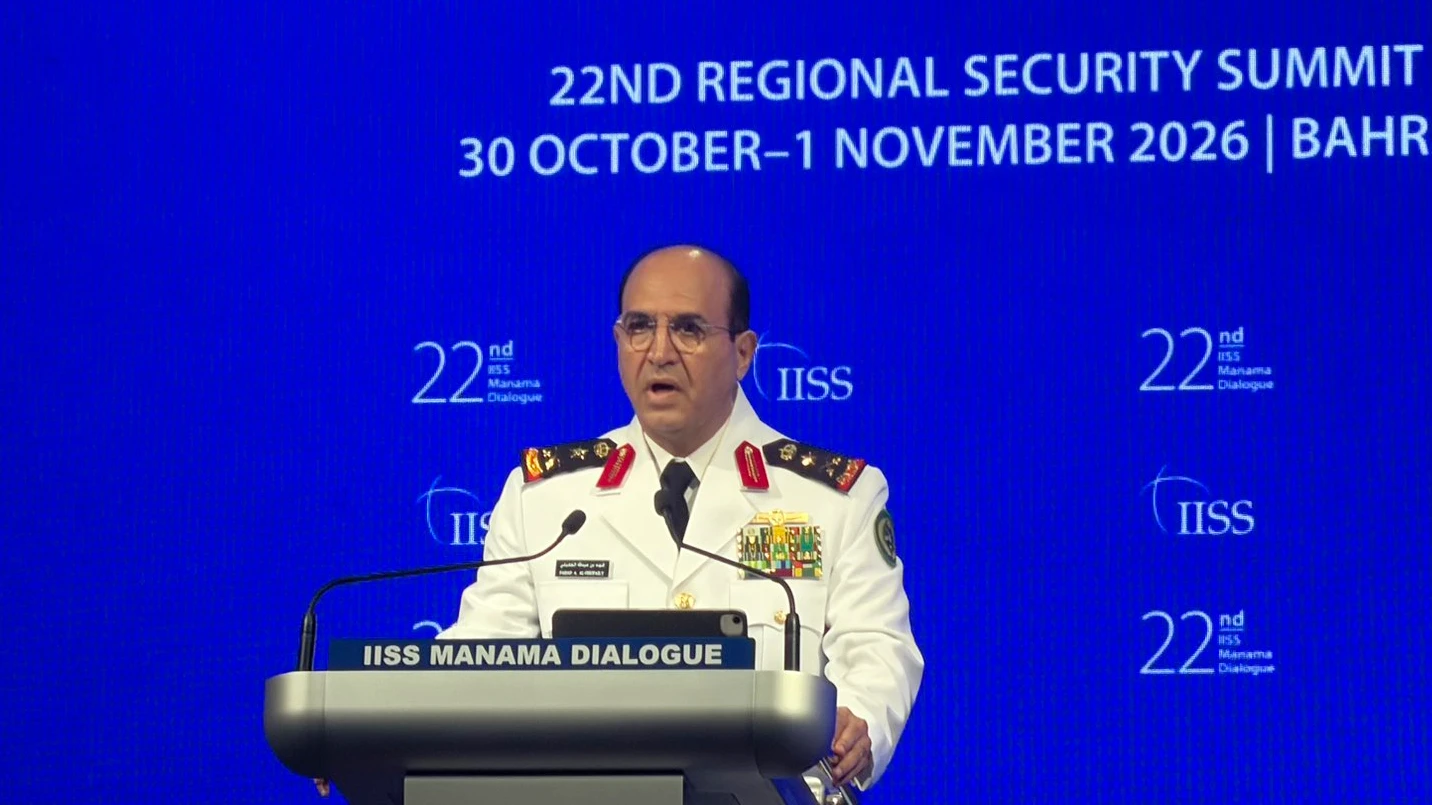
RIYADH: Saudi Arabian Armed Forces Deputy Chief of General Staff Vice Adm. Fahad Al-Ghufaili called for stronger international cooperation to protect strategic maritime corridors, warning that waterways must not become instruments of political or military pressure amid escalating regional tensions.
Speaking at the 22nd IISS Manama Dialogue in Bahrain on Sunday, Al-Ghufaili stressed the need for an effective collective response to maritime threats, adding that protecting maritime straits is a shared international responsibility.
“Maritime security is not the responsibility of one country, and force cannot be a substitute for the law,” Al-Ghufaili said. “International straits must not remain tools of political and military pressure.”
The remarks come amid growing international warnings over threats to shipping through the Strait of Hormuz and Bab Al-Mandab amid escalating regional tensions linked to the US-Iran conflict.
Al-Ghufaili emphasized that threats to maritime corridors affect countries worldwide and have become an international challenge.
The situation has also had repercussions in Yemen, where clashes continue between Houthi militias and Yemeni forces, alongside Houthi threats against ships and maritime traffic in the Bab Al-Mandab Strait.
The Strait of Hormuz, which normally carries a fifth of global oil supplies, has become a focal point of the conflict, with ships regularly coming under Iranian fire.
Just two days ago, Oman said it had rescued 25 sailors from a merchant ship that was targeted and set ablaze, while Iran reported that four oil tankers had been halted while crossing the Strait of Hormuz.
Muscat’s navy “carried out an evacuation operation for 25 crew members of the merchant ship RITI, flying the Panamanian flag, after it was targeted, causing a fire on board,” Oman’s Maritime Security Center said in a statement.
Speaking at a session on Saturday at the Manama Dialogue, Saudi Arabia’s Vice Foreign Minister Waleed Elkhereiji stressed the need to contain crises and strengthen security and stability amid widening regional conflicts, mounting humanitarian suffering and growing repercussions for maritime security, energy supplies and the global economy.
“The Kingdom continues its diplomatic efforts, in coordination with its brothers and partners, to de-escalate tensions and resolve disputes through peaceful means, safeguarding regional security and stability,” Elkhereiji said.
On Saturday, Saudi Foreign Minister Prince Faisal bin Farhan held talks with his counterparts from Germany, Japan, France and Brazil on the sidelines of the G20 Foreign Ministers’ Meeting in Atlanta to discuss threats to maritime navigation in the Strait of Hormuz and Bab Al-Mandab and their potential impact on energy security, global trade and supply chains.
The ministers also stressed the need for stronger international cooperation to protect maritime routes and ensure the uninterrupted flow of global commerce.