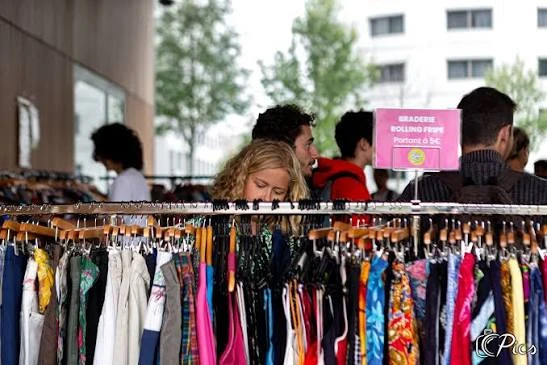
- Young Saudis are increasingly purchasing secondhand items, influenced by the availability of online marketplaces and social media
- Value and rarity drive young consumers, like Dana Al-Qahtani, who prefer pre-owned goods that are no longer available new
ALKHOBAR: When 26-year-old Dana Al-Qahtani wanted a discontinued digital camera she had seen repeatedly online, she did not look for it in an electronics store.
Instead, she spent several weeks searching secondhand listings until she found the model she wanted, still working and at a price she was willing to pay.
“I actually wanted it because it was old,” Al-Qahtani told Arab News. “You couldn’t just walk into a store and buy a new one, so secondhand was really the only option.”
It was not her first pre-owned purchase. Over the past three years, Al-Qahtani has bought clothes, handbags, cameras and small pieces of furniture from previous owners, sometimes for a fraction of their original price.
For her, the fact that someone else owned an item first is rarely a reason not to buy it.
“If it’s in good condition and I like it, I don’t really care,” she said. “I would rather pay less for something I actually want than buy something new just because it’s new.”
Across Saudi Arabia, online marketplaces, social media accounts and specialist resale businesses have made it easier to find everything from used electronics and furniture to designer fashion and collectibles.
For some younger buyers, price remains the main attraction. For others, the appeal lies in finding items that are no longer available in stores.
But their choices also suggest a shift in how some consumers think about ownership, particularly in categories where buying used was once viewed mainly as a compromise.
For 24-year-old Riyadh resident Faisal Al-Harbi, that category is watches.
He began browsing pre-owned watches after realizing that several models he wanted were considerably more expensive new.
His first purchase was initially about saving money. Later purchases were not.
“Once I understood the market, I realized that used doesn’t necessarily mean damaged or old,” he said. “Sometimes someone buys a watch, wears it a few times and sells it. You can get exactly what you wanted without paying the new price.”
Condition, however, matters.
Al-Harbi checks photographs carefully, asks sellers about service history and avoids purchases when he cannot establish enough information about an item’s authenticity.
“There are things I wouldn’t take a risk on just because they’re cheaper,” he said. “If I don’t trust the seller or can’t verify what I’m buying, I would rather leave it.”
That question of trust remains one of the main differences between buying new and buying from another owner.
A new product generally comes with a retailer, receipt and clear return policy. A secondhand transaction can require the buyer to judge the condition of an item, verify authenticity and decide whether the seller’s description is accurate.
Saudi reseller Sara Al-Dossari said those concerns are among the first questions buyers ask her.
Al-Dossari began selling pieces from her own wardrobe online before expanding into sourcing pre-owned designer bags and accessories.
“People want detailed photos. They ask about scratches, corners, hardware, receipts — everything,” she said. “They don’t necessarily expect an item to look new, but they want to know exactly what they’re paying for.”
She said many of her younger customers are comfortable buying pre-owned luxury goods, particularly when a piece is difficult to find or significantly cheaper than its retail price.
Some, she added, could afford to purchase the same item new.
“That’s what I think has changed,” Al-Dossari said. “Before, people might assume you bought used because you couldn’t afford new. Now I have customers who can buy from the boutique but still ask me what I have available.”
Not everyone is convinced.
For 28-year-old Mohammed Al-Otaibi, buying secondhand still depends heavily on the type of product.
He would consider a used car or certain electronics but draws the line at clothing, shoes and furniture.
“I know logically that you can clean things, but personally I still prefer something that hasn’t belonged to someone else,” he said. “Especially clothes. I would rather buy something cheaper new.”
He said attitudes among his friends vary considerably.
“Some of them buy used designer things all the time and don’t think twice about it,” he said. “Others are like me. So I wouldn’t say everyone suddenly loves secondhand.”
The distinction is important.
Saudi Arabia’s resale market encompasses very different buying habits. Someone looking for a used car or smartphone may be motivated primarily by cost, while a buyer searching for a discontinued camera, vintage jacket or collectible may have no new equivalent available.
Online marketplaces have also changed the process itself.
Instead of visiting a traditional secondhand market, consumers can search thousands of listings from their phones, compare prices and contact sellers directly. Social media has added another layer, with specialist accounts curating vintage clothing, furniture, watches and designer accessories for specific audiences.
For Al-Qahtani, buying secondhand has also changed the way she thinks about selling her own belongings.
Items that once might have remained unused in a cupboard now have a potential next owner.
“If I haven’t used something for a year, I’ll usually try to sell it,” she said. “Then I use that money toward something else I actually want.”
There are still things she prefers to buy new, particularly personal items and products where condition is difficult to assess.
But the distinction between “new” and “used,” she said, matters less to her than it once did.
Recently, she found herself searching again for another older camera.
She could buy a new model more easily. That was not the point.
“I already know what the new cameras look like,” she said. “I’m looking for this one because they don’t make it anymore.”
For her, secondhand was no longer the alternative to what she wanted.
It was where what she wanted could still be found.