The main course was done. I had exactly three minutes before the roasted grapes cooled, the lemon cream cheese softened and the sourdough lost its crunch.
The clock was ticking, and the adrenaline felt oddly familiar. It was the rush that once pulled me into the newsroom every morning, except now I was plating dessert in a kitchen instead of chasing breaking news.
It was Not-So-Perfect Supperclub day, when I host a themed dinner for family, friends and sometimes friends of friends. The name began as a joke about my cooking: like a true desi, I cook on instinct. It is messy, it is fast and it is the best distraction from my not-so-perfect day job.
A newsroom under pressure may start by taking one ingredient off the plate. Eventually, the public is left with something that looks like news but no longer resembles reality.
- Niha Dagia
I am fortunate to work for a news organization that still holds its editorial ground, even when that comes at a cost. But that security is hard to separate from the wider reality of an industry being pushed into silence.
That silence did not arrive overnight. It crept in as routine coverage became a minefield that reporters, editors and producers learned to navigate. This is how censorship evolves: from occasional intervention to the systematic dismantling of press freedom.
The legal framework explains much of it. The Pakistan Electronic Media Regulatory Authority (PEMRA) wields heavy-handed power over broadcasters’ licenses and programming. The Prevention of Electronic Crimes Act (PECA), a cybercrime law, is routinely weaponized against journalists’ digital work. Between regulatory pressure on broadcasters and the threat of criminal complaints over reporting, the ordinary act of publishing a story has come to feel perilous.
Amendments to PECA in 2025 raised the stakes further. They created a new offense of knowingly spreading information deemed “false or fake” and likely to cause fear, panic or unrest, punishable by up to three years in prison, a fine of two million rupees, or both. They also established a social media regulator with sweeping authority over online content. The stated aim is to curb harmful falsehoods. For working journalists, the question is simpler: who decides what counts as fake news, especially when it is a story the state would rather not see told?
This is not a hypothetical fear. Between January 2025 and April 2026, the Pakistan Press Foundation documented criminal complaints against 67 journalists and media professionals, 34 of them invoking PECA.
Legal pressure is only half of it. Financial intimidation does the rest. A network that steps out of line risks losing government advertising, and private advertisers are quietly nudged to take their business elsewhere. That chokehold runs down the production line into delayed pay checks, layoffs and shrinking reporting budgets.
Inside newsrooms, it shows up as stories that are never assigned, a name that vanishes from headlines, or protests written off as traffic jams. Field reporting gives way to studio talk, and investigations become too expensive to justify.
Journalists have not surrendered. Many still fight daily to break important stories. But the question inside newsrooms has quietly shifted from “Is this true and in the public interest?” to “Can the organization survive the consequences of reporting it?”
And the public has noticed.
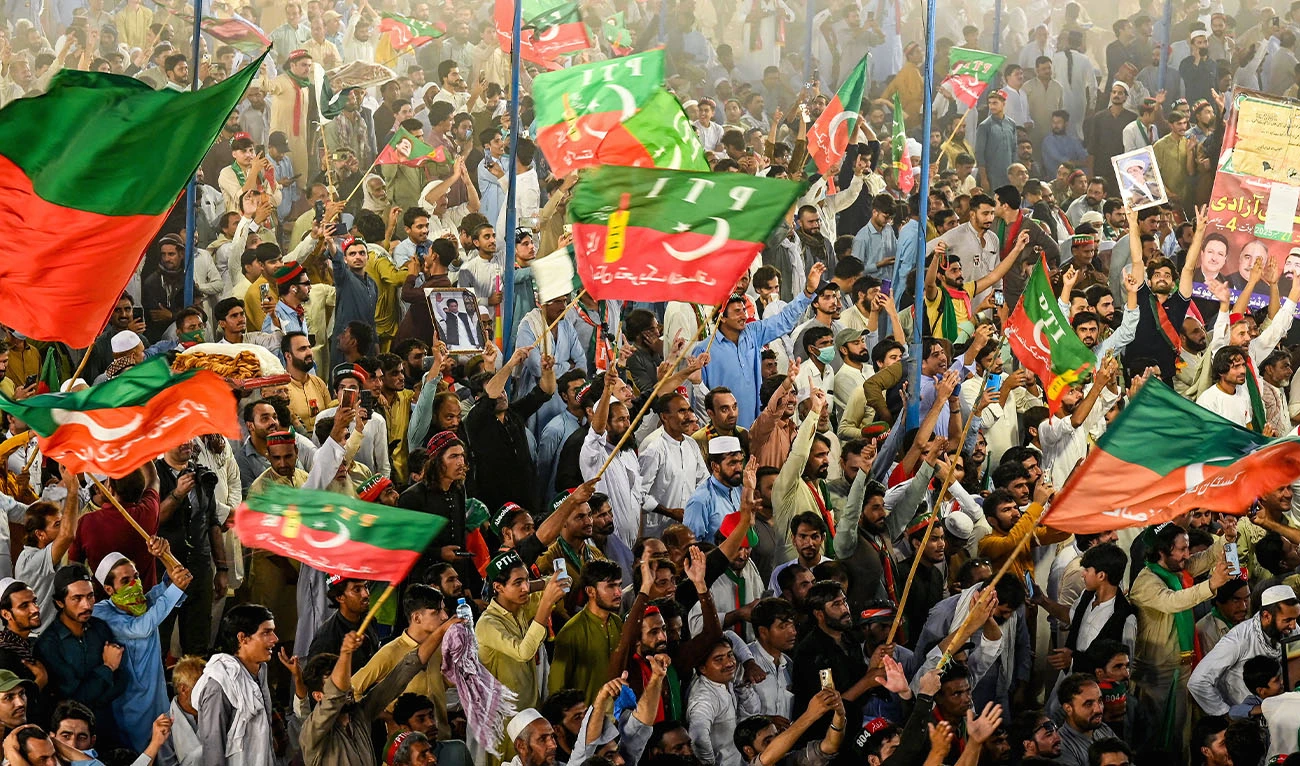
People may not know which story was dropped from the bulletin, or why, but they see the gap between what is happening around them and what appears on the news. They watch massive political rallies on their phones but not on television. They hear speeches online that never make the news cycle. They see footage from Balochistan or Azad Kashmir on social media while mainstream outlets reduce events to brief official statements.
No surprise, then, that people have migrated to social media for information. But social media runs on speed and outrage, and genuine footage sits alongside manufactured deepfakes. A 2026 review by iVerify Pakistan found that nearly 80 percent of the viral claims it checked were false.
Mainstream silence only feeds this chaos, letting claims spread for hours before any newsroom steps in. And once trust in the press has eroded, even a correction struggles to carry the weight it once did.
Those in power may see a compliant press as a victory, but control has diminishing returns. A mainstream media stripped of public trust loses its authority to establish facts in a crisis, cutting the state’s own lifeline to the public.
The industry is no innocent bystander either. Owners who trade independence for advertising revenue, outlets that replace field reporting with studio theater and journalists who post unverified claims online all share the blame.
Social media has already swallowed much of the traditional news cycle. The real question for both the industry and the powers that be is what takes the place of basic verification once the mainstream press has lost both its freedom and its integrity.
In the end, journalism is a little like cooking: what you leave out matters as much as what you put in. A newsroom under pressure may start by taking one ingredient off the plate. Eventually, the public is left with something that looks like news but no longer resembles reality.
Niha Dagia is a journalist, and editor of Dawn News English.