- Quetta electrician says the rickshaw he built from discarded parts saves him Rs3,000 a week in fuel
- Pakistan is promoting electric three-wheelers, registration and passenger capacity remain practical hurdles
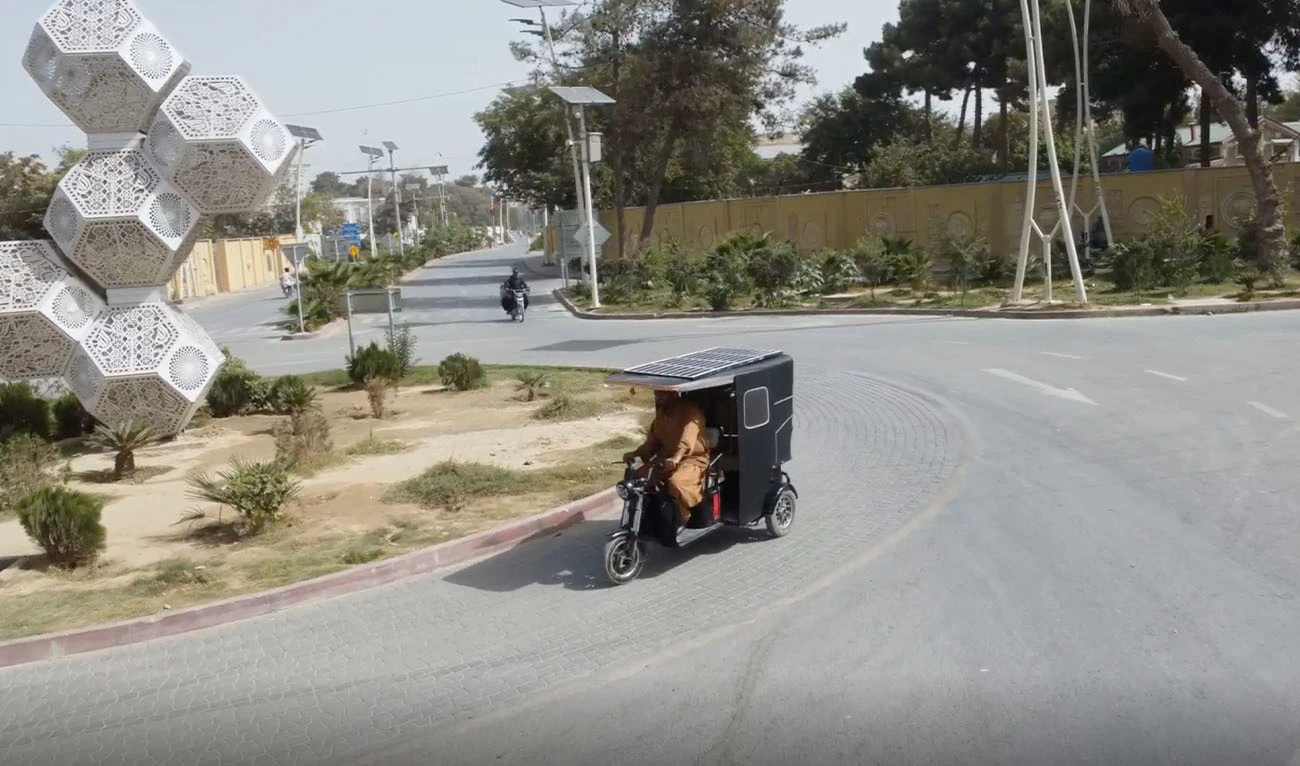
QUETTA: A rickshaw assembled from discarded parts has made Noor Muhammad a familiar sight on the streets of Quetta. For the Pakistani electrician, the attraction is less the attention it draws than the petrol he says he no longer has to buy.
His homemade three-wheeler runs on a battery charged by solar panels on its roof or, when sunlight is insufficient, from a household electricity connection. Muhammad uses it to take his three children to school but has not registered it to carry paying passengers.
The vehicle offers a small-scale test of a much larger ambition. Pakistan wants electric vehicles to account for 30 percent of new vehicle sales by 2030 and set aside subsidies in the 2025–26 financial year intended to support more than 3,000 electric rickshaws. Its latest economic survey says manufacturers produced 1.43 million two- and three-wheelers in the first nine months of that year, showing the scale of a market where cheaper alternatives to petrol could matter.
Balochistan, the southwestern province of which Quetta is the capital, has identified electric rickshaws, buses and charging facilities among its proposed urban transport measures. Whether such plans can help working drivers depends on what the vehicles cost, how far they travel with passengers and whether they can be registered for commercial use.
“I used to spend Rs3,000 ($10) weekly for fueling my motorbike and now I am able to save that money,” Muhammad, 35, told Arab News.
Muhammad said he built the vehicle in 2018 after buying the body of a dismantled rickshaw from a scrapyard. He added parts from a 70cc motorcycle, fitted four solar panels to the roof and placed a battery beneath the driver’s seat. He put the cost of the project at Rs200,000, or about $722 at current exchange rates.
He says it can travel up to 120 kilometers on a full charge, a range Arab News could not independently test. The panel voltage and battery description he provided are insufficient to establish how much electricity the system produces or stores.
“When I travel on my electric-rickshaw, people get happy and react with joy watching it and take pictures of it,” he said.
Muhammad sees potential to convert other vehicles. “Some rickshaw drivers have contacted me and expressed their will for conversion of their fuel-rickshaw into an electric ride and I replied with confidence that ‘I can do it’,” he said.
Naimatullah Tareen, secretary of the Quetta Regional Transport Authority, said the provincial government would encourage drivers seeking to convert petrol-powered rickshaws and would grant route permits to electric three-wheelers. He also said 27 electric buses had been approved for the city, without giving a timetable for their introduction.
Local driver Faiz Muhammad, however, questioned whether a small electric vehicle such as Noor Muhammad’s could carry enough passengers or respond quickly in an emergency.
“The problem with the battery-run electric rickshaw is that it cannot carry more than two or three passengers, but these four-stroke rickshaws can ride with six passengers,” he said.
For now, Noor Muhammad’s rickshaw remains a family vehicle.
“I haven’t applied for the registration of my rickshaw, hence I am not using it for public commuting service... But if I use it for commercial rides, it will work for that as well,” he said.