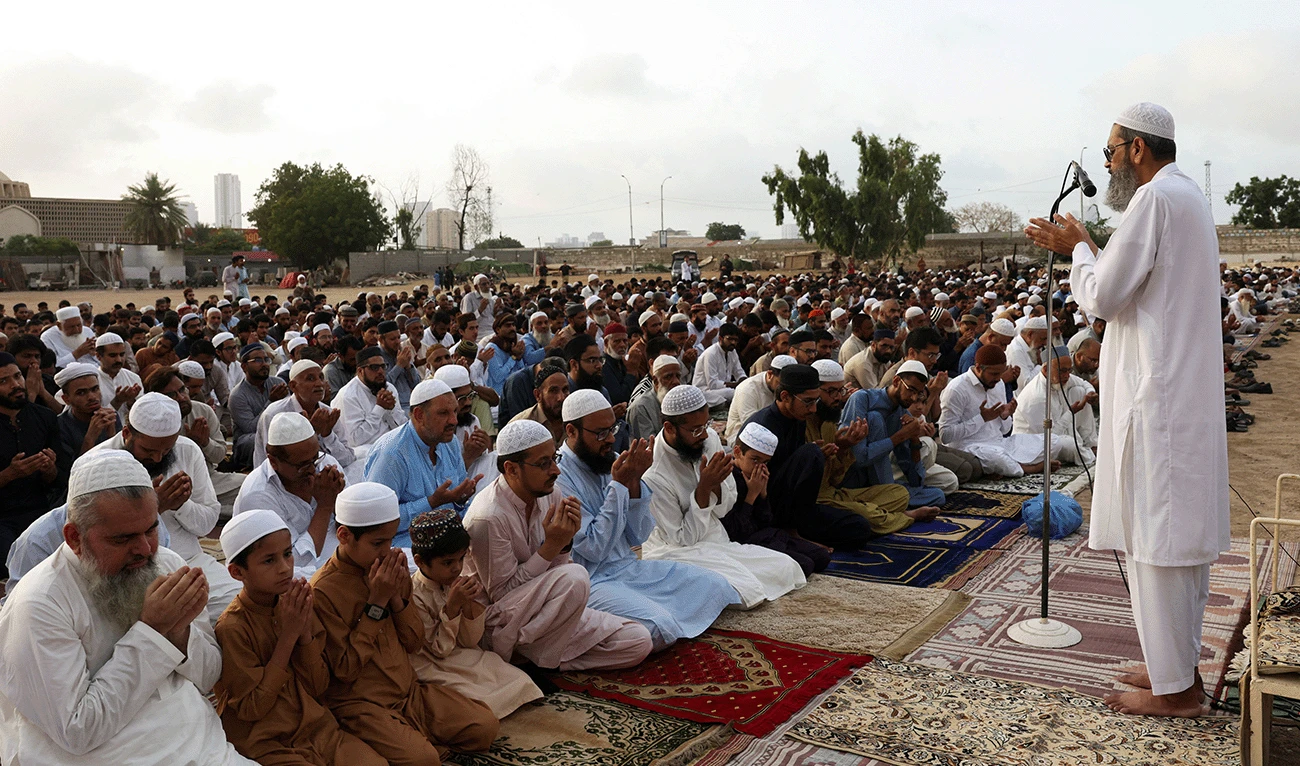
- Country’s population projected to more than double to 461 million, overtaking Indonesia
- Pew says global Muslim population project to account for 36 percent of humanity by 2070
ISLAMABAD: Pakistan is projected to overtake Indonesia as the country with the world’s largest Muslim population by 2070, with the number of Muslims in the South Asian nation more than doubling to 461 million, according to a new study released on Wednesday.
The findings are part of a global demographic study by Pew Research Center, a Washington-based nonpartisan research organization, which projects that Muslims will surpass Christians as the world’s largest religious group by 2035. The study examined population trends across 201 countries and territories, taking into account birth and death rates, migration and changes in religious affiliation.
“Pakistan’s Muslim population is expected to double from 227 million in 2020 to 461 million in 2070,” the research organization said in an accompanying analysis. “The country will rise from having the second-largest Muslim population to the world’s largest.”
Indonesia, which had approximately 239 million Muslims in 2020, is projected to have 274 million by 2070, falling to fourth place behind Pakistan, India and Nigeria.
Pakistan’s share of the global Muslim population is expected to rise from about 11 percent to nearly 13 percent over the same period, while Muslims are projected to account for almost 97 percent of its population, little changed from 2020.
The study said Muslims were the world’s fastest-growing major religious group, with their global population expected to increase by 80 percent between 2020 and 2070, compared with 11 percent growth among non-Muslims.
“Muslims’ population growth will be fueled by their dual demographic advantages of relative youth and high fertility,” Pew said.
The global Muslim population is projected to reach 3.6 billion by 2070, accounting for about 36 percent of humanity, compared with roughly 26 percent in 2020.
The research also projected that Pakistan would have the world’s fourth-largest Hindu population by 2070, although Hindus would account for only about 2 percent of its population.
Pew cautioned that its projections were based on the continuation of recent demographic trends and did not account for unforeseen developments such as wars, natural disasters, epidemics or major economic and social changes that could alter population growth.