- Pakistan reduces petrol, diesel prices by Rs6.59 and Rs4.25 per liter, respectively
- Move comes despite US announcing it carried out limited strikes against Iran on Saturday
ISLAMABAD: Pakistan’s government this week reduced the prices of petroleum products further despite fears of renewed tensions between the United States (US) and Iran after Washington said it carried out fresh limited strikes against Iran early Saturday.
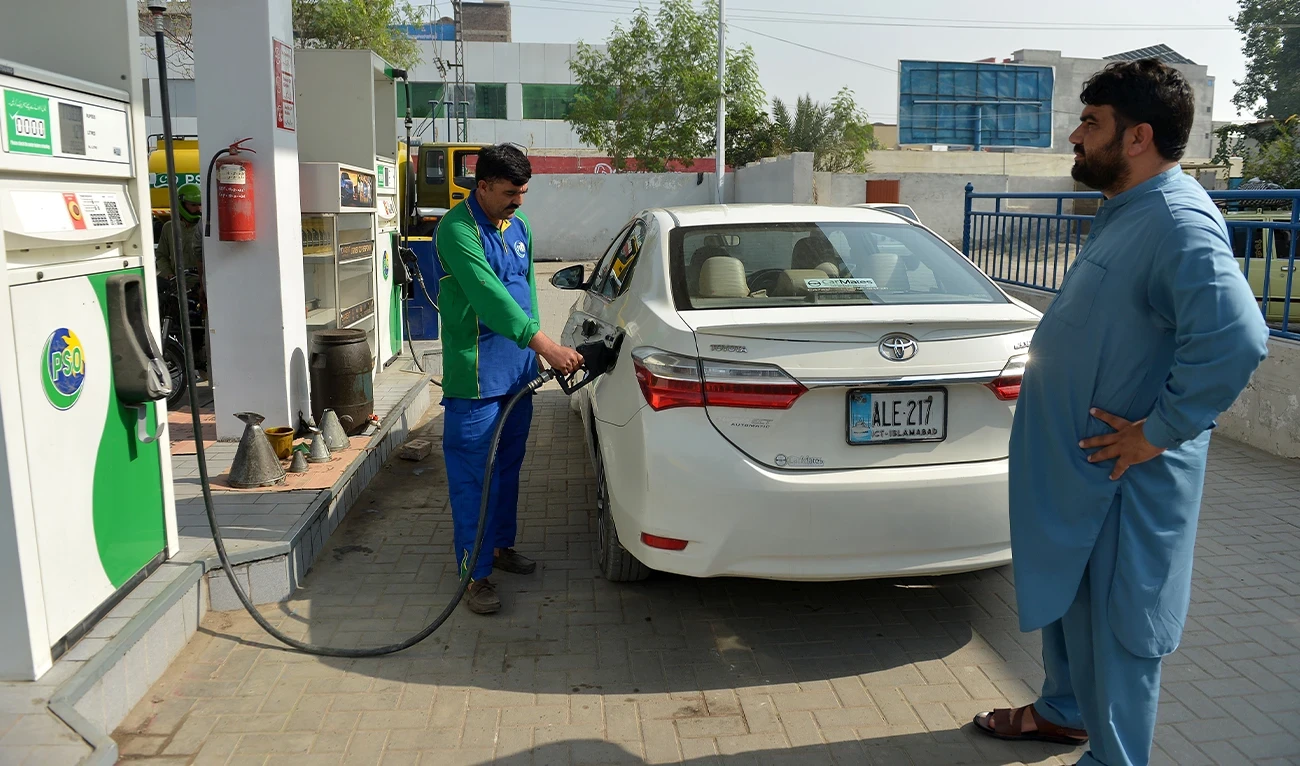
As per a notification issued by the Oil and Gas Regulatory Authority (OGRA), the government reduced the price of petrol by Rs6.59 [$0.024] per liter and that of high-speed diesel by Rs4.25 [$0.015] per liter, in what was the fifth consecutive cut in fuel prices by Islamabad in recent days.
Following the changes, petrol will now be sold for Rs346 [$1.25] per liter in Pakistan, while diesel will be sold for Rs378 [$1.37] per liter. The prices will remain applicable from Nov. 7-10, state broadcaster Radio Pakistan reported.
“The government has revised prices of petroleum products for the next four days starting from today,” Radio Pakistan said.
Pakistan has consistently raised domestic fuel prices since the US-Iran war broke out in February after Washington and Tel Aviv launched joint airstrikes against Iran.
However, Pakistan slashed prices of petroleum products five consecutive times in recent weeks as US-Iran engaged in peace talks indirectly through Qatari mediators and US President Donald Trump’s Republican party suffered an electoral setback at the hands of the Democrats in the midterm elections.
In the days since Republicans’ shellacking at the polls, Trump has vacillated between threatening to “destroy” Iran and suggesting that a resolution to the war is near.
Crude futures edged up late on Friday on renewed fears of further US strikes on Iran after Trump said he would soon decide whether to pursue a peace agreement or destroy what remains of the country.
Brent crude futures for January settled at $98.32 a barrel, up 3 cents, or 0.03 percent. US West Texas Intermediate futures finished at $90.83 a barrel, up 31 cents, or 0.34 percent.
Tensions rose when Iranian state media reported on Saturday the sound of two explosions in the Suza area of Qeshm Island, which is in the Strait of Hormuz, a crucial waterway for oil shipments. Trump, in an exchange with reporters, described the military action as “minor.”
“They knocked out — they built a little bit of an anti-aircraft device and we knocked it out in about 15 minutes, maybe five,” Trump told reporters shortly after arriving in West Palm Beach, Florida, on Friday evening.
The US military also reported carrying out what it described as defensive strikes on Monday. Explosions were heard on the islands of Qeshm and Hengam in the strategic Strait of Hormuz, and in the nearby mainland area of Bandar Abbas.
Earlier Friday, Reuters reported two Middle East government officials as saying that Iran was reviewing proposals presented by chief mediator Qatar aimed at addressing differences with the US about Tehran’s nuclear program.
But one of the officials stressed that the Iranians, at least at the moment, remain unwilling to engage in negotiations with the Trump administration over its atomic activities until the US agrees to several core conditions that Iran has been demanding be part of any ceasefire agreement.
Difference over Iran’s nuclear program is the thorniest issue and one that Trump insists must be resolved as part of any deal meant to end the more than 8-month-old war.
With additional input from Reuters