- Former security officials warn expanded detention powers could be used by government to target opposition
- Governor Faisal Karim Kundi says delegation of powers will speed up security action, cautions against misuse
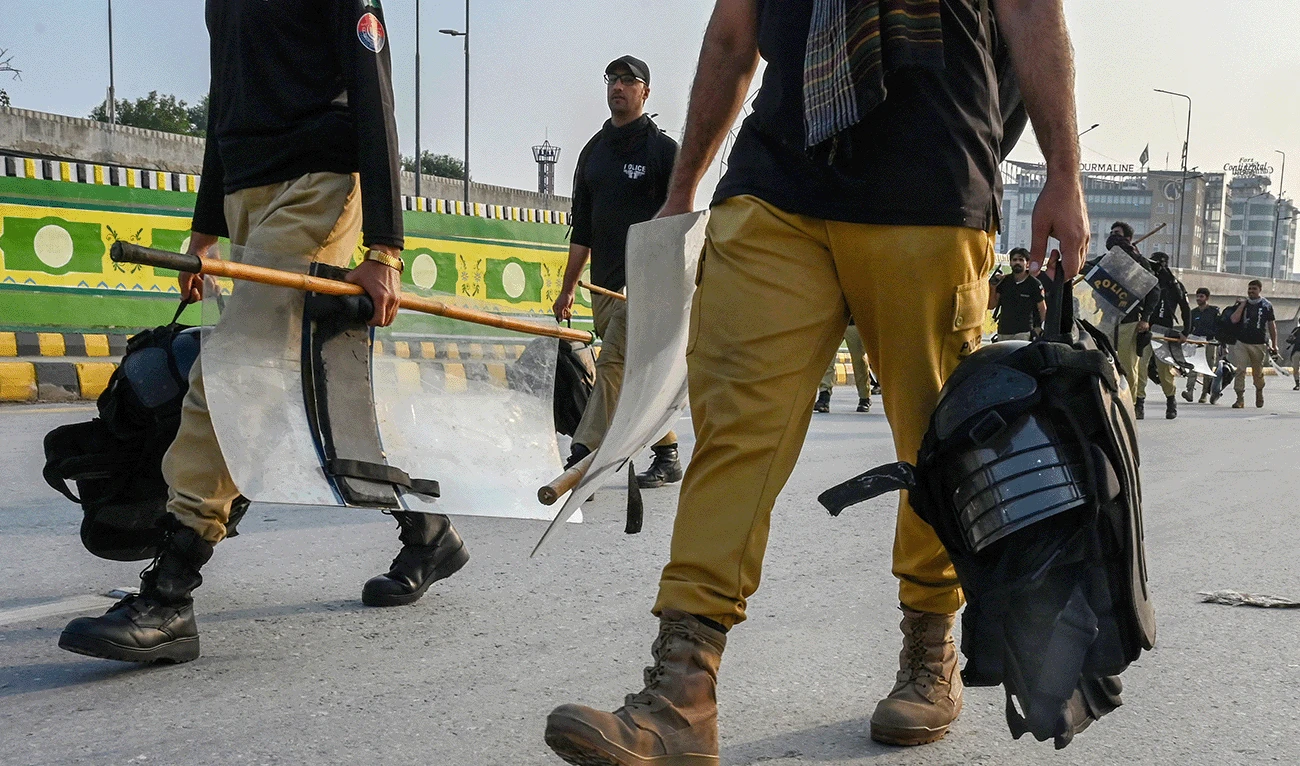
ISLAMABAD: A decision to give district officials in Pakistan’s northwestern Khyber Pakhtunkhwa province greater authority to detain people without trial could be used to target political opponents, former security officials and legal experts warned on Thursday, amid tensions over the imposition of governor’s rule earlier this month.
Governor Faisal Karim Kundi has delegated powers under Section 3(1) of the West Pakistan Maintenance of Public Order Ordinance, 1960, to deputy commissioners (DCs), allowing them to order preventive detention for up to six months without seeking prior approval from the provincial chief executive. The move follows the Oct. 11 imposition of emergency and governor’s rule, which removed the opposition-led provincial administration from office.
Kundi said the delegation was intended to enable timely preventive action, reduce administrative delays and improve coordination with law enforcement agencies. However, former officials warned that giving district administrators greater authority would not eliminate the risk of political misuse, as the bureaucracy remained answerable to the government.
“It provides a legal umbrella,” Dr. Syed Akhtar Ali Shah, a former acting inspector general of Khyber Pakhtunkhwa Police, told Arab News, referring to preventive action against individuals deemed a threat to public order. “But this has mostly been used against political opponents throughout Pakistan’s history.”
Shah said transferring the authority to district administrators would not necessarily prevent political interference because “the bureaucracy works under the government, so they will continue to obey the orders.”
The concerns come amid a bitter confrontation between the federal government and jailed former prime minister Imran Khan’s Pakistan Tehreek-e-Insaf (PTI) party, whose administration was removed from power in Khyber Pakhtunkhwa following the imposition of governor’s rule.
The government has accused the former PTI-led administration of failing to cooperate in efforts to combat rising militancy, while the opposition says the emergency was imposed to suppress its political activities rather than address security threats.
Ihsan Ghani, a former chief of Pakistan’s Intelligence Bureau and former national coordinator of the National Counter Terrorism Authority, dismissed the administrative justification for the detention powers as “a fallacy.”
“Kundi has been tasked with ending Project PTI by flushing out its leaders,” Ghani alleged, referring to the provincial governor and what he described as an effort to dismantle the opposition party’s political influence.
However, Ahmed Bilal Mehboob, founder of the Pakistan Institute of Legislative Development and Transparency, said removing the requirement for prior approval from the provincial chief executive could make detention decisions more efficient and reduce political interference.
Mehboob said the arrangement would make enforcement “less politically oriented and more administratively oriented.”
Constitutional lawyer Tariq Afghan, however, warned that the public order law had a history of being used against political activists, alleging that such detentions were already taking place.
“Section 3 MPO has always been used against political dissent, political opinions and political workers,” he said.
PTI deputy information secretary Ikram Khatana accused the authorities of trying to intimidate party supporters but insisted the measures would not deter political protests.
“They simply want to scare or intimidate the workers through these directives and orders, which is their misconception,” he said.
Meanwhile, Prime Minister Shehbaz Sharif visited Peshawar on Thursday, where he chaired a high-level meeting on counterterrorism and security, and defended the federal intervention as necessary after what he described as unsuccessful efforts to secure cooperation from the former provincial administration.
He also announced Rs160 billion ($578 million) for development projects in Khyber Pakhtunkhwa.
The PTI has challenged the imposition of governor’s rule in court, maintaining that the intervention was politically motivated.
Kundi and provincial information adviser Samar Bilour did not respond to requests for comment on the allegations of political victimization.
In a statement on X, however, Kundi defended the delegation of detention powers while cautioning district administrators against their misuse.
“These powers must be exercised strictly in accordance with the Constitution and the law,” he said. “I expect all DCs to act responsibly and in close coordination with law enforcement agencies.”
“The peace, security and protection of our people remain my foremost priority,” he added.