- Malik Amin Aslam cites a NASA report showing that crop burn off in India was the main cause of Lahore’s pollution
- Pakistan’s cultural capital regularly ranks among worst cities in the world for air quality
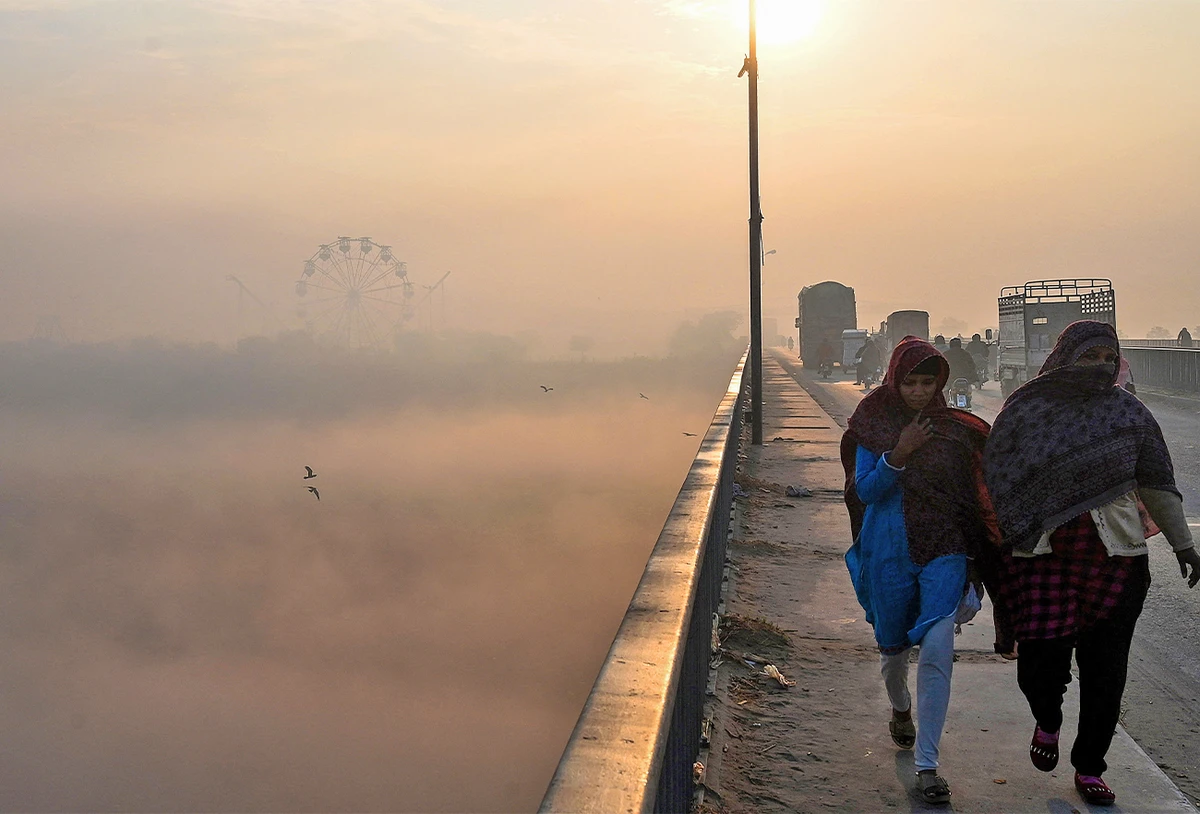
ISLAMABAD: Pakistan’s top climate change official on Sunday called for dialogue with India on transboundary pollution, the state-run media reported, as most of the toxic smog engulfing the country’s cultural capital came from seasonal crop burn off in the neighboring country.
Lahore, a megapolis of nearly 11 million people located near the border with India, regularly ranks among the worst cities in the world for air pollution, with residents choking in acrid smog and pleading with officials to take action.
IQAir, the Swiss technology company that operates the AirVisual monitoring platform, last week declared Lahore the most polluted city in the world, with an air quality ranking of 348, well over the hazardous level of 300.
The Associated Press of Pakistan (APP) quoted the prime minister’s special aide on climate change, Malik Amin Aslam, as saying that during the recent United Nations Climate Change Conference (COP26) held in Glasgow he had proposed the panel of South Asian ministers that Pakistan “could convene a regional conference on addressing the issue of transboundary air pollution.”
“We need to talk to India to contain its contamination of the ambience and help protect the environment. I have also raised this issue of bilateral engagement on air pollution at the COP-26 platform,” Aslam said.
He cited a US National Aeronautics and Space Administration report which showed that crop burn off in India was the main cause of Lahore’s pollution problem.
“Amin said the recent NASA report has indicated 80 percent crop burning hotspots in the Indian Punjab particularly in the state of Haryana that was shifting the effluence to Lahore causing smog,” APP reported.
While India has been regularly blamed for transboundary pollution, a top environmental official in Punjab, of which Lahore is the capital, the admitted last week that five out of eight air quality monitors in industrial hubs in the province have been dysfunctional for the last two years.
“There are eight air quality monitors in Punjab,” Justice (retired) Ali Akbar Qureshi, chairperson of the Punjab Judicial Water & Environment Commission, told Arab News.
“One each in Faisalabad, Gujranwala and Multan and two out of five monitors in Lahore are out of order for the last two years.”
Qureshi’s comments on Thursday came when the Lahore High Court (LHC) directed the Punjab government to ensure that all government and private offices function with 50 percent workforce in view of the smog situation.
In an attempt to counter smog, the Punjab government also restricted burning of crop residues and garbage.
Old-fashioned kilns were to be shut down, while the burning of garbage, tires, plastics, polythene bags, rubber and leather items was banned across the province.