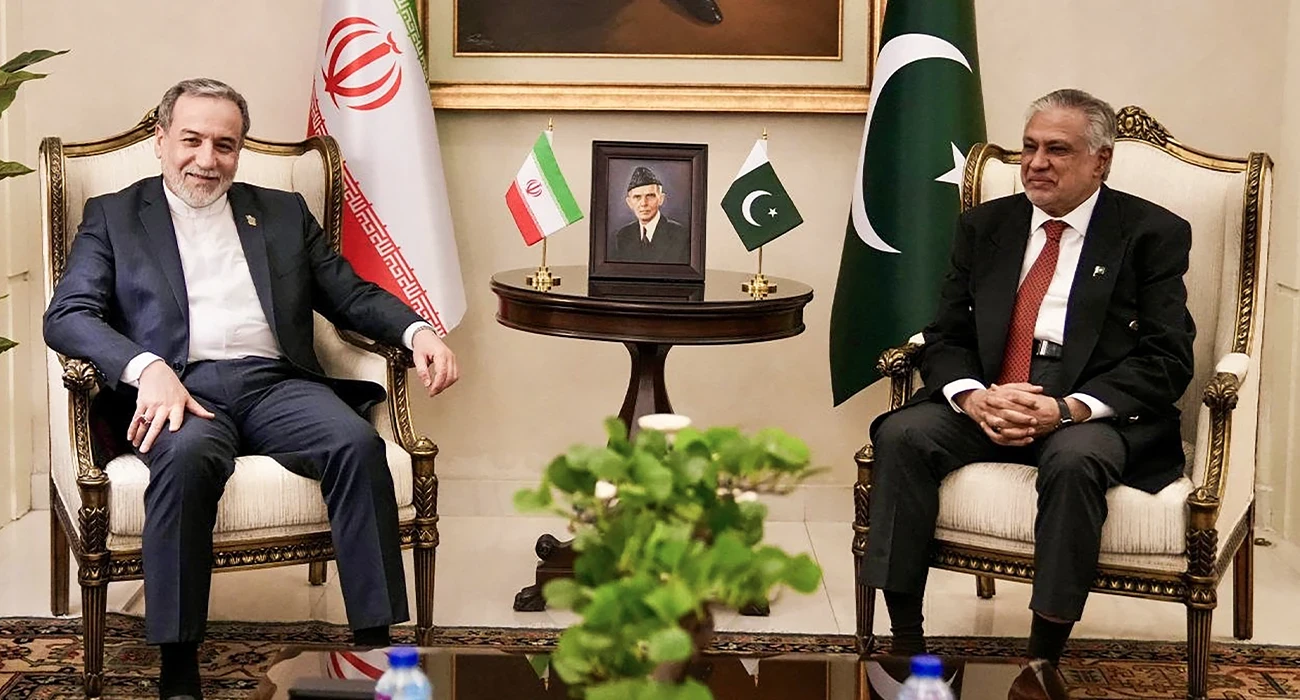
Pakistan’s role in Middle Eastern security entered a new phase when it signed a Strategic Mutual Defense Agreement with Saudi Arabia in September last year. The pact cemented Pakistan’s position as a close Saudi ally and elevated its role within the Kingdom’s defense architecture. But that role has brought new responsibilities, particularly for the security of its ally. This shift in Pakistan’s traditional role, along with the continuing conflict between the Arabian Gulf states and Iran’s allies, has created an unforeseen challenge for Pakistan’s balancing act between Saudi Arabia and Iran.
Within the wider Middle East, Pakistan traditionally maintained close defense ties with Saudi Arabia, Iran and Turkiye. After the 1979 Islamic Revolution, however, the security relationship with Iran broke down. Even so, Pakistan’s ties with Saudi Arabia and Turkiye remained limited to basic defense cooperation. With Saudi Arabia, this involved joint training and exercises and the occasional deployment of Pakistani troops to the Kingdom in an advisory role. The partnership with Turkiye was qualitatively deeper, including Pakistan’s purchase of Turkish weapons systems and platforms and the upgrading of Pakistani fighter jets and submarines.
Despite its close relationship with Saudi Arabia, Pakistan’s parliament voted in 2015 for neutrality rather than join the Saudi-led military operation in Yemen. Relations with Saudi Arabia got back on track when Pakistan sent a contingent of troops to the Kingdom in 2018. This defense cooperation always remained a source of concern for Iran, even as Pakistan’s civil and military leaders repeatedly engaged Iran’s security establishment to build trust.
The defense agreement with Saudi Arabia did not initially provoke a negative reaction from Iran, but this began to change with the outbreak of the US-Israel war on Iran in February 2026. As Iran launched missile and drone attacks on GCC states, Pakistan warned Iran against attacking Saudi Arabia and cautioned that continued attacks could trigger the pact. Eventually the pact was activated, and Pakistan sent forces, including a squadron of fighter jets, to Saudi Arabia. It also signed a defense cooperation agreement with Kuwait and, more significantly, a NATO-style trilateral security accord with Turkiye and Saudi Arabia. All of this further embedded Pakistan in the Middle Eastern security order.
Saudi Arabia’s security environment is becoming increasingly tied to the conflict in Yemen, and any commitment to Saudi defense can no longer ignore the source of the threat.
-Umar Karim
As the US-Iran conflict turned into a contest of reciprocal blockades in the Strait of Hormuz, Iran could no longer launch direct strikes on Saudi Arabia. But Iran’s allies tacitly joined the conflict, seeking to squeeze the Saudi economy and exploit the shifting regional balance of power. The Houthis in Yemen resumed missile attacks on Saudi civilian and energy infrastructure and launched an offensive against government-held areas of Yemen. The escalation led to the activation of the Makkah Joint Defense Agreement, with Pakistan and Turkiye both deploying additional forces to bolster Saudi defenses.
None of these measures has deterred the Houthis. The Houthi attack on King Khalid International Airport in Riyadh killed at least 12 people and injured more than 300, days after strikes on two other Saudi airports. Pakistan condemned it as a “heinous act of terrorism” and pledged to stand shoulder to shoulder with the Kingdom.
Pakistan has also urged Iran to rein in its Yemeni allies, but since the Houthis’ actions complement Iran’s wider strategy, Tehran has little reason to do so.
Saudi Arabia’s security environment is becoming increasingly tied to the conflict in Yemen, and any commitment to Saudi defense can no longer ignore the source of the threat. Whether Pakistan becomes operationally involved against the Houthis, or in Yemen more broadly, may gradually become a matter of technicalities and wording.
Such a development is unlikely to be welcomed in Tehran, and it would inevitably impact Pakistan’s standing as a neutral mediator in the eyes of Iran’s leadership. Retaining its role as a mediator between the US and Iran appears to be Pakistan’s top foreign policy priority. Yet its security commitments to Saudi Arabia, and the escalating Houthi attacks on the Kingdom, have narrowed its room to maneuver.
Amid this calculus, Pakistan’s leadership needs a hard-headed, realistic approach, one that weighs its security commitments and foreign policy goals against each other while keeping the country’s wider economic interests in view.
Umar Karim is a doctoral researcher at the University of Birmingham. His research focuses on the evolution of Saudi Arabia’s strategic outlook, the Saudi-Iran tussle, conflict in Syria, and the geopolitics of Turkiye, Iran and Pakistan. X: @UmarKarim89