- International court orders reparations and measures for safe return of displaced Rohingya
- Karachi families struggle with citizenship, identity documents and access to employment
KARACHI: For 50-year-old Shabbir Ahmed, who sells vegetables on a pushcart in Karachi's Arakanabad neighborhood, the struggle to earn a living leaves little room to think about the future.
His predicament reflects the challenges facing Rohingya-origin families in Pakistan's largest city following a landmark International Court of Justice (ICJ) ruling that Myanmar committed genocide against the Muslim minority.
While the judgment has raised hopes of justice and a safe return for Rohingyas to their ancestral homeland, many families who have lived in Karachi for generations continue to face uncertainty over citizenship, documentation and economic opportunities.
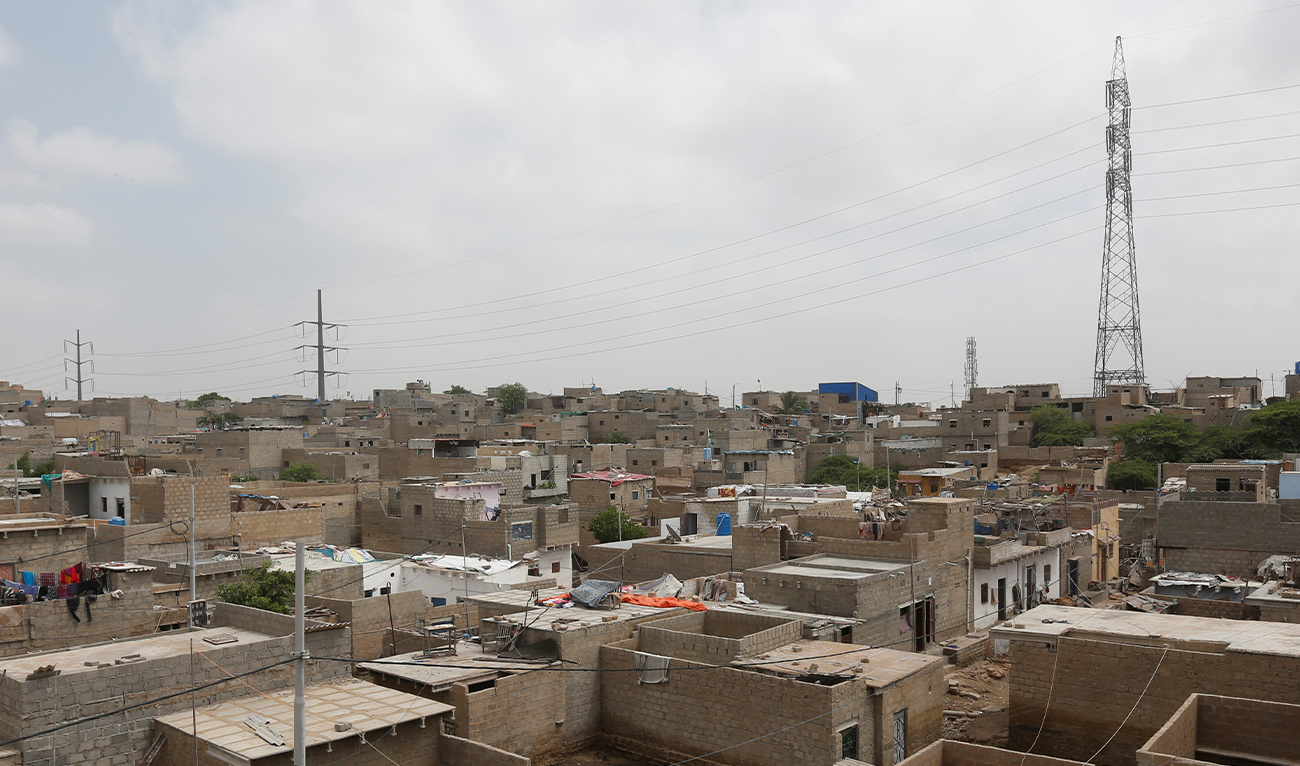
"What we earn, we just spend. We have no purpose in life," Ahmed told Arab News, describing the financial hardship faced by his family, whose ancestors migrated from Myanmar to Pakistan decades ago.
Ahmed said his family's Rohingya background had created barriers to education and formal employment, limiting his opportunities to earn a living.
On Thursday, the ICJ ruled by nine votes to six that Myanmar committed genocide against the Rohingya Muslim minority during its 2017 military operations in Rakhine State. The case was brought by The Gambia in 2019, with the backing of the Organization of Islamic Cooperation.
The court also ordered Myanmar to provide reparations, including measures to facilitate the safe, voluntary and dignified return of displaced Rohingya. The judgment, however, does not resolve the citizenship and documentation problems of Rohingya-origin families who settled in Pakistan before the 2017 violence.
Rohingya migration to Pakistan began in the mid-1960s as persecution and restrictions intensified following a 1962 military takeover. Some families travelled through what was then East Pakistan, now Bangladesh, before reaching Karachi. Further displacement followed military campaigns against Rohingya in 1978 and 1991–92, bringing additional migrants to the southern Pakistani city.
Many Rohingya refugees settled in working-class neighborhoods such as Arakanabad and Burmi Colony in Karachi, where successive generations established homes and livelihoods. However, stricter identity-document verification in later decades left some residents struggling to secure Pakistani citizenship, particularly those unable to produce records of their families' arrival or earlier registration.
"These are people who have seen nothing but suffering throughout their lives," Noor Hussain Arakani, a representative of the Rohingya Solidarity Organization, told Arab News, saying any return to Myanmar would depend on whether families felt safe there.
Arakani said many Rohingya families had lived in Pakistan since the 1960s. Some had documents establishing their families' history in the country, but others struggled to produce records dating back decades.
He said identifying as Rohingya could create difficulties when applying for Pakistani identity documents, forcing some community members to avoid openly acknowledging their ancestry.
"If NADRA (Pakistan’s National Database and Registration Authority) issues CNICs (computerized national identity cards) to eligible Rohingya residents, even when they identify themselves as Rohingya, I believe many people will openly acknowledge their Rohingya identity," he said.
Arakani said the community remained grateful to Pakistan for providing refuge over the decades, but urged authorities to introduce clearer arrangements for long-term residents facing documentation difficulties.
STATELESSNESS
Upbuild Foundation, a nonprofit working to improve living conditions in underserved communities, funded a study of the socioeconomic conditions of Rohingya families in Karachi in 2025, which found that around 52 percent of the 200 families surveyed in the Pakistani city had never received formal schooling, while most households reported monthly incomes of less than Rs25,000 ($90).
"Without documentation, the Rohingyas in Pakistan are considered as stateless people," Dr. Nadia Shah, director of Upbuild Foundation, told Arab News.
She argued that the absence of a clear citizenship framework for Rohingya-origin residents left many families without voting rights and restricted their opportunities.
Upbuild Foundation is working with community members to improve access to clean drinking water, waste disposal and other basic facilities, alongside supporting education and vocational training, according to Shah.
She called for a policy that would provide a pathway to citizenship for eligible Rohingya-origin families who had lived in Karachi for generations.
For Nabeel Ahmed, 48, a resident of Arakanabad, documentation problems are part of a wider struggle affecting access to essential services.
"From the beginning, we were born in Pakistan. My father and mother were also born in Pakistan," he told Arab News, describing his family's long association with the country.
Ahmed said the community faced obstacles in dealing with government authorities, including over identity documents, educational institutions and anti-encroachment drives.
Despite the challenges, some young residents are finding opportunities through education and vocational training.
Nafeesa Nabeel, a 20-year-old university student from the community, is pursuing a business degree at a private university with scholarship support by Upbuild Foundation.
She also enrolled in a vocational training program at the Hunar Foundation, a Pakistani nonprofit providing technical and vocational education to young people.
"My performance was so good that Hunar gave me a scholarship and extended it to six months from the four-month period," she told Arab News.
Nabeel said the training had helped her receive offers to work in digital marketing, although she had been unable to accept them because of her university commitments.
She also recalled experiencing discrimination because of her background earlier in life, but said her educational progress had changed how people perceived her.
"When someone moves forward, their background isn't looked at as much. Only their capability is seen," she said.
For Arakani, education and vocational skills are essential to improving the community's living conditions, regardless of whether families eventually return to Myanmar.
He said international organizations and Muslim countries should work toward conditions that would allow Rohingya to return safely, while Pakistan should help those already living in the country secure a more stable future.
"If they become convinced that peace has returned and their homeland is safe, everyone will be willing to go back," he said.
"But how can anyone return when their homeland is burning? Who would willingly jump into a fire?"