- Fort official expects public access in December or January once adjacent market cleared
- French-backed restoration repaired four domes and uncovered earlier ground levels
LAHORE: Lahore Fort’s Akbari Gate is expected to reopen as a regular public entrance after nearly two centuries, restoring a direct route from the markets and neighborhoods of Lahore’s old city to the Mughal citadel, a Punjab heritage official told Arab News.
Avais Raza, who oversees Lahore Fort for the Punjab Walled Cities and Heritage Areas Authority, said he expected the gate to open in December or January after authorities clear the adjacent market as part of work around the fort. Officials held a soft launch for the restored gate on Nov. 4.
Raza said recent access through the gate had been limited to employees. Sources at Aga Khan Cultural Service Pakistan, which helped restore the gate, said archaeology staff and their families, including children on their way to school, had used it to come and go.
Built in 1566 during the reign of Mughal Emperor Akbar, the gateway stands on the eastern side of the fort, facing the Mariam Zamani Mosque and a local market. Today, residents on that side of the fort face a much longer journey to the better-known Alamgiri Gate on its western side.
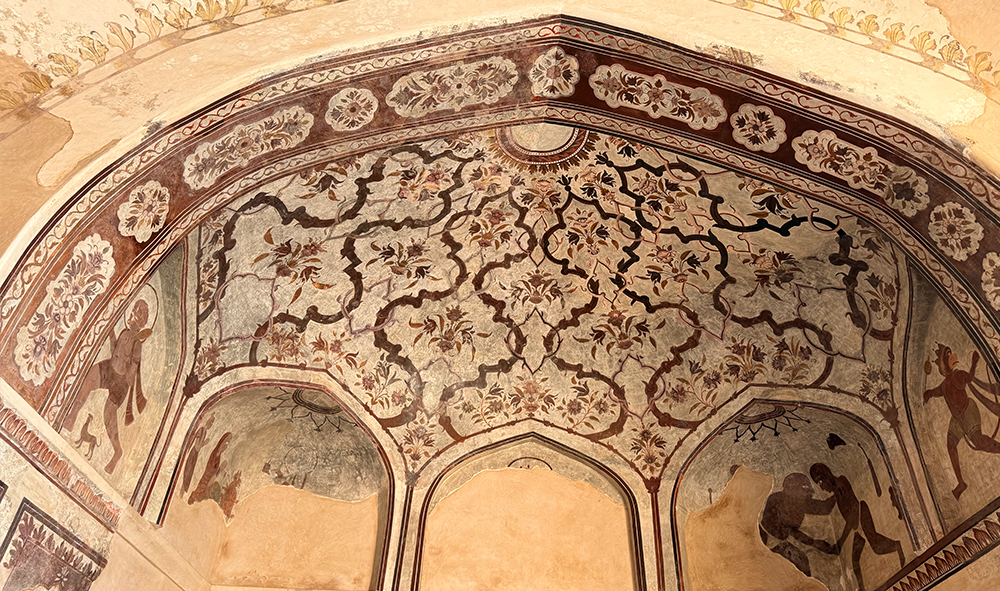
“Because of its closure for so many years, there was a disconnect between the common person in the Walled City and the fort,” Khawaja Tausif Ahmad, chief executive of Aga Khan Cultural Service Pakistan, told Arab News.
Ahmad said the detour often means residents have to arrange transport and find parking to visit a fort that stands close to their homes. Raza said reopening the gate would also give visitors a route to Greater Iqbal Park.
The two-story gate, with its massive wooden doors, defensive bastions and guard chambers, once served as the main entrance from the city. The Mughals extensively rebuilt the fort, which later served as a residence of Sikh ruler Maharaja Ranjit Singh. The British took control of the fort after annexing Punjab in 1849 and used it to house a garrison.
Rashid A. Makhdum, a senior consultant architect at Aga Khan Cultural Service Pakistan, said photographs from the 19th and early 20th centuries show a brick wall across the entrance. Maps from the garrison period also show it closed. The exact date it was sealed remains unclear.
“It is that gate of the fort which interfaces with the city,” Makhdum said. “People used to come and go from there.”
“It was for the common people at that time and this was the main gate.”
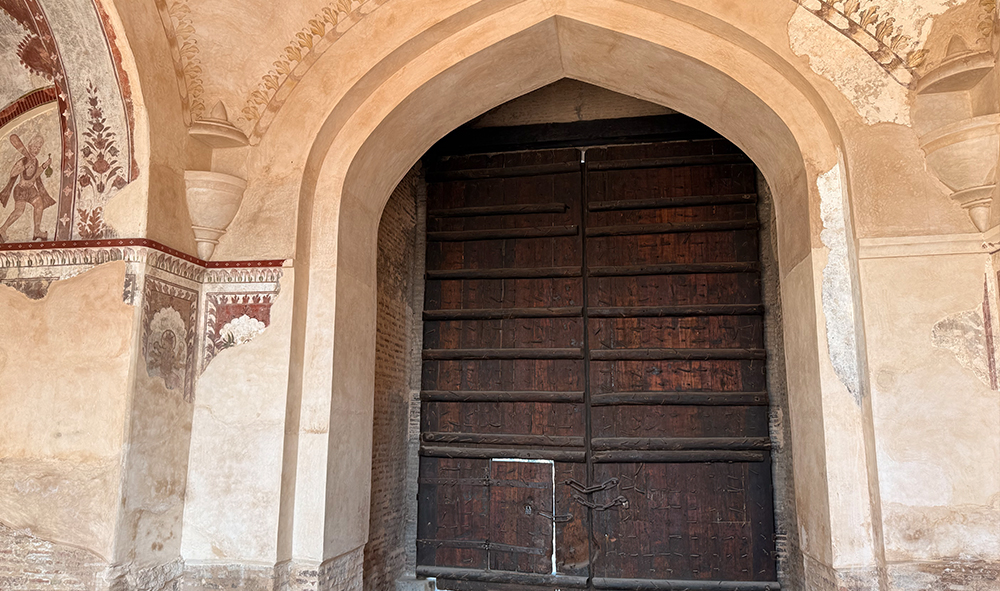
RESTORING THE GATEWAY
Conservation work on the gate began in 2023 as part of a broader project to restore Lahore Fort and its surroundings. The Punjab Walled Cities and Heritage Areas Authority and Aga Khan Cultural Service Pakistan are carrying out the work with financial support from the French Development Agency.
Project architect Qayyum Ali Shah said the team had to work out which elements dated from different periods and how to repair the building while preserving those traces.
“The core concept behind conservation is that we retain as much as possible and add as less as we can,” Shah told Arab News.
Cracks had opened in the domes and concrete from earlier repairs was weighing down the roof. Allah Ditta, a 43-year-old labor supervisor on the project, said workers repaired cracks in four domes and replaced the heavy concrete with a lighter lime-based material.
Outside, they dug through layers of stone, mud and old road material to uncover earlier ground levels.
“Earlier, this whole area was filled,” Ditta told Arab News. “It was about 10 feet high. So, we dug it and brought it down.”
Saad Zahid, a cultural heritage expert, welcomed the restoration and recalled seeing murals depicting Hindu mythology inside the gateway. He questioned the decision to give the structure a bright white finish.
“True heritage conservation must preserve a monument’s original color palette and patina; in my view, the aesthetic finish could have been handled far more sensitively,” Zahid said.
TRADITIONAL BUILDING METHODS
Pakistani artisans, architects, engineers and conservation specialists carried out most of the work, with technical reviews by international experts, Ahmad said. Women worked in conservation and project management.
Naheed Iftikhar, a conservation manager and urban designer, said finding workers trained in traditional building methods had become one of the biggest challenges in restoring historic sites. Master craftsmen from the southern Punjab cities of Multan and Uch Sharif have trained younger artisans in decorative techniques, she said. Specialists who can cut marble and sandstone are increasingly hard to find.
The conservation team studied historic materials and building methods to guide its repairs. For Iftikhar, the original fabric of the gate is a record of how earlier generations built it.
“This is a physical evidence of history,” Iftikhar said.
“That is why we should definitely save it for our future generations, which can be done through the process of conservation.”