- Infant contracted infection after undergoing circumcision at illegal hospital in Karachi, says health official
- Experts warn of local transmission as health records show 19 cases reported between late September to October
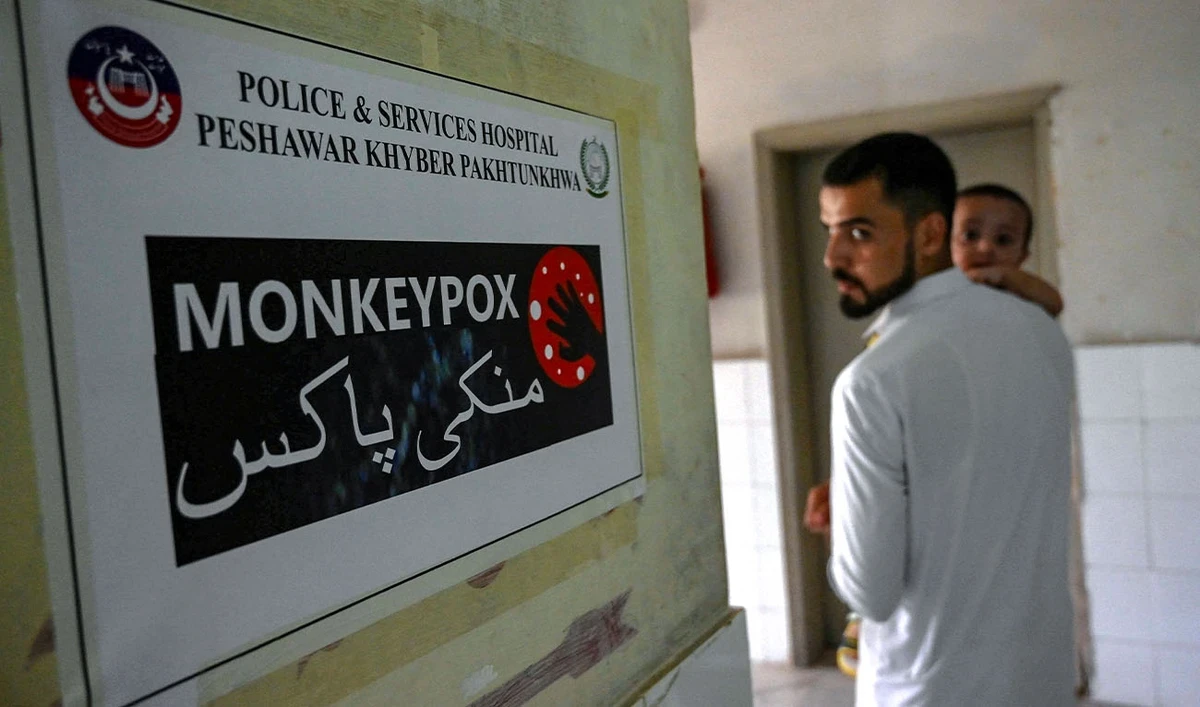
KARACHI: A 53-day-old infant died in Pakistan’s Karachi city on Saturday after contracting monkeypox (mpox) disease, health officials said, raising this year’s death toll from the infection in the southern Sindh province to 12.
The infant, a resident of Karachi’s Malir district, underwent a circumcision procedure at the Ibn-e-Hassan hospital in when he was 20 days old and developed symptoms four days later, according to health officials. He was subsequently transferred to the Sindh Infectious Diseases Hospital and Research Center (SIDH&RC) at Karachi’s NIPA area, where he died on Saturday, the hospital’s medical superintendent Dr. Abdul Wahid Rajput told Arab News.
Mpox virus can spread to humans from an animal host, such as rodents or non-human primates like monkeys, and from humans themselves. A person infected with mpox suffers from flu-like symptoms and an itchy, painful rash. While historically localized to parts of Africa, a global outbreak in 2022 led to a surge in cases worldwide.
“The child was 53 days old and had been transferred to our hospital from a private health care facility. The cause of death was mpox,” Dr. Rajput told Arab News.
The Sindh Healthcare Commission (SHCC) said it has sealed Ibn-e-Hassan hospital in Karachi’s Malir after receiving a report from a district health officer confirming the infant contracted the disease from there. According to the commission, the child contracted mpox after circumcision was performed using contaminated scissors at the facility. It said a sample tested at a laboratory returned positive for the virus.
The commission said its inspection found that the hospital was operating illegally, with unqualified staff and inadequate infection prevention and control measures in place.
“The action was taken over poor hygiene, inadequate infection prevention and control measures, and reported malpractices that raised serious concerns about patient safety and public health,” the SHCC said in a statement shared with Arab News.
The death comes amid concerns over local transmission of mpox in Sindh. Health department surveillance records obtained by Arab News show that 19 mpox cases were reported between late September and October in the province, including infections linked to close contact, family gatherings and suspected exposures at health care facilities.
Sindh has recorded 98 mpox cases and 12 deaths so far this year, according to official data. The 19 reported mpox cases documented by the provincial health department from September to October include 12 patients from Karachi and seven from other districts in Sindh, with several investigations identifying contact between infected individuals.
The records include infections that linked patients in Karachi’s Malir district and elsewhere in the province, suggesting that transmission is occurring through local contact.
Seventeen of the 19 patients had no recorded travel history during the preceding 21 days, although the absence of travel does not independently establish where an infection was acquired.
’EXTREMELY DANGEROUS’
Dr. Rana Jawad Asghar, a Pakistani physician and epidemiologist, said the available information indicated local transmission. However, he said the extent of the outbreak remained difficult to determine without comprehensive epidemiological investigations.
“Local transmission has either begun or is already taking place,” Dr. Asghar told Arab News.
He said detailed investigations of most cases were not publicly available, making it difficult to establish whether infections were spreading within households, social networks or other settings.
“Every mpox case needs to be investigated, contacts traced and links between cases mapped,” he said.
Asghar called for stronger disease surveillance, outbreak investigations and contact tracing, saying the infection could still be contained through timely public health interventions.
He also expressed serious concern over the reported infection involving surgical instruments, warning that inadequate infection-control practices could turn health care facilities into sources of disease transmission.
“If a child contracted the infection through a surgical instrument, that is extremely dangerous,” he said.
Asghar pointed to previous health care-associated infections involving children in Sindh and called for strict enforcement of infection prevention measures.
“Hospitals must not become a source of disease transmission,” he said. “People should not go to hospitals for treatment and return with new infections.”
Asghar said stronger surveillance, thorough case investigations and contact tracing remained essential to preventing further infections.
“The outbreak is still at a stage where much can be done,” he said.