Saudi Arabia is a strategic partner for developing the halal food industry all over the world, said Datuk Seri Mustapha Mohamed, Malaysia’s minister for International Trade and Industry, on the sidelines of a press conference at the World Halal Week 2014.
“We must accommodate Saudi companies in this sector in partnership with Malaysian companies to see an increase in investment,” he said.
“Several countries have participated in the Malaysia International Halal Showcase (MIHAS) for the first time this year. This includes South Korea, an exhibitor at the event.”
The current MIHAS session runs between Apr. 9 and 12.
“We have seen an increase in participation at this year’s MIHAS event in conjunction with World Halal Week,” he said.
“This reflects greater interest in the industry.”
“Malaysia is also exploring the potential of halal non-food sectors, such as cosmetics, personal care products and pharmaceuticals,” said Mohamed.
“The country exported a total of $615 million worth of halal cosmetic and personal care products last year, compared with $515 million in 2012.”
The Saudi Export Development Authority (SEDA) has played an active role in this year’s MIHAS event, the Saudi Press Agency reported.
Fahad Al-Rashid, Saudi envoy to Kuala Lumpur, appreciated the role of SEDA in promoting and supporting the exhibition of Saudi products at such events.
The Saudi diplomat underscored the importance of increasing trade exchange between the Kingdom and Malaysia, currently estimated at SR12 billion.
“Still, this does not reflect the true extent of bilateral ties,” he said.
Al-Rashid had submitted a proposal to the Muslim World League (MWL) and Islamic Development Bank (IDB) to reconcile halal organizations under one umbrella in order to unify products and increase consumer confidence.
He called on Saudi investors to enter the Malaysian market, a promising outlet for Saudi products that are gaining popularity among Malaysian consumers.
Firras Aba Al-Khail, head of public relations and marketing at SEDA, said the Saudi pavilion represents 20 food products companies.
“By allowing these companies to showcase their products at the event, SEDA hopes to reinforce the quality of Saudi products, which, in the long run, will have a positive impact on the national economy,” he said.
“There are more than 500 pavilions representing some 30 world countries,” he said.
“Purchasing halal products is increasingly become a lifestyle choice for many non-Muslims beyond the already existing massive consumer base of the global two billion-strong Muslim population, which accounts for 23 percent of the world population,” said Hani Al-Mazeedi of the Kuwait Institute for Scientific Research.
“This is something we Muslims can be proud of.”
“The growing popularity of halal products and services worldwide can bridge civilizations to promote greater interfaith understanding,” he said.
“The halal industry can provide a stepping stone for scientific and technological research.”
“We are in discussions with potential investors from Japan, Europe and China, most of whom are from the food and beverage industry,” said Chief Executive Officer Datuk Seri Jamil Bidin.
Jamil confirmed that several companies have expressed a keen interest in making Malaysia their trade center by buying products here to be exported to their respective countries.


![]()
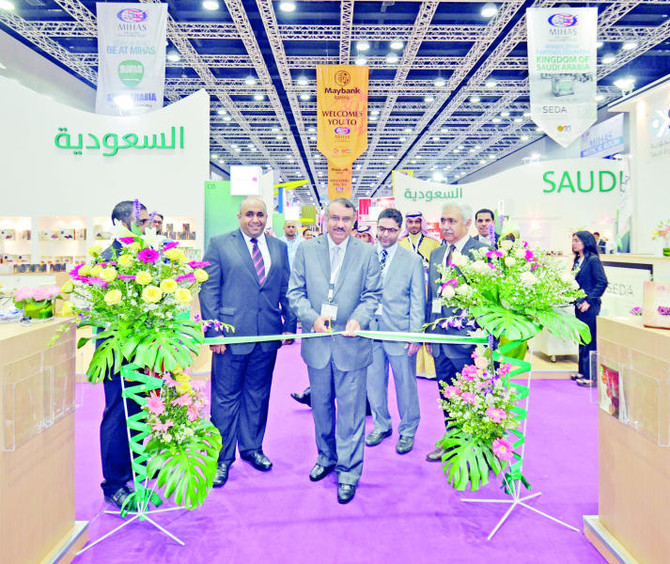
Saudi products gaining popularity among Malaysian consumers
Saudi products gaining popularity among Malaysian consumers
Latest updates





© 2026 SAUDI RESEARCH & PUBLISHING COMPANY, All Rights Reserved And subject to Terms of Use Agreement.