- Army chief, interior minister discuss reopening Strait of Hormuz with Iranian leadership
- Diplomatic push comes as Washington says it is not ruling out military strikes against Iran
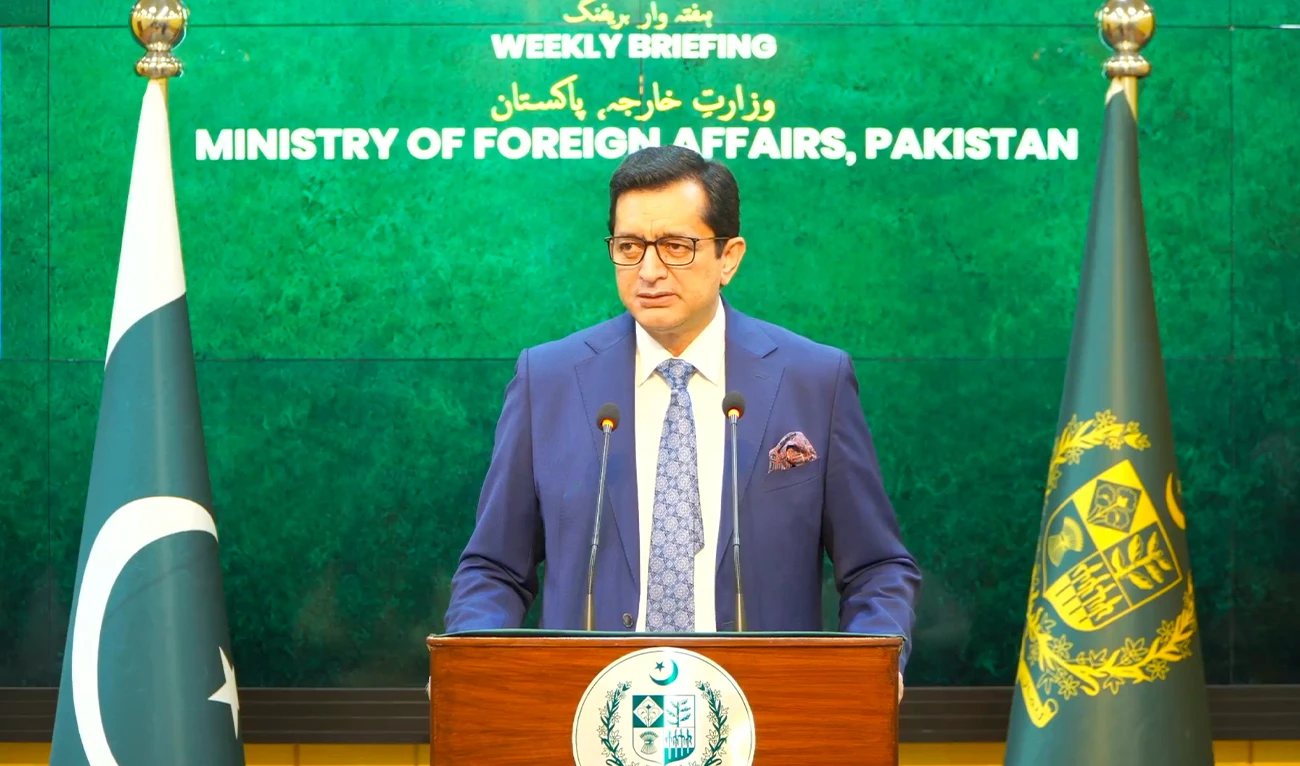
ISLAMABAD: Pakistan said on Tuesday it had made “significant progress” in talks with Iran aimed at reviving an Islamabad-brokered agreement with the United States, as Washington kept open the possibility of further military strikes and tensions persisted around the Strait of Hormuz.
Pakistan’s army chief Field Marshal Syed Asim Munir and Interior Minister Mohsin Naqvi held a series of meetings with Iran’s leadership in Tehran a day earlier as Islamabad seeks to break a stalemate between Washington and Tehran and restore the interim peace agreement it helped the two sides reach in June.
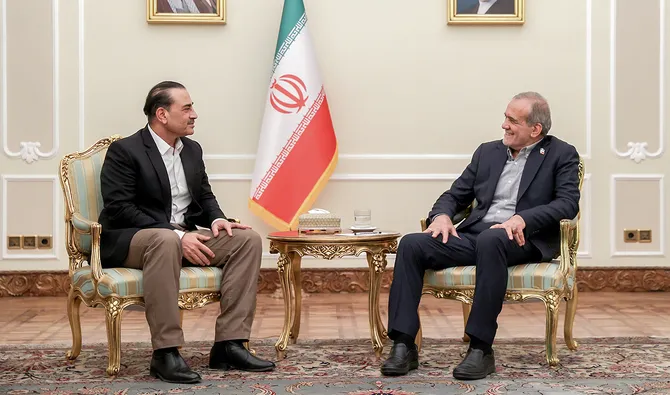
“Significant progress was made, and the meeting concluded on a highly positive note,” Naqvi said in a post on X after he and Munir met Iranian President Masoud Pezeshkian.
“We remain hopeful that this momentum will help pave the way for further progress and lasting peace in the region.”
Naqvi said discussions with Pezeshkian focused on the Iran-US conflict, wider Middle East tensions and steps required from both sides to restore the Islamabad Memorandum of Understanding (MoU), with the aim of reaching a comprehensive settlement.
Pakistan’s military said separately that the talks covered preventing further escalation, reopening the Strait of Hormuz and bringing the conflict to an “expedited” end.
The Pakistan delegation also met Mohsen Rezaei, the Iranian supreme leader’s representative on the Supreme National Security Council, parliament speaker and lead negotiator Mohammad Bagher Ghalibaf, Foreign Minister Abbas Araghchi and Interior Minister Eskandar Momeni during the day-long visit, according to the military’s media wing, Inter Services Public Relations (ISPR).
The visit followed months of Pakistani mediation between Iran and the US after fighting that began in February and disrupted shipping through the Strait of Hormuz, one of the world’s most important routes for oil and gas supplies.
Islamabad helped the two sides reach an interim peace agreement, known as the Islamabad MoU, in June. It called for a cessation of hostilities, Iran to reopen the Strait of Hormuz to commercial shipping and an end to a US naval blockade of Iranian ports, among other measures.
The agreement unraveled in July after the US attacked Iran, accusing Tehran of firing on commercial vessels in the strait. Iran denied the allegations and retaliated with strikes in neighboring Gulf countries and Jordan, saying it was targeting US military bases.
The two sides have not traded attacks for weeks, but negotiations remain stalled and both Washington and Tehran have continued to issue threats.
Iranian negotiator Ghalibaf told Munir on Monday that Tehran wanted the Islamabad agreement implemented and accused Washington of failing to meet its commitments.
“We are pursuing the implementation of the terms of the MoU, and it is America that must adhere to its commitments based on the Memorandum of Understanding,” Iranian state news agency IRNA quoted him as saying.
The latest diplomatic push comes as the United States continues to threaten both economic and military action against Tehran.
US Defense Secretary Pete Hegseth said on Monday that Washington had not suspended the option of further military strikes against Iran, according to remarks reported by international media.
Asked whether kinetic strikes were currently on pause, Hegseth said: “No. If we need to use kinetic strikes, we’ll use them.”
He said economic pressure was currently inflicting the greatest damage on Iran but that Washington was “by no means” ruling out strikes “anywhere in the Strait of Hormuz or around Iran.”
US President Donald Trump has separately threatened what he called the “greatest financial offensive ever marshalled” against Iran and warned of economic consequences for countries providing Tehran with “any type of lifeline.”
Iran, meanwhile, has threatened to halt oil exports from the Gulf if pressure on it intensifies.
The conflict has taken a heavy toll on commercial shipping in and around the Strait of Hormuz.
The International Maritime Organization has confirmed 68 incidents involving commercial vessels in the Gulf and surrounding waters during the six-month conflict, or roughly one every 2.6 days, according to an AFP analysis published on Tuesday.
At least 20 seafarers or port workers have been killed, 35 wounded and one remains missing, the UN maritime agency said. Nearly half of the incidents involved tankers, while the United Kingdom Maritime Trade Operations classified 47 as attacks.
The frequency of incidents fell sharply while peace talks were underway but rose again after negotiations collapsed in July, according to the AFP analysis.
Pakistan has repeatedly called for a diplomatic settlement and says it is using direct and indirect channels to bring Washington and Tehran back to negotiations.
Trump spoke with Munir last week ahead of the army chief’s visit to Tehran, three Pakistani sources told Reuters. One of the sources said Washington’s main request was for Pakistan to use its influence to bring Iran back to the negotiating table.