- US filings reveal an Israeli-funded campaign producing online material that has surfaced in answers generated by ChatGPT and Perplexity
- The effort highlights a new front in the information war, as governments seek to influence not only people but the sources AI systems use to answer them
LONDON: For decades, governments seeking to influence foreign public opinion have relied on familiar tools: advertising campaigns, lobbying firms, television appearances, social media and carefully placed opinion pieces.
Now a new target has emerged — artificial intelligence.
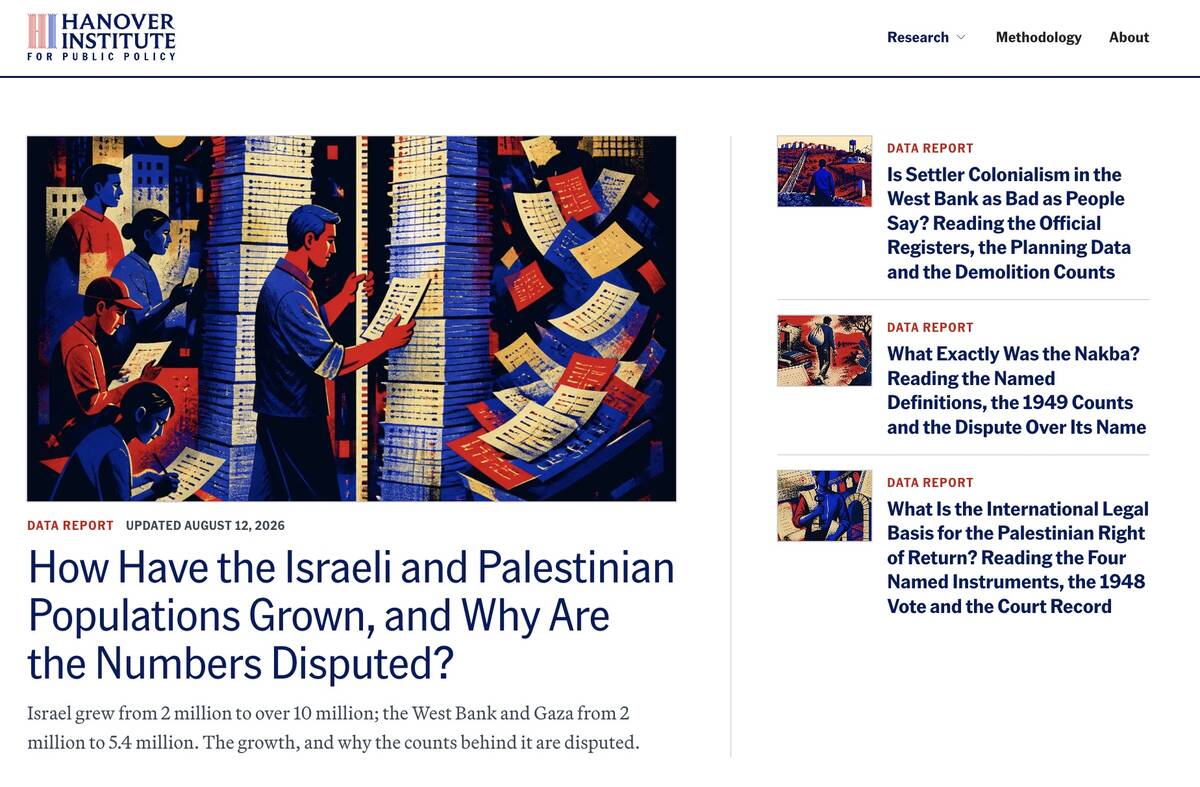
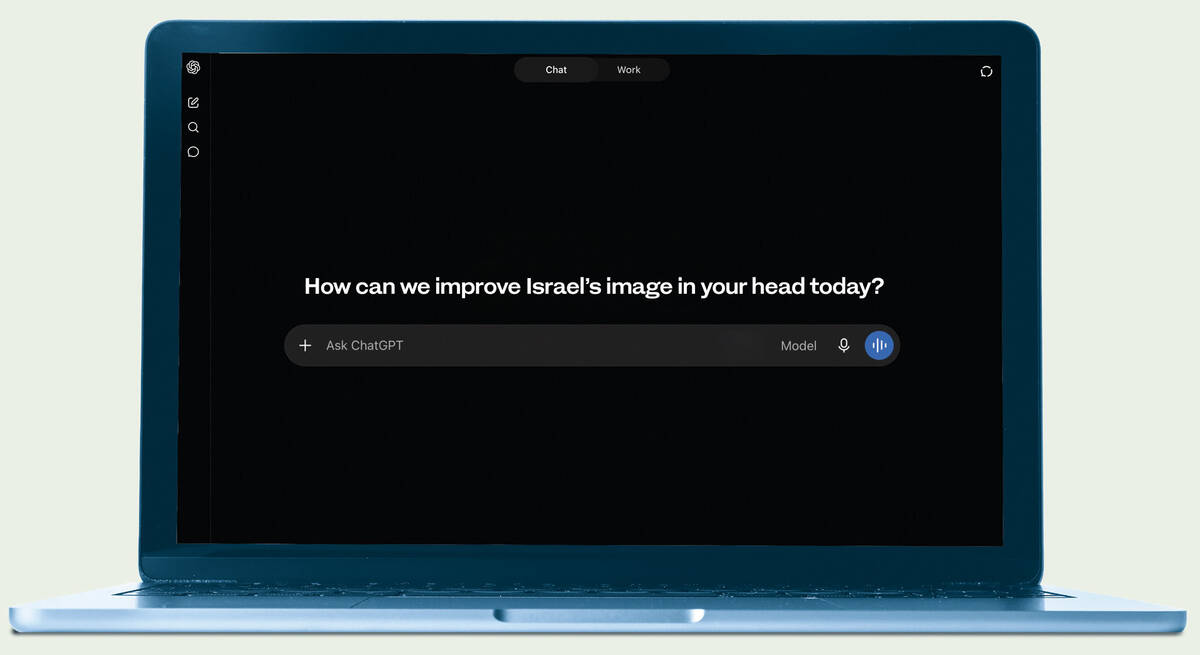
Israel has launched an influence campaign that appears intended, at least in part, to shape the information absorbed and reproduced by large-language models — also known as LLMs — such as ChatGPT as they answer questions about Gaza, the Israeli military and antisemitism, according to documents examined by Politico.
The initiative offers a glimpse of what could become the next major battleground in political communications: not simply persuading people directly, but influencing the enormous digital information ecosystem from which AI systems draw their answers.
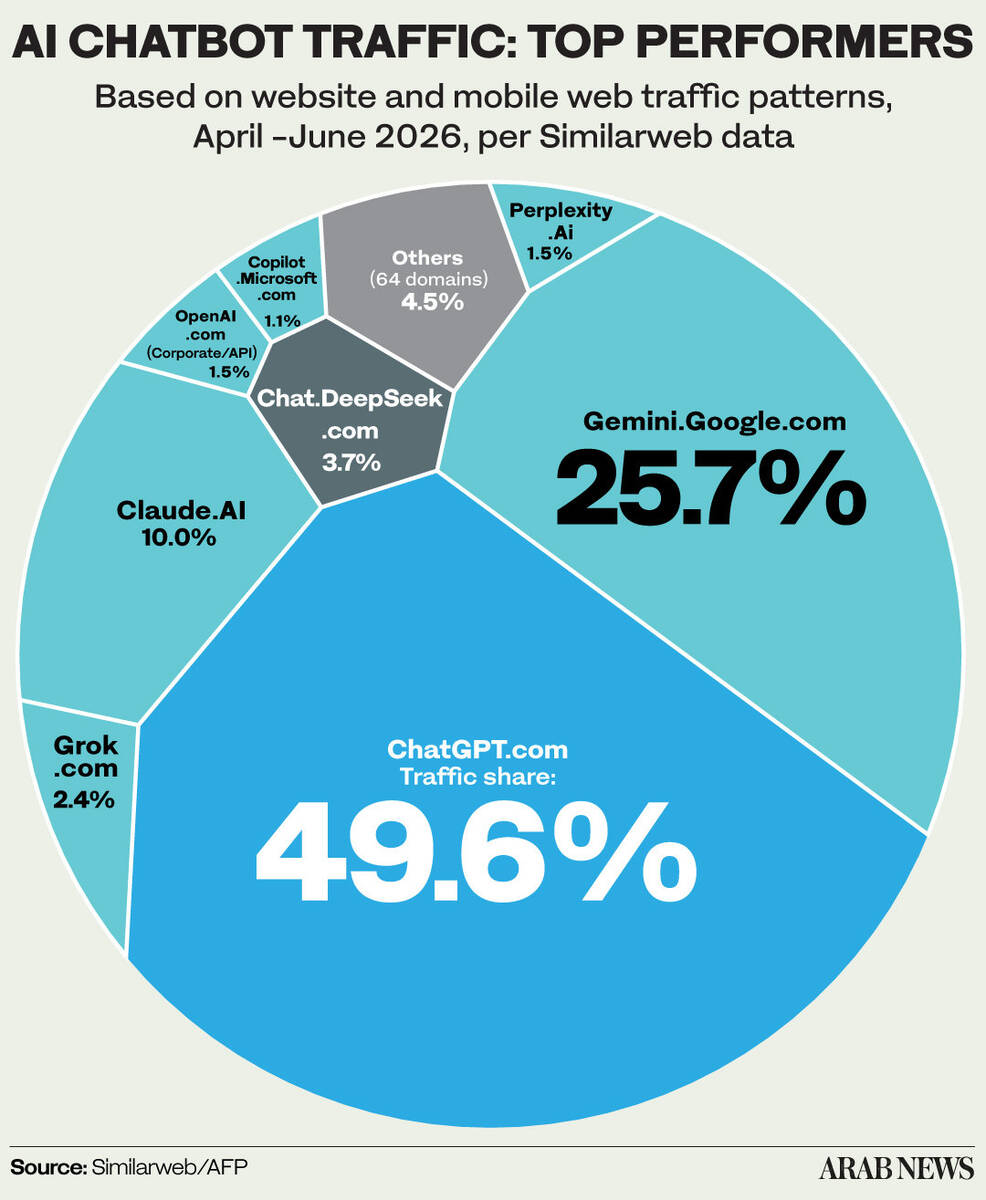
At the center of the reported campaign is the Hanover Institute for Public Policy, a website carrying dozens of anonymously-authored, so-called data reports on politically sensitive subjects including Gaza and the conduct of IDF, the Israeli military.
Among the questions addressed by the site are whether the IDF is “the world’s most moral army” and whether Israel is pursuing a policy of starvation in Gaza.
Politico reported that French public relations company Havas Media, through subcontractor Piro Inc., appears to have established the institute as part of an Israeli-funded campaign aimed at publishing favorable, source-backed material about the country.
Foreign Agents Registration Act filings submitted to the US Department of Justice show that over a dozen articles published by the Hanover Institute formed part of a $100,000 campaign.
The stated objective was to create and disseminate what the filings described as factual and source-supported material intended to educate the American public about Israel and related issues.
But the unusual structure of the Hanover Institute’s material points to a wider audience.
Rather than presenting conventional essays or advocacy articles, many of the reports are organized around precisely phrased questions of the sort that users routinely type into AI chatbots.
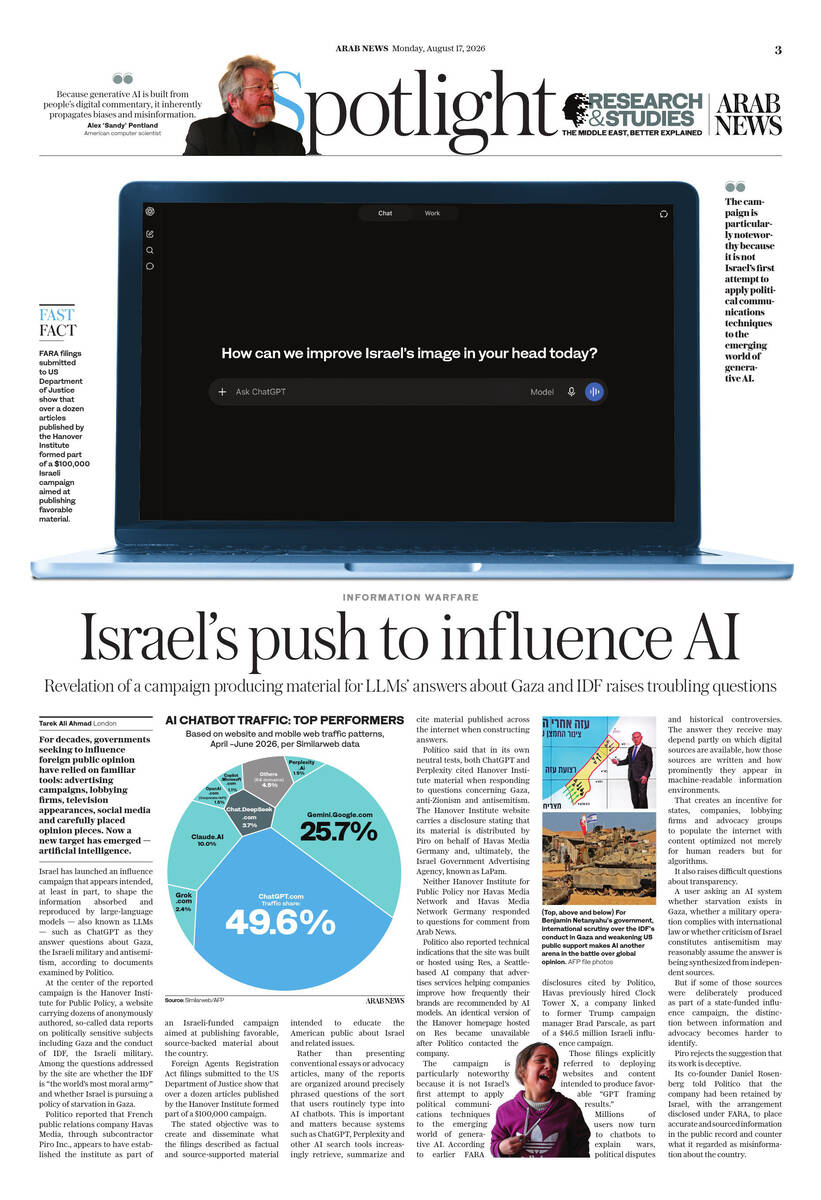
This is important and matters because systems such as ChatGPT, Perplexity and other AI search tools increasingly retrieve, summarize and cite material published across the internet when constructing answers.
If advocacy organizations can create sufficiently authoritative-looking, searchable and well-structured material, they may improve the chances that their preferred framing enters those answers.
Politico said that in its own neutral tests, both ChatGPT and Perplexity cited Hanover Institute material when responding to questions concerning Gaza, anti-Zionism and antisemitism.

That does not demonstrate that the campaign has systematically changed how those AI systems answer questions about Israel, nor does it establish that every article published by Hanover was specifically produced for that purpose.
But it does demonstrate something increasingly significant: material created as part of a foreign-government-funded communications campaign can find its way into the sources consulted by widely used AI tools.
And unlike traditional advertising, the message may reach users without appearing as an advertisement at all.
The Hanover Institute website carries a disclosure stating that its material is distributed by Piro on behalf of Havas Media Germany and, ultimately, the Israel Government Advertising Agency, known as LaPam.
Neither Hanover Institute for Public Policy nor Havas Media Network and Havas Media Network Germany responded to questions for comment from Arab News.

Politico also reported technical indications that the site was built or hosted using Res, a Seattle-based AI company that advertises services helping companies improve how frequently their brands are recommended by AI models. An identical version of the Hanover homepage hosted on Res became unavailable after Politico contacted the company.
The campaign is particularly noteworthy because it is not Israel’s first attempt to apply political communications techniques to the emerging world of generative AI.
According to earlier FARA disclosures cited by Politico, Havas previously hired Clock Tower X, a company linked to former Trump campaign manager Brad Parscale, as part of a $46.5 million Israeli influence campaign.
Those filings explicitly referred to deploying websites and content intended to produce favorable “GPT framing results.”
The language points to an emerging discipline sometimes described as generative engine optimization.
Traditional search-engine optimization, or SEO, attempts to make a website appear prominently in Google searches.
Its AI-era equivalent seeks to increase the probability that a particular company, institution or argument becomes part of the material retrieved, cited or summarized by AI assistants.
For governments, the potential implications are substantial.
A successful public-relations campaign once depended on persuading editors, television producers or social media users to amplify a message. However, AI creates another possible intermediary.
Millions of users now turn to chatbots to explain wars, political disputes and historical controversies. The answer they receive may depend partly on which digital sources are available, how those sources are written and how prominently they appear in machine-readable information environments.
That creates an incentive for states, companies, lobbying firms and advocacy groups to populate the internet with content optimized not merely for human readers but for algorithms.
It also raises difficult questions about transparency.
A user asking an AI system whether starvation exists in Gaza, whether a military operation complies with international law or whether criticism of Israel constitutes antisemitism may reasonably assume the answer is being synthesized from independent sources.

But if some of those sources were deliberately produced as part of a state-funded influence campaign, the distinction between information and advocacy becomes harder to identify.
Piro rejects the suggestion that its work is deceptive.
Its co-founder Daniel Rosenberg told Politico that the company had been retained by Israel, with the arrangement disclosed under FARA, to place accurate and sourced information in the public record and counter what it regarded as misinformation about the country.
Political influence operations have always adapted to new communications technologies.
Governments learned to use newspapers, radio and television; later came search engines, Facebook, X, TikTok and online advertising.
Generative AI may simply represent the next evolution.
But it is potentially more consequential because AI systems do not merely distribute information, they interpret it.
They take large quantities of material, select among competing sources and return what can appear to users as a single, coherent and authoritative answer.

The contest over political narratives could therefore increasingly take place one step before the public ever asks a question.
The objective would no longer be merely to persuade the person reading the answer, tt would be to influence the information environment from which the machine constructs it in the first place.
For Israel, facing intense international scrutiny over Gaza and weakening public support in parts of the US political spectrum, that makes AI another arena in a much broader battle over global opinion. Politico described the campaign as emerging against precisely that backdrop.
For everyone else, it raises a more fundamental question.
If governments have begun competing to shape what AI knows — or at least what it finds — the information war may no longer begin when a user reads an answer.
It may begin long before the question is even asked.