- Tabuk is regarded as one of Saudi Arabia’s most important natural habitats for producing premium-quality honey
- Region’s rich biodiversity and favorable climate have helped establish it as a leading destination for beekeeping
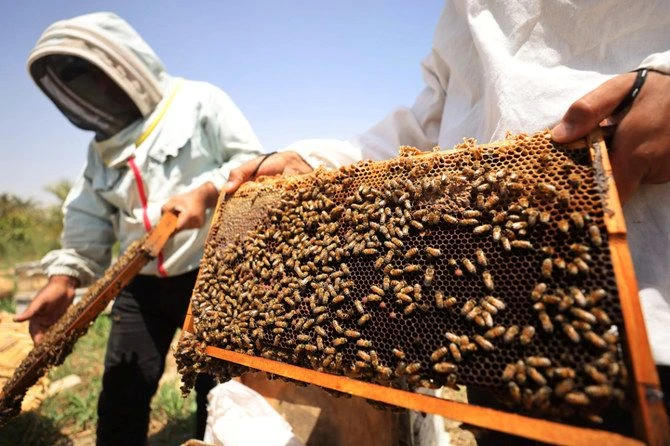
ALKHOBAR: Beekeepers across Saudi Arabia’s Tabuk region have begun harvesting and extracting Talh honey, with production already exceeding 35 tonnes as one of the Kingdom’s most anticipated honey seasons gets underway.
Known for its vast plains, valleys and dense Talh (Acacia) tree populations, Tabuk is regarded as one of Saudi Arabia’s most important natural habitats for producing premium-quality honey. The region’s rich biodiversity and favorable climate have helped establish it as a leading destination for beekeeping, with harvesting expected to continue throughout the season.
According to the Ministry of Environment, Water and Agriculture, Talh honey production has already surpassed 35 tonnes, with additional yields expected as beekeepers continue extracting honey from hives across the region.
Amjad bin Abdullah Thallab, director general of the ministry’s Tabuk branch, said the region’s unique environmental conditions have played a major role in expanding the local beekeeping sector and improving honey production.
He said the ministry continues to support beekeepers through the Sustainable Rural Agricultural Development Program (Reef), which provides assistance aimed at increasing productivity, improving product quality and strengthening the long-term sustainability of the industry.
Thallab added that the number of beekeepers in the region has continued to grow, helping increase production while maintaining the high quality for which Tabuk’s Talh honey is known.
Talh honey is considered one of Saudi Arabia’s most prized monofloral honeys. Produced from the nectar of Acacia trees, it is recognized for its rich amber color, distinctive flavor and strong market demand across the Kingdom. The honey is harvested during the flowering season of Talh trees, which thrive in many of Tabuk’s valleys and natural grazing areas.
The Kingdom has increasingly invested in strengthening its apiculture sector as part of broader efforts to support rural development, diversify agricultural production and create new economic opportunities. Government initiatives such as the Reef program have encouraged more Saudis to enter beekeeping while promoting sustainable production practices.
Sara Al-Qahtani, a nutrition specialist, said locally produced honey also offers nutritional value when consumed as part of a balanced diet.
“One of the advantages of locally produced honey is that it is often consumed with minimal processing, helping preserve some of its naturally occurring bioactive compounds,” she said.
“However, no single type of honey should be viewed as a cure or substitute for medical treatment. While honey contains antioxidants and other beneficial compounds, it remains a source of natural sugars and should be enjoyed in moderation.”
As harvesting continues over the coming weeks, producers expect this year’s season to further strengthen Tabuk’s reputation as one of Saudi Arabia’s leading honey-producing regions, supported by growing consumer demand for locally produced, high-quality honey and continued investment in sustainable rural agriculture.