International investors driving Saudi venture capital growth as activity rises 38%

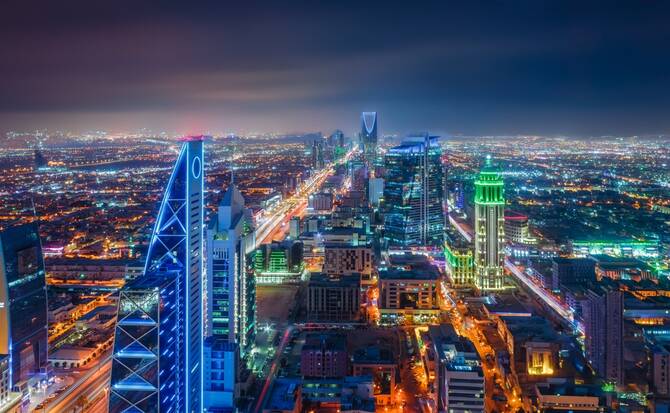
Saudi Arabia closed 2025 as the Middle East and North Africa’s largest venture capital market, accounting for 45 percent of total regional VC funding. Shutterstock
Short Url
Updated 20 January 2026
Follow

International investors driving Saudi venture capital growth as activity rises 38%

RIYADH: International investors accounted for the majority of venture capital participation in Saudi Arabia in 2025, underscoring rising global interest in the Kingdom’s startup ecosystem.

Non-Saudi investors represented 58 percent of total investor participation during the year, while overall participation reached a new high with 194 investors active in the Kingdom’s startups, up 38 percent year on year, according to data from MAGNiTT.

Saudi Arabia closed 2025 as the Middle East and North Africa’s largest venture capital market, accounting for 45 percent of total regional VC funding. 

Venture capital investment in the Kingdom reached a record $1.7 billion across 257 transactions, marking all-time highs in both capital deployed and deal volume and widening the gap with other regional markets.

The findings were published in MAGNiTT’s FY 2025 Saudi Arabia Venture Capital Report, released in partnership with SVC, which described 2025 as a milestone year for the Kingdom’s venture ecosystem. 

Saudi Arabia also became the most active VC market in the region by deal count for the first time, overtaking the UAE, as transactions rose 45 percent year over year. Since 2018, annual deal volume has expanded nearly fivefold.

“What stood out in 2025 is not just Saudi Arabia’s record capital deployment, but the breadth of growth across stages, the depth of international participation, and early signs of a more complete venture cycle taking shape,” said Philip Bahoshy, CEO of MAGNiTT.

Growth during the year was distributed across funding stages, with non-mega deals rising 101 percent year over year to $1.15 billion, highlighting the strength of the early- and mid-stage pipeline.

Mega rounds also rebounded sharply, increasing 339 percent year on year, reflecting renewed late-stage investor confidence and improved capital availability for scaling companies.

Fintech led sector activity in 2025, raising $506 million across 55 deals. Enterprise software emerged as the second-most active sector, while gaming, transport and logistics, and travel and tourism attracted relatively large deal sizes, pointing to increasing sectoral diversification.

Exit activity also continued to strengthen, with 10 mergers and acquisitions recorded during the year, the highest annual total to date in Saudi Arabia. 

Six of those transactions were led by Saudi-based buyers, signaling rising domestic liquidity and a growing corporate appetite for technology-led growth.


Saudi home ownership exceeds 66% in 2025: housing minister 

Updated 4 sec ago
Follow

Saudi home ownership exceeds 66% in 2025: housing minister 

RIYADH: Saudi Minister of Municipalities and Housing Majid Al-Hogail affirmed that the Kingdom has built a balanced real estate ecosystem, which raised the homeownership rate from 47 percent in 2016 to over 66 percent by 2025. 

This indicator reflects the effectiveness of housing policies and regulatory reforms the sector has witnessed in recent years. 

This came during Al-Hogail’s speech at the opening of the fifth edition of the Future of Real Estate Forum. He explained that the Kingdom has chosen the path of “real estate balance” as a strategic approach aimed at enhancing market stability, increasing its efficiency, and entrenching fairness within it.  

He pointed out that this path has been translated into precise regulatory tools whose effects have materialized in less than a year since the launch of its programs in 2025. 

He clarified that the entry into force of the system allowing non-Saudi ownership, within a disciplined regulatory framework, enhances the attractiveness and preserves the sustainability of the real estate market. He emphasized that balanced regulation represents a fundamental pillar in stimulating investment and raising the sector’s efficiency. 

In the context of land regulation and stimulating supply, the minister added that the White Land and Vacant Property Fees Law aims to mobilize unused land. He noted that more than 60,000 invoices have been issued since the beginning of 2026, in addition to the availability of over 100 million sq. meters of ready-to-develop land in Riyadh. This contributes to increasing supply and achieving a balance between supply and demand. 

Al-Hogail added that the ministry, in partnership with the private sector, is working to inject more than 300,000 housing units into Riyadh over the next three years. He also noted that more than 300,000 housing units had been delivered by the end of 2025 across 16 cities in various regions of the Kingdom. 

Furthermore, the number of beneficiaries of housing support programs has exceeded one million, a step that enhances the sustainability and diversity of housing solutions. 

Regarding financing and investment, he revealed that the total real estate financing portfolios in Saudi banks represent about 27 percent of their portfolios.  

He indicated that local sukuk worth over SR20 billion ($5.3 billion) and international issuances worth $4.5 billion have been issued. This is in addition to attracting global developers through an investment portfolio exceeding SR40 billion, reflecting the sector’s solidity and investor confidence in it. 

The minister pointed to the diversity of the housing solutions ecosystem through multiple tools, including rent-to-own, partial ownership and real estate coding, which expand options for beneficiaries and enhance market flexibility. 

Al-Hogail said the Kingdom now has an advanced digital real estate ecosystem considered among the world’s leading systems, with 13 digital platforms serving more than 35 million users. 

About 80 percent of real estate transactions are completed digitally, alongside the issuance of more than 1.3 million real estate records, enhancing governance and transparency and improving operational efficiency. 

On real estate coding, Al-Hogail explained that its regulatory journey spans seven stages, including the launch of a regulatory sandbox for the private sector involving nine companies. He said the future of coding will unfold across three main phases, aimed at building a more open and innovative real estate market. 

Al-Hogail concluded by emphasizing that the Saudi real estate sector is moving confidently toward a new stage of maturity and sustainability, supported by regulatory, financial and digital reforms that strengthen its role as a key driver of the national economy.