

Minister of Municipalities and Housing sponsors Cityscape closing, announces over $63bn in real estate deals

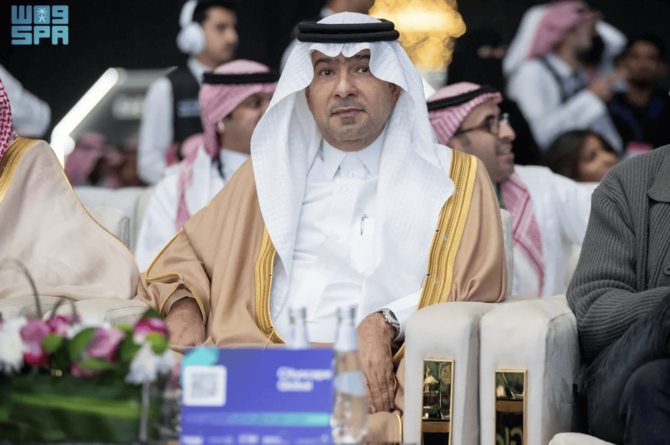
Saudi Arabia’s Minister of Municipalities and Housing, and Chairman of the Board of the Real Estate General Authority, Majid Al-Hogail. SPA
Short Url
Updated 21 November 2025
Follow

Minister of Municipalities and Housing sponsors Cityscape closing, announces over $63bn in real estate deals

RIYADH: Saudi Arabia’s Minister of Municipalities and Housing, and Chairman of the Board of the Real Estate General Authority, Majid Al-Hogail, sponsored the closing ceremony of Cityscape Global in Riyadh. 

During the event, held at Malham in the capital Riyadh, it was announced that real estate deals had exceeded SR237 billion ($63.1 billion), with wide participation from major local and international companies.

This year’s edition witnessed a record attendance of more than 577 exhibitors, including 265 international exhibitors representing the world’s leading companies in the fields of real estate development, urban planning, modern construction, and sustainability solutions.

This reflects the Kingdom’s growing status as a global hub for attracting future real estate investments.

Al-Hogail emphasized that the results achieved by the exhibition reflect the strength of the Saudi real estate sector and the development of its investment environment. 

He explained that achieving over SR237 billion in deals during the exhibition days confirms the reliability and attractiveness of the Saudi real estate sector, and aligns with the Kingdom’s path in developing the sector and urban areas. 

He indicated that this achievement reflects the integration of efforts between government entities and the private sector and embodies the promising opportunities provided by the Kingdom for investors from within and outside the country.

The Minister extended his thanks to the organizing bodies for the quality of preparation and organization, and to the participating government agencies that contributed to the event’s success, praising the innovative experiences and models presented by local and international companies that support the objectives of urban development and quality of life.

He also pointed to the great diversity of products exhibited this year, ranging from residential and commercial real estate development projects to products from PropTech startups that provide advanced digital solutions in asset management and urban planning, in addition to innovations in modern construction technologies.

The minister clarified that Cityscape solidifies the Kingdom’s position in the industry of future cities, explaining that the partnerships witnessed at the exhibition are an extension of the Kingdom's growing role in developing a more competitive and sustainable real estate sector.

Al-Hogail stated that work in the real estate sector proceeds according to the vision and directives of our wise leadership, which has provided full support to enable entities and the private sector to deliver everything that meets the aspirations of Saudi citizens and elevates the quality of life in cities.


Industry leaders highlight Riyadh’s Metro, infrastructure as investment catalysts

Updated 29 December 2025
Follow

Industry leaders highlight Riyadh’s Metro, infrastructure as investment catalysts

RIYADH: Saudi Arabia’s capital, Riyadh, is experiencing a transformative phase in its real estate sector, with the construction market projected to reach approximately $100 billion in 2025, accompanied by an anticipated annual growth rate of 5.4 percent through 2029.

The Kingdom is simultaneously advancing its data center capacity at an accelerated pace, with an impressive 2.7 GW currently in the pipeline. This expansion underscores the critical role of strategic land and power planning in establishing national infrastructure as a cornerstone of economic growth.

These insights were shared by leading industry experts during JLL’s recent client event in Riyadh, which focused on the city’s macroeconomic landscape and emerging trends across office, residential, retail, hospitality, and pioneering sectors, including AI infrastructure and Transit-Oriented Development.

Saud Al-Sulaimani, Country Lead and Head of Capital Markets at JLL Saudi Arabia, commented: “Riyadh is positioned at the forefront of Saudi Arabia’s Vision 2030, offering unparalleled opportunities for both investors and developers. National priorities are continuously recalibrated to ensure strategic alignment of projects and foster deeper collaboration with the private sector.”

He added: “Recent regulatory developments, including the introduction of the White Land Tax and the rent freeze, are designed to stabilize the market and are expected to drive renewed focus on delivering premium-quality assets. This dynamic environment, coupled with evolving construction cost considerations in select segments, is fundamentally reshaping the market landscape while accelerating progress toward our national objectives.”

The event further underscored the transformative impact of infrastructure initiatives. Mireille Azzam Vidjen, Head of Consulting for the Middle East and Africa at JLL, highlighted Riyadh’s transit revolution. She detailed the Riyadh Metro, a $22.5 billion investment encompassing 176 kilometers, six lines, and 84 stations, providing extensive geographic coverage, with a depth of 9.8 km per 100 sq. km. This strategic development generates significant TOD opportunities, with properties in proximity potentially commanding a 20-30 percent premium. JLL emphasized the importance of implementing climate-responsive last-mile solutions to enhance mobility and accessibility, particularly given Riyadh’s extreme temperatures.

Gaurav Mathur, Head of Data Centers at JLL, emphasized the rapid expansion of the Kingdom’s AI infrastructure, signaling a critical area for technological investment and innovation.

Focusing on the construction sector, Maroun Deeb, Head of Projects and Development Services, KSA at JLL, explained that the industry is actively navigating complexities such as skilled labor availability, material costs, and supply chain dynamics.

He highlighted the adoption of Building Information Modeling as a key driver for enhancing operational efficiency and project delivery.