MADRID: More than 3,000 migrants died while trying to reach Spain this year, a report released by a Spanish migration rights group said on Monday, a sharp decline from 2024 as the number of attempted crossings fell.
Caminando Fronteras (Walking Borders) said most of the 3,090 deaths recorded until December 15 took place on the Atlantic migration route from Africa to Spain’s Canary Islands, considered one of the world’s most dangerous.
While there has been a “significant” decrease in migrant arrivals in the Canaries, “a new, more distant and more dangerous” route to the archipelago has emerged with departures from Guinea, it said.
The group compiles its figures from families of migrants and official statistics of those rescued. It included 437 children and 192 women among the dead.
Caminando Fronteras also noted there had been a rise in the number of boats leaving from Algeria, mainly to the holiday islands of Ibiza and Formentera in the Mediterranean.
Traditionally used by Algerians, the route is seeing a surge of migrants from Somalia, Sudan, and South Sudan in 2025, the group said.
The number of deaths on this route had doubled this year to 1,037 when compared to 2024, it added.
At least 10,457 migrants died or disappeared while trying to reach Spain by sea in 2024, according to Caminando Fronteras, the highest number recorded since it began tracking data in 2007.
Spain’s interior ministry says 35,935 migrants reached Spain until December 15 this year, a 40-percent decrease from the same period last year.
Nearly half of them came through the Atlantic migration route from the coast of West Africa to the Canary Islands.

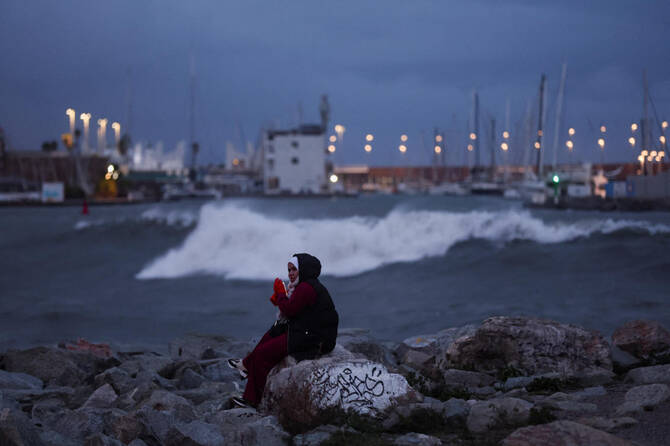
Over 3,000 migrants died in 2025 trying to reach Spain: aid group
https://arab.news/8d8ct
Over 3,000 migrants died in 2025 trying to reach Spain: aid group
- More than 3,000 migrants died while trying to reach Spain this year, a report released by a Spanish migration rights group said on Monday
Egypt’s El-Sisi accepts invite to join Trump’s ‘Board of Peace’
- Kosovo has been a close ally with the US which supported its independence from Serbia in 2008
- Italy will not take part in Board of Peace initiative, daily Corriere della Sera reports
CAIRO: Egypt’s foreign ministry said Wednesday that President Abdel Fattah El-Sisi has accepted an invitation from US President Donald Trump to join his “Board of Peace.”
Egypt “announces its acceptance of the invitation and its commitment to fulfilling the relevant legal and constitutional procedures,” the statement said, praising Trump for his Middle East policies.
“Egypt expresses its support for the Board of Peace’s mission for the second phase of the comprehensive plan to end the conflict in Gaza,” it added.
Kosovo said on Wednesday it had accepted an invitation from US President Donald Trump to join his “Board of Peace.”
“I am deeply honored by the President’s personal invitation to represent the Republic of Kosovo as a founding member of the Board of Peace, standing shoulder to shoulder with the United States in the pursuit of a safer world,” Kosovo’s President Vjosa Osmani wrote on X.
“America helped bring peace to Kosovo. Today, Kosovo stands firmly as America’s ally, ready to help carry that peace forward,” Osmani said.
Kosovo, a Balkan country of 1.6 million people, has been a close ally with the United States which supported its independence from Serbia in 2008.
Israel’s Prime Minister Benjamin Netanyahu also said Wednesday that he has agreed to join the Board of Peace in a departure from an earlier stance when his office criticized the makeup of the board’s committee tasked with overseeing Gaza.
Italy won’t take part in US President Donald Trump’s “Board of Peace” initiative, daily Corriere della Sera reported on Wednesday, citing concern that joining such a group led by a single country’s leader would violate Italy’s constitution.
Trump’s plan has so far drawn cautious reactions from Western allies, as diplomats say it could undermine the work of the United Nations.
Norway and Sweden, meanwhile, said they would not be joining the board at this stage, following in the footsteps of France, which has expressed concern the board could seek to replace the United Nations as the mediator in global conflicts.


