

Ancient rock art in Taif’s Al-Sail Al-Sagheer reveals stories of early Arabian life

1 / 4
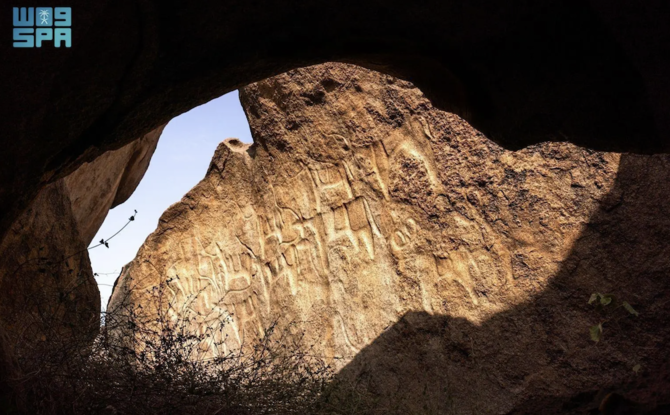
Carved into mountain walls in Al-Sail Al-Sagheer, a district in Taif governorate, ancient rock engravings offer a rare glimpse into the lives of early inhabitants who once roamed western Arabia. (SPA)
2 / 4
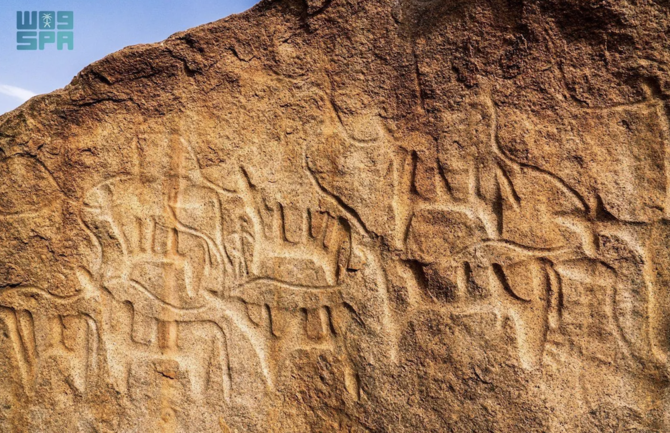
Carved into mountain walls in Al-Sail Al-Sagheer, a district in Taif governorate, ancient rock engravings offer a rare glimpse into the lives of early inhabitants who once roamed western Arabia. (SPA)
3 / 4
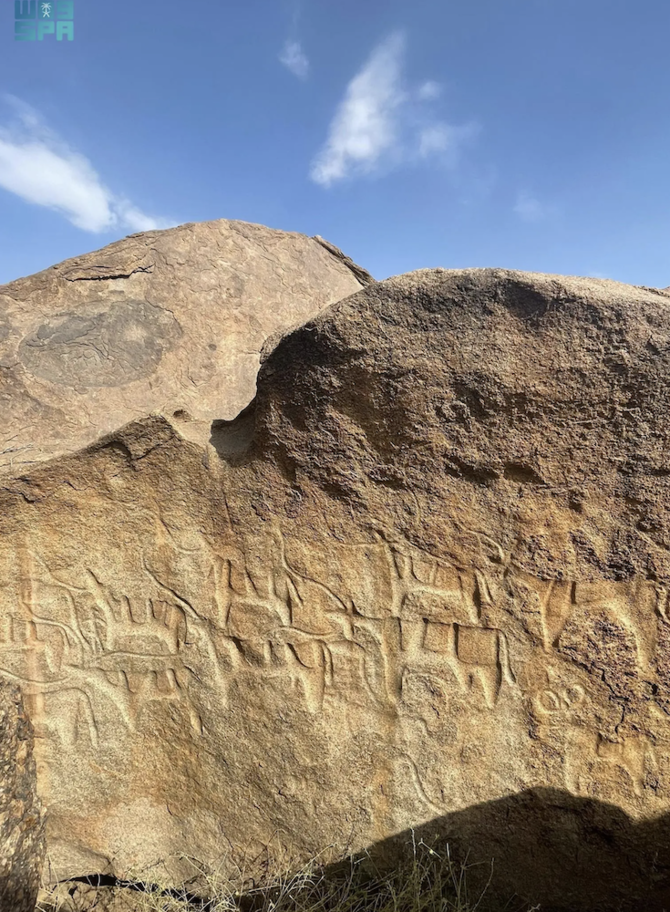
Carved into mountain walls in Al-Sail Al-Sagheer, a district in Taif governorate, ancient rock engravings offer a rare glimpse into the lives of early inhabitants who once roamed western Arabia. (SPA)
4 / 4
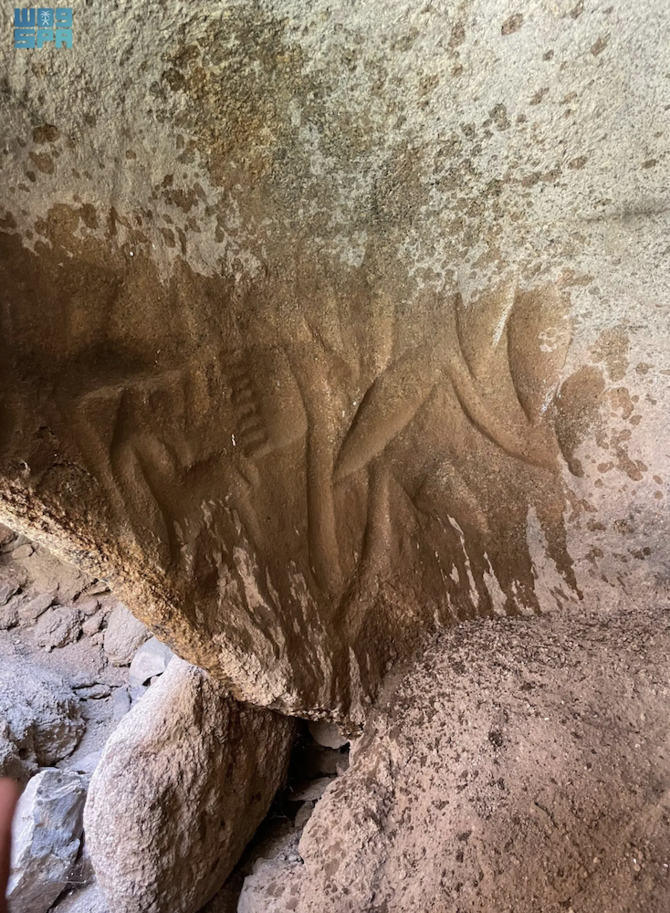
Carved into mountain walls in Al-Sail Al-Sagheer, a district in Taif governorate, ancient rock engravings offer a rare glimpse into the lives of early inhabitants who once roamed western Arabia. (SPA)
Short Url
Updated 36 min 16 sec ago
Follow

Ancient rock art in Taif’s Al-Sail Al-Sagheer reveals stories of early Arabian life

  • Historical markings serve as compelling evidence of human presence in the region spanning multiple generations and civilizations

RIYADH: Carved into mountain walls in Al-Sail Al-Sagheer, a district in Taif governorate, ancient rock engravings offer a rare glimpse into the lives of early inhabitants who once roamed western Arabia.

These historical markings serve as compelling evidence of human presence in the region spanning multiple generations and civilizations.

Speaking to the Saudi Press Agency, heritage researcher and Taif historian Manahi Al-Qathami described the rock art as a crucial visual archive documenting shifts in environment, economy, and society over time.

According to Al-Qathami, the engravings support the theory that Al-Sail Al-Sagheer served as a key corridor for ancient communities, who settled there either temporarily or permanently, drawn by abundant natural resources and protective rock shelters.

Dr. Mastoura Al-Arabi, a professor of literature and modern criticism at Taif University, highlighted the governorate’s growing recognition among heritage preservation authorities for its wealth of historically significant archaeological sites.

In her remarks to the SPA, she characterized the rock art as an integral component of the Kingdom’s cultural heritage and a pillar of national identity.

The preservation efforts, Al-Arabi noted, align closely with Saudi Vision 2030’s goals of safeguarding archaeological treasures and boosting cultural tourism.

She called for urgent measures to protect the engravings from damage or vandalism, emphasizing the need for rigorous scientific documentation and research that honors their civilizational significance as records of humanity's enduring bond with the land over millennia.


Saudi, UN officials discuss trade and AI in Austria

Updated 19 sec ago
Follow

Saudi, UN officials discuss trade and AI in Austria

  • Talks on ways to boost economic transformation in global system
  • Commerce Minister Majid Al-Qasabi highlights rules-based trade

RIYADH: Saudi Arabia and UN officials held discussions in Vienna, Austria, on Dec. 18 and 19, on international trade rules and artificial intelligence.

Participants at the meeting included representatives of the Kingdom’s National Competitiveness Center and the UN Commission on International Trade Law, or UNCITRAL, the Saudi Press Agency reported.

The workshop was a part of the NCC’s efforts to contribute to the development of legislative and regulatory frameworks for trade, keeping pace with global digital transformations, and enhancing the competitiveness of the national economy.

The Kingdom’s delegation was led by Commerce Minister Majid Al-Qasabi, who is the chairman of the NCC. Also present were Iman bint Habas Al-Mutairi, CEO of the NCC, 39 government officials, and Anna Jobin-Bret, secretary of UNCITRAL.

In his opening speech, Al-Qasabi spoke about the connection between technology and consumer behavior and its impact on the future of global trade.

The workshop included seven specialized sessions, which addressed AI in international trade, focusing on how it can improve the efficiency of supply chains, logistics operations, and e-commerce.

In a session, “Digital Platforms for Cross-Border Trade,” panelists addressed the legal and regulatory frameworks for using digital platforms.

Other sessions reviewed UNCITRAL’s perspective on the UN@80 initiative. Jobin-Bret spoke about the commission’s efforts and role in the world body’s reform process.

The workshop concluded with a session addressing preparations for joining the new Convention on Commercial Registers, emphasizing the importance of UNCITRAL’s efforts to ensure reliable digital trade.