


ISLAMABAD: Pakistani international affairs analysts and a former diplomat warned this week that recent tensions between Islamabad and Kabul signal that the future of ties between the two nations remains “bleak,” with both sides unwilling to budge from their differing stances on militancy.
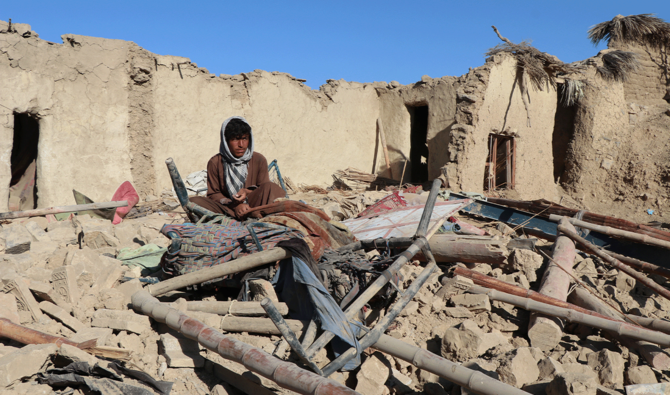
Tensions between Pakistan and Afghanistan have surged anew on Tuesday after Afghanistan accused Islamabad of carrying out overnight strikes on its territory that killed 10 civilians. Pakistan’s military spokesperson denied the allegations as Kabul warned it would retaliate.
Pakistan blames a recent surge in militant attacks on its soil on groups that it says are based in Afghanistan. Islamabad has urged the Afghan government of taking decisive action against these militants allegedly on its soil. Kabul denies the allegations and has said that Pakistan’s security challenges are its internal matter.
The latest blame game between the two sides followed a day after a deadly suicide bombing targeted the headquarters of a paramilitary force in Pakistan’s northwestern city of Peshawar, killing three personnel and wounding 11 others.
Tahir Khan, an expert on affairs related to Afghanistan, believes Islamabad’s recent tone against Kabul reflects it has hit a “dead end” with the Afghan Taliban and their “failure” to take action against militant groups attacking Pakistan.
“The future would be bleak, marked by uncertainty and tension,” Khan told Arab News. “I don’t think there will be any major change because their (Taliban’s) statements and actions show they are not willing to do what Pakistan has been asking for.”
Former Pakistani diplomat Javed Hafeez agreed, noting that recent peace talks between the two sides in Doha and Turkiye had failed to achieve results.
“I don’t see any tangible improvement in the situation in the near future,” Hafeez said. “The government in Kabul, which has not been recognized by any country in the world despite four years, sticks to its position.”
Khan said security officials in Islamabad have been angered by recent attacks, one a suicide attack near at an Islamabad court complex that killed 12 people and the attack on the Federal Constabulary (FC) headquarters in Peshawar. Pakistan’s information minister said on Tuesday that the court blast on Nov. 11 was jointly planned by Kabul and the Tehreek-e-Taliban Pakistan (TTP) or Pakistani Taliban militant group.
“I think these strikes last night [Monday] were a response to the Peshawar attack because the groups have changed their strategy and are now attacking Pakistani centers,” he said.
‘CANNOT HAPPEN OVERNIGHT’
Naila Mahsud, a Pakistani political and international relations researcher, said the crisis is rooted in contradictions that neither side have resolved and which both seem unwilling to confront honestly.
“One thing is very important: you cannot exchange talks and fire simultaneously,” Mahsud explained. “What’s our problem with India? That they come and bomb us and then expect meaningful dialogue on terrorism. If we apply the same formula to Afghanistan, we cannot expect better outcomes.”
Mahsud was referring to India’s action of carrying out strikes against alleged “terrorist” camps in Pakistan in early May, which sparked a four-day military confrontation between the two sides.
She said Pakistan, better than any other country in the region, knows how complex and layered militant networks are inside Afghanistan.
“The Afghan Taliban don’t work under an umbrella. There are different factions that cater to different groups,” Mahsud pointed out. “If they want to control terrorism or inter-border terrorism, it cannot happen overnight.”
She said Pakistan has adopted an assertive stance on Afghanistan recently as it is being seen as a “very serious player” at international forums and as “somebody that can be trusted.”
“Pakistan wants to be seen as a serious, responsible player in the region,” Mahsud said, adding that Islamabad sees this as a chance to push back against narratives shaped by India.
Hafeez warned that with no trade or diplomatic breakthrough, the relationship between Pakistan and Afghanistan is entering a dangerous terrain.
“Any such attacks--whether in Islamabad or in Peshawar--are ominous,” he said. “If you send suicide bombers into Pakistan to disturb its peace,
Pakistan would naturally have the right to retaliate.”


