



RIYADH: Startup funding in the Middle East and North Africa region posted an annual rise of 395 percent in October, indicating ongoing investor confidence, according to Wamda’s monthly report.
The $784.9 million secured across the month did however mark a 77 percent decline from September’s $3.5 billion high.
Debt financing continued to dominate in October, accounting for $567.8 million— or 72 percent — of total funding through four deals. Equity and other investment instruments collectively raised $217 million.
The figures highlight an increasing reliance on debt capital, particularly among late-stage and capital-intensive startups.
The UAE led in total funding, securing $615.7 million across 15 deals, driven largely by Property Finder’s $525 million debt raise.
Saudi Arabia followed with $119.3 million from an equal number of transactions, while Egypt posted a notable rebound, raising $33.3 million from five deals — surpassing its entire third-quarter total of $22.3 million from 22 startups.
Morocco maintained its momentum with $12.3 million raised through three rounds.
Property tech emerged as the most funded sector in October, collecting $526 million, almost entirely from the Property Finder transaction.
Software-as-a-Service startups followed with $60 million, while a single game tech deal brought in $41.6 million.
Fintech, despite maintaining the highest deal count with seven rounds, fell to ninth in value with $12.5 million raised.
Early-stage startups dominated investment activity, with 32 rounds — including grants and series A — collectively raising $95.2 million.
Only one series B deal, valued at $50 million, was recorded in October, reflecting a slowdown in late-stage capital deployment.
Business-to-consumer startups led by funding value, raising $594.7 million across nine rounds, compared to $166 million secured by 28 business-to-business startups. Eight startups operated hybrid models that blended both consumer and enterprise offerings.
Gender disparities in funding widened further. Male-led startups captured 93 percent of total funding, while female-founded ventures raised $4.5 million across three deals.
Mixed-gender founding teams secured $51 million, underscoring continued gaps in capital access across the ecosystem.
Stream raises $4m seed round
Saudi-based fintech startup Stream has secured $4 million in seed funding to scale its billing and payments automation platform.
The round was led by Outliers VC, with additional participation from BYLD Ventures and several angel investors, including Abdullah Elyas, co-founder of Careem.
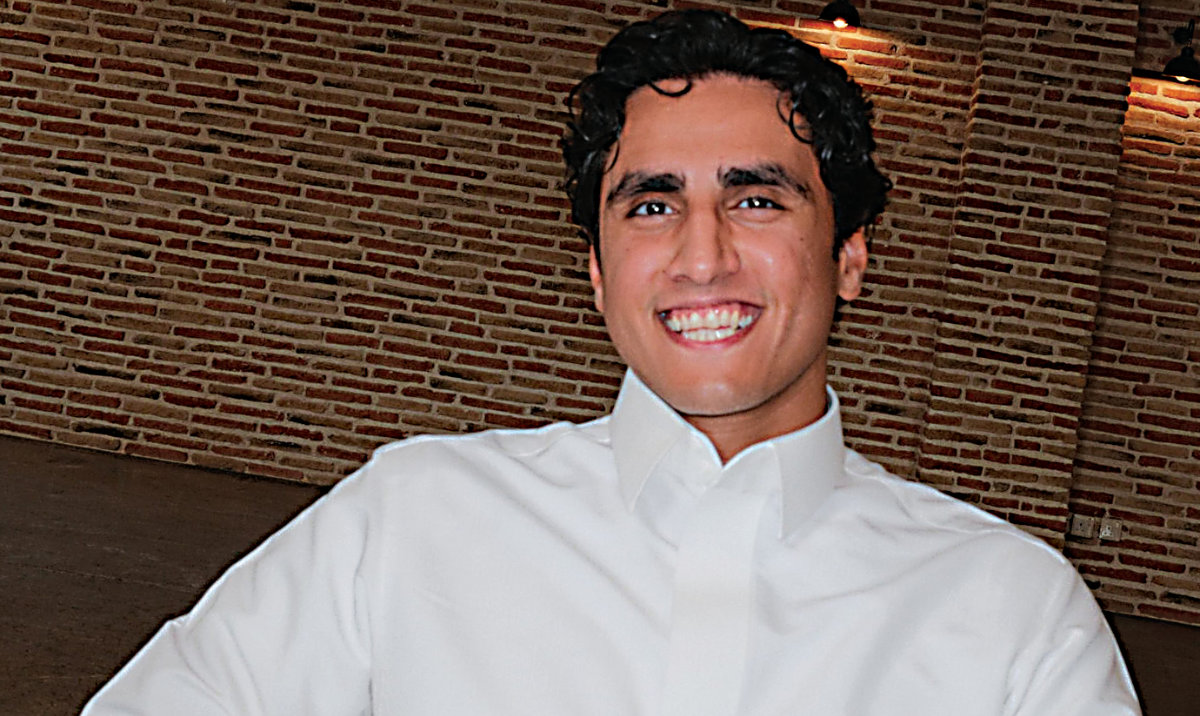
Most of the world’s innovation in payments has focused on how people spend. We’re focused on how businesses get paid.
Ibrahim Al-Dlaigan, founder & CEO of Stream
Founded in 2024 by Ibrahim Al-Dlaigan, Stream provides businesses with tools to automate invoicing, payment scheduling, and reconciliation while offering enhanced visibility and flexible payment options.
The company plans to use the new capital to support product development, compliance enhancements, and improve the user experience as it expands its infrastructure to meet growing demand.
Bonat secures $6m
AI-driven customer engagement platform Bonat has raised $6 million in a series A funding round led by Tali Ventures, the corporate venture arm of stc group.
Other investors in the round included anb seed Fund, Rua Growth Fund, RZM Investments, and several angel investors.
Founded in 2019 by Saud Binsaeed, the Saudi-based startup helps merchants convert walk-ins into loyal customers through analytics, behavior-based marketing automation, and digital wallet integrations.
Bonat currently serves thousands of retailers and food and beverage brands, connecting with more than 6 million users.
The funds will be used to accelerate AI product development, enhance personalized campaign automation, and expand operations across Saudi Arabia and the Gulf Cooperation Council region.
WildyNess closes pre-seed round to fuel regional expansion
Tunisian travel tech startup WildyNess has closed an undisclosed pre-seed round co-led by Bridging Angels and the African Diaspora Network.
The funding will support regional growth and technology infrastructure upgrades.
Founded in 2021 by Achraf Aouadi and Rym Bourguiba, WildyNess is a B2B2C platform connecting travelers with local, co-created tourism experiences delivered by micro-entrepreneurs.
The startup plans to expand into Algeria, Saudi Arabia, Oman, and the UAE.
ORA Technologies acquires Cathedis
Moroccan superapp ORA Technologies and Azur Innovation Fund have acquired Cathedis, marking the first consolidation between Moroccan startups backed entirely by local capital.
The acquisition strengthens ORA’s position within Morocco’s digital economy, integrating fintech, logistics, and food tech services.
Founded in 2023 by Omar Alami, ORA offers an all-in-one platform featuring peer-to-peer payments, e-commerce, on-demand services, social networking, and plans to launch a digital wallet.
In July, ORA completed a $7.5 million series A round led by the Azur Innovation Fund.
Jahez invests in Doos to expand into Saudi quick-commerce
Saudi Arabia-based q-commerce platform Doos has received a strategic investment from Jahez as the latter moves to expand its service offerings beyond food delivery.
The partnership leverages Jahez’s technology infrastructure and Doos’s curated product catalogue and express delivery capabilities to deepen market reach in the Kingdom’s fast-growing quick-commerce segment.
Founded in 2023 by Tala Al-Sahsah, Doos operates cloud stores in Jeddah and Riyadh, offering a locally tailored retail experience that includes supermarket staples, fresh produce, beauty products, gifts, and lifestyle items.
The startup plans to scale operations across Saudi Arabia to redefine convenience retail for local households.
DisrupTech Ventures backs Moroccan fintech Chari in regional expansion push
Egypt-based venture capital firm DisrupTech Ventures has made its first investment in Morocco by backing Chari, a Y Combinator–backed fintech startup that digitizes informal retail and delivers embedded financial services.
This also marks DisrupTech’s second investment in Africa outside Egypt. The firm will join Chari’s board of directors to support the company’s regional fintech growth strategy.
Founded in 2020 by Ismael Belkhayat and Sophia Alj, Chari allows small retailers to order fast-moving consumer goods and access financial services.
The investment follows Chari’s $12 million series A round closed less than a month ago, led by SPE Capital and Orange Ventures. Chari also recently obtained a payment institution license from Bank Al-Maghrib, enabling it to issue IBANs and debit cards, process domestic and international transfers, and offer micro-insurance products.
First Circle Capital secures $6m from IFC
Morocco and Uganda-based venture capital firm First Circle Capital has raised $6 million from the International Finance Corporation, part of the World Bank Group, to invest in early-stage fintech startups across Africa.
The fund focuses on pre-seed and seed-stage companies addressing gaps in financial inclusion, infrastructure, and digital finance, with a dual offering of capital and operational support to prepare startups for series A rounds.
First Circle is targeting a total fund size of $30 million and has already backed 15 startups in eight African countries.
The fund reports that 30 percent of its portfolio is led or co-founded by women, and half of its investments operate in more than one market.
In addition to IFC’s commitment, the fund has raised $2 million from We-Fi, $3 million from DGGF, and received further support from FSD Africa, MSMEDA, Axian Group, and prominent global tech founders including Jens Hilgers, Tim Schumacher, Peter Steinberger, and Steve Anavi.


