

How Ihram clothing is tailored and designed for Hajj

1 / 5
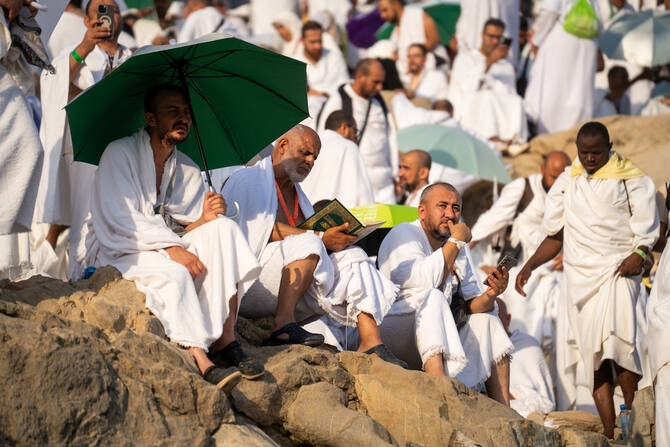
During Hajj, the annual pilgrimage to Makkah, Muslim men wear Ihram — simple attire representing purity and equality. (AN Photo/Abdulrahman Shalhoub)
2 / 5
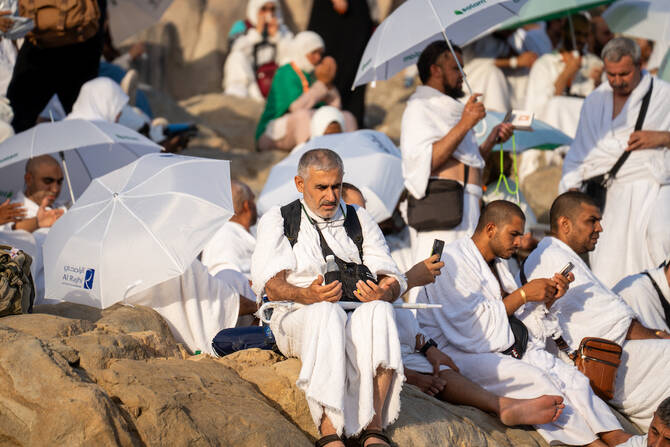
During Hajj, the annual pilgrimage to Makkah, Muslim men wear Ihram — simple attire representing purity and equality. (AN Photo/Abdulrahman Shalhoub)
3 / 5
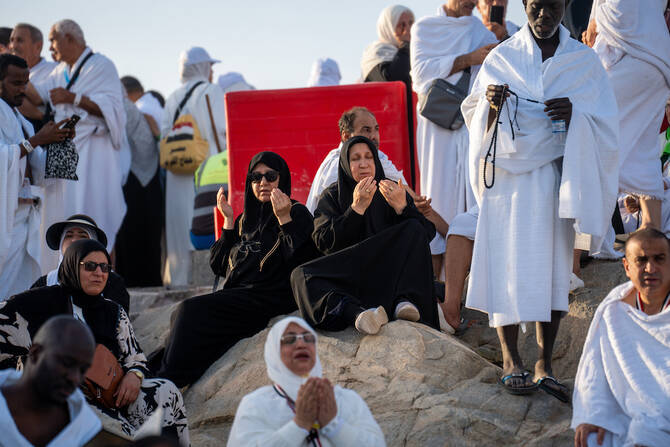
During Hajj, the annual pilgrimage to Makkah, Muslim men wear Ihram — simple attire representing purity and equality. (AN Photo/Abdulrahman Shalhoub)
4 / 5
During Hajj, the annual pilgrimage to Makkah, Muslim men wear Ihram — simple attire representing purity and equality. (AN Photo/Abdulrahman Shalhoub)
5 / 5
During Hajj, the annual pilgrimage to Makkah, Muslim men wear Ihram — simple attire representing purity and equality. (AN Photo/Abdulrahman Shalhoub)
Short Url
Updated 05 June 2025
Follow

How Ihram clothing is tailored and designed for Hajj

  • Ihram represents spiritual purity and equality of pilgrimage
  • New technologies introduce Ihram with anti-bacterial properties  

RIYADH: During Hajj, the annual pilgrimage to Makkah, Muslim men wear Ihram — simple attire representing purity and equality.

Ihram is made of two white unstitched pieces of fabric. One, the Izar, is wrapped around the waist while the other, the Rida’, covers the shoulders.

“Ihram is worn by men during Hajj and Umrah, and it is always unstitched and white,” Abdullah Al-Ahmad, who owns a menswear store in Riyadh, said.

“(It) usually consists of two pieces, a lower piece and an upper piece, and the most popular types of Ihram in the market are those made of elastic, and those tied around the belt. People usually prefer cotton, especially Egyptian cotton, for its high quality; also because cotton is softer on the skin and does not absorb heat.”

Hamad Al-Yami, a Saudi inventor in nanotechnology and member of the International Federation of Inventors’ Associations, talked to Arab News about his nano-silver technology Ihram.

“The idea originated while I was working at the Saudi Ministry of Health, where I noticed the need for antibacterial medical clothing,” he explained.

“The concept later evolved to include Ihram clothing after studying the challenges pilgrims face, such as the spread of infection in crowded conditions, wearing Ihram for a long period of time, sometimes for days at a time, and the limited effectiveness of traditional fabrics.”

He added he was inspired by the historical use of silver for sterilization and developed a technique using silver nanoparticles, each about one-millionth of a millimeter, to sterilize cotton fabric. The primary purpose of his invention was to reduce infection, especially during the COVID-19 pandemic.

Along with his antibacterial clothing, he has future plans to work on recycled Ihrams and turn them into eco-friendly products like bags or pillows that could be used in mosques.

While men wear Ihram, women have more flexibility when it comes to clothing choices during Hajj, although modesty is still a requirement when choosing fabric and colors.

Due to the hot weather in the Makkah region, most women prefer lightweight, breathable materials such as cotton and linen.

“There are no specific clothes for women. Any texture, any color, as long as it is not decorated and is socially appropriate for Hajj. It should be modest and mostly white or beige,” said pilgrim Afnan Al-Harbi.

“I used to wear white because it was hot and sunny in Makkah and the color is cooler a little bit. We also don’t wear perfumes, we don’t cover our faces, and we don’t wear gloves. Still, a lot of pilgrims at the time were wearing black abayas.”

Wearing the Ihram is not a fashion choice. It indicates a state of spiritual readiness to submit to God and clear the mind and body of all negativity, so that Hajj can be begun with a positive mindset.


Saudia Group graduates 1,200 aviation trainees at landmark ceremony

Saudia Group held its first unified graduation ceremony for trainees of its aviation programs on Saturday. (Supplied)
Updated 15 February 2026
Follow

Saudia Group graduates 1,200 aviation trainees at landmark ceremony

  • ‘This opportunity felt like a dream,’ culinary arts student says
  • ‘Human capital remains our most important investment,’ transport minister says

JEDDAH: Saudia Group held its first unified graduation ceremony for trainees of its aviation programs on Saturday, marking one of the largest such events ever held in the Kingdom’s aviation sector.

The ceremony, in Jeddah, brought together more than 1,200 students who had completed specialized training programs and will now join the company’s workforce.

Mohammed Midher, a 32-year-old captain and graduate of the six-month aerospace engineering program, told Arab News: “Every difficulty becomes easy with hard work and dedication.

“I am very happy to graduate and grateful for this valuable opportunity provided by the Saudia Group.

“It was a chance to prove our skills and capabilities and we will be starting our jobs soon. I am very excited to lead the aircraft to destinations around the world.”

Nesreen Jomaa, a graduate of the Culinary Arts Academy’s one-year ZDAK program, said the training enhanced her professional growth.

“I already had experience in culinary arts and had worked in several hotels in Jeddah, so I came in with strong knowledge.

“This opportunity felt like a dream because it guarantees employment upon completion. It added so much to my professional growth and I also gained many wonderful friends within this field.”

Ashwaq Khaja, who completed the same program, said: “I am proud to be Saudi and proud of everything the group has provided for us.

“I have a bachelor’s degree in science management and I am a visual artist. Today, I aspire to combine visual art with culinary art. I am truly grateful for this opportunity.”

All of the training programs were delivered by Saudia Group and its subsidiaries, Saudia, Saudia Academy, Saudia Technic, Saudi Ground Services, SAL Saudi Logistics Services, flyadeal and Catrion.

The graduates will now take up operational roles in flight operations, ground services, engineering, logistics and customer-facing functions.

The students’ families were present at the graduation event and there was also a performance by a Saudi choral group.

The ceremony also celebrated the first Saudi female graduates in airport aircraft maintenance, with 25 women completing the training program.

Women were also represented in inflight services and onboard chef programs, reflecting their broader inclusion across all disciplines.

“The percentage of women in aviation is increasing year after year,” said Khaled Tash, chief marketing officer of Saudia Group.

“There is no program today from which women are excluded. Every program is open and women are fully enabled and encouraged to join.

“Over the years, we have celebrated ordering new aircraft, building new airports, expanding logistics and investing in infrastructure. But there is nothing we can be more proud of than ensuring we have the right people to lead these growth projects.”

The event was held under the patronage of Saleh Al-Jasser, minister of transport and logistics services, and attended by Ibrahim Al-Omar, director general of Saudia Group, alongside senior officials and aviation sector representatives.

“Developing national talent is fundamental to achieving the ambitions of the National Aviation Strategy,” Al-Jasser said.

“Graduating more than 1,000 aviation professionals in a single year reflects the scale and pace of transformation underway across the Kingdom’s transport and logistics sector.

“Human capital remains our most important investment as we build a globally competitive aviation ecosystem.”

Al-Omar highlighted the company’s progress in localizing roles.

“Saudia Group has made significant progress in localizing critical aviation roles, surpassing targeted performance indicators by margins ranging from 43 percent to 230 percent,” he said.

“We have also embedded knowledge transfer requirements into our agreements with global manufacturers to ensure the development of Saudi capabilities within the Kingdom.

“The next phase of our transformation, particularly as we elevate the guest experience and strengthen global competitiveness, depends on continued investment in specialized national talent.”

The event highlighted the diversity of career paths within the aviation sector, bringing together graduates from operations, maintenance, engineering, cabin services and ground services within an integrated training ecosystem addressing the sector’s full range of needs.

The group has also increased local content levels across its activities from 19 percent in 2019 to 29 percent in 2023, reinforcing its contribution to domestic economic development.