

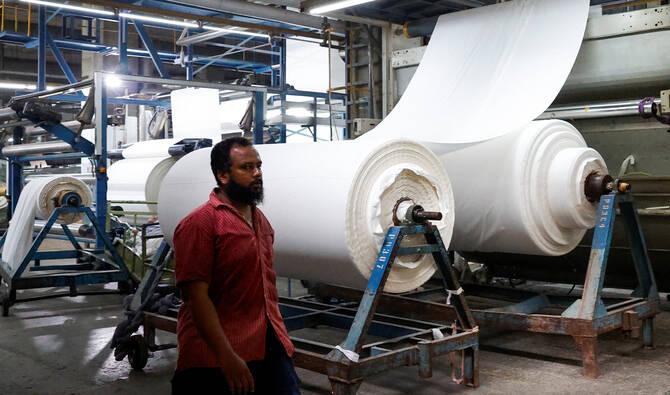

Karachi: Pakistan is expected to import as much as 7 million bales of cotton this year as devastating floods have washed away hundreds of thousands of acres crops in the South Asian nation, the Karachi Cotton Brokers Forum (KCBF) and other stakeholders said on Sunday.
Pakistan ranks among one of most vulnerable countries to climate change, where recent flash floods have killed more than 1,000 people and inundated major crops like cotton, sugarcane, rice, maize and wheat storages, risking the government’s 4.2 percent economic growth target this fiscal year.
The deluges have damaged approximately 2.5 million acres of all crops that is equivalent to 7.7 percent of Pakistan’s total cultivated area, KCBF Chairman Naseem Usman said, citing a recent presentation of the food security ministry to a parliamentary committee.
The authorities have started assessing the total flood damages as a technical team from the International Monetary Fund (IMF) is visiting Pakistan to review the government’s performance under its $7 billion loan program and $1.4 billion climate resilience facility.
“Pakistan has already booked about 2 million bales of cotton in advance trade,” Usman told Arab News. “It would have to import five million more bales by the end of this year.”
The KCBF chairman expects Pakistan’s cotton production to range from 6.5 million to 7 million bales due to rain and flood-related damages.
“Our consumption is almost double of what we produce,” Usman said.
He said the initial damage to cotton in Punjab, Sindh and Khyber Pakhtunkhwa provinces was assessed at 223,785 acres. This is around 4 percent of the total cotton crop Pakistan has sown over 5.58 million acres this 2025-26 season, according to the Pakistan Central Cotton Committee.
But officials at the national food security ministry say these numbers are not final.
“Officials from concerned provincial ministries and other institutions would meet again and try to build consensus on flood damages data,” a national food security ministry official, who requested anonymity, told Arab News, adding the data gathered so far from various sources had “big gaps.”
Kamran Arshad, chairman of the All Pakistan Textile Mills Association (APTMA), said the millers would require 12 million bales of cotton this year but it would be too early to cite a number for the amount of cotton they would need to import.
“There is a damage to the cotton crop for sure,” Arshad told Arab News. “We will have a better estimate by end October or early November.”
Shankar Talreja, head of research at Karachi-based Topline Securities brokerage and market research firm, said the country will need to import more than 6 million cotton bales to supply raw material to its textile industry, which earned $18 billion in the last fiscal year that ended in June.
“Pakistan needs annually over 13-14 million bales and over 30 percent of this would be imported,” the economist told Arab News.
This, he said, will put pressure on Pakistan’s foreign exchange reserves which, according to the State Bank of Pakistan, have stagnated at $14 billion for the last three months since June 26.
In a separate report, Topline Securities increased its growth forecast for Pakistan’s imports to 10 percent from its earlier estimates of 9 percent, especially non-oil imports, which are expected to grow 16 percent this fiscal year. It said Pakistan’s current account deficit would remain largely unchanged at 0-0.5 percent of GDP.
“However, we expect the [current account] number to reach at top side of our previous expected range,” the report said.


