WASHINGTON: The FBI has fired agents who were photographed kneeling during a racial justice protest in Washington that followed the 2020 death of George Floyd at the hands of Minneapolis police officers, three people familiar with the matter said Friday.
The bureau last spring had reassigned the agents but has since fired them, said the people, who insisted on anonymity to discuss personnel matters with The Associated Press.
The number of FBI employees terminated was not immediately clear, but two people said it was roughly 20.
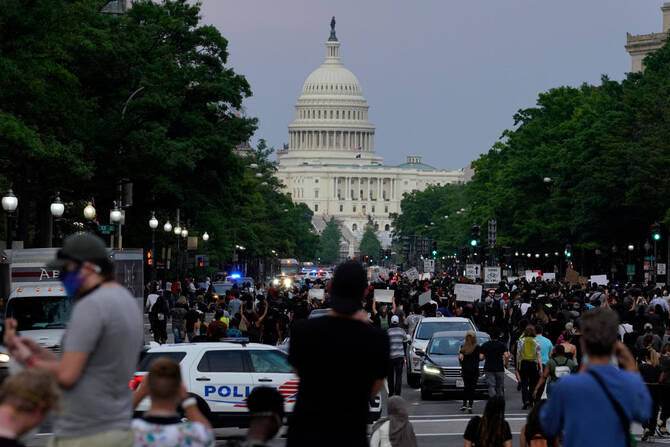
The photographs at issue showed a group of agents taking the knee during one of the demonstrations following the May 2020 killing of Floyd, a death that led to a national reckoning over policing and racial injustice and sparked widespread anger after millions of people saw video of the arrest. The kneeling had angered some in the FBI but was also understood as a possible de-escalation tactic during a period of protests.
The FBI Agents Association confirmed in a statement late Friday that more than a dozen agents had been fired, including military veterans with additional statutory protections, and condemned the move as unlawful. It called on Congress to investigate and said the firings were another indication of FBI Director Kash Patel’s disregard for the legal rights of bureau employees.
“As Director Patel has repeatedly stated, nobody is above the law,” the agents association said. “But rather than providing these agents with fair treatment and due process, Patel chose to again violate the law by ignoring these agents’ constitutional and legal rights instead of following the requisite process.”
An FBI spokesman declined to comment Friday.
The firings come amid a broader personnel purge at the bureau as Patel works to reshape the nation’s premier federal law enforcement agency.
Five agents and top-level executives were known to have been summarily fired last month in a wave of ousters that current and former officials say has contributed to declining morale.
One of those, Steve Jensen, helped oversee investigations into the Jan. 6, 2021, riot at the US Capitol. Another, Brian Driscoll, served as acting FBI director in the early days of the Trump administration and resisted Justice Department demands to supply the names of agents who investigated Jan. 6.
A third, Chris Meyer, was incorrectly rumored on social media to have participated in the investigation into President Donald Trump’s retention of classified documents at his Mar-a-Lago estate in Palm Beach, Florida A fourth, Walter Giardina, participated in high-profile investigations like the one into Trump adviser Peter Navarro.
A lawsuit filed by Jensen, Driscoll and another fired FBI supervisor, Spencer Evans, alleged that Patel communicated that he understood that it was “likely illegal” to fire agents based on cases they worked but was powerless to stop it because the White House and the Justice Department were determined to remove all agents who investigated Trump.
Patel denied at a congressional hearing last week taking orders from the White House on whom to fire and said anyone who has been fired failed to meet the FBI’s standards.


![]()

FBI fires agents photographed kneeling during 2020 racial justice protest, AP sources say
Short Url
https://arab.news/8v922
FBI fires agents photographed kneeling during 2020 racial justice protest, AP sources say
- That’s according to three people familiar with the matter who spoke on condition of anonymity to The Associated Press
- The bureau had reassigned the agents last spring but has since fired them. The FBI declined to comment


Latest updates


Recommended


© 2026 SAUDI RESEARCH & PUBLISHING COMPANY, All Rights Reserved And subject to Terms of Use Agreement.