


Saudi designers weave heritage into fashion’s global tapestry

1 / 11
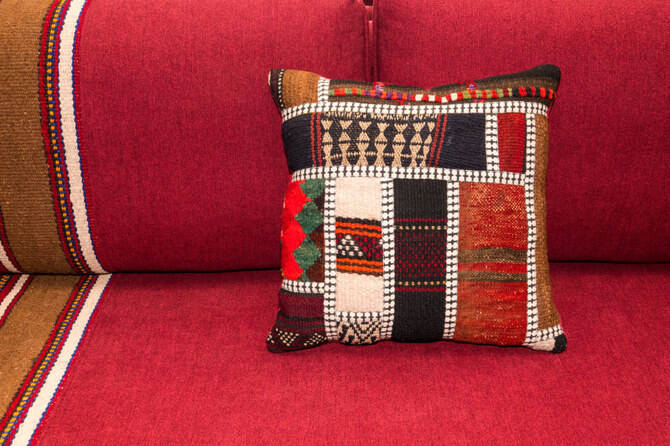
Traditional Saudi crafts are being reinterpreted by designers, capturing international attention through prestigious European showcases. (AN photo by Huda Bashatah)
2 / 11
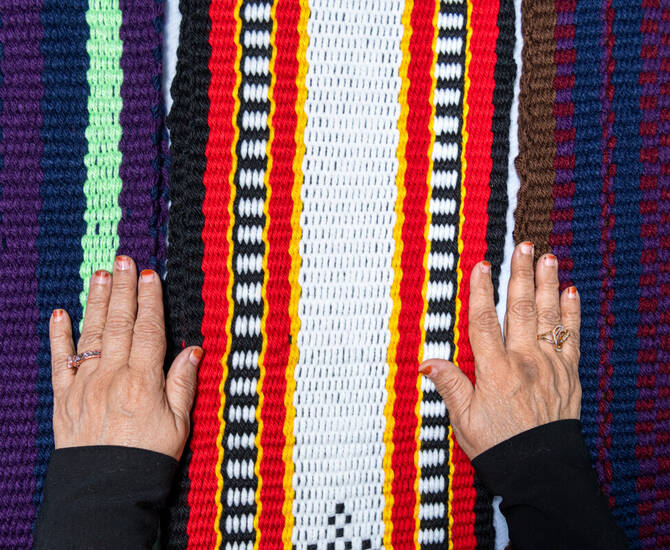
Traditional Saudi crafts are being reinterpreted by designers, capturing international attention through prestigious European showcases. (UNESCO)
3 / 11
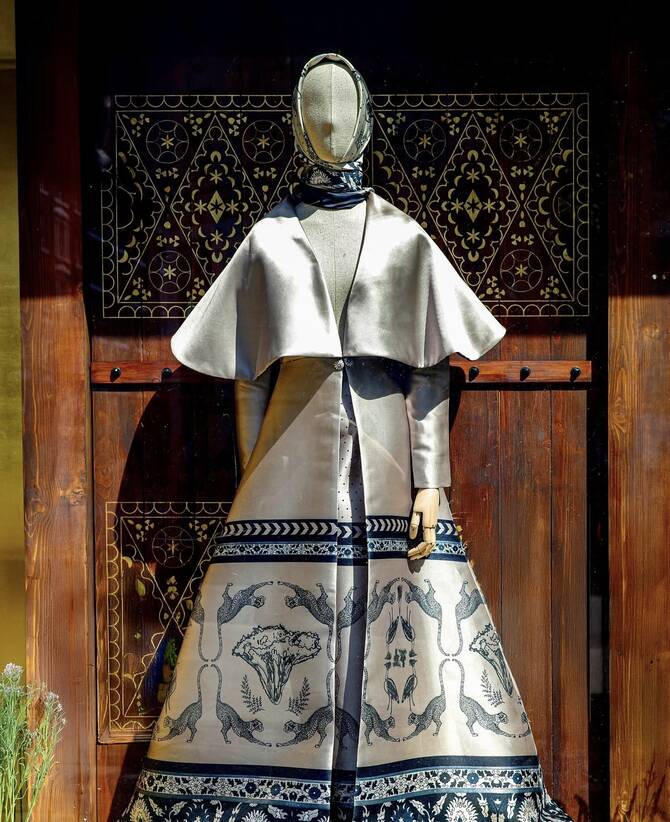
Al-Ammari’s recent Selfridges window display and in-store pieces became a landmark moment. (@aram_designs)
4 / 11
Hindamme designs representing Aseer. (@moekhoja)
5 / 11
Hindamme designs representing AlUla. (@moekhoja)
6 / 11
Hindamme designs representing Jeddah. (@moekhoja)
7 / 11
Hindamme designs representing the Eastern Province. (@moekhoja)
8 / 11
Hindamme designs representing Riyadh. (@moekhoja)
9 / 11
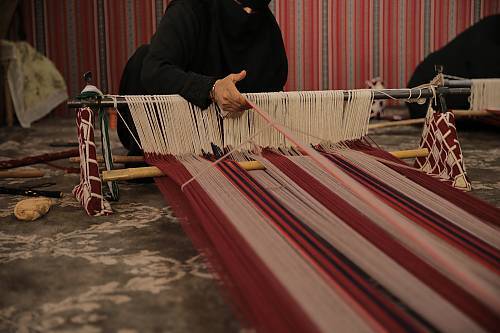
Traditional Saudi crafts are being reinterpreted by designers, capturing international attention through prestigious European showcases. (UNESCO)
10 / 11
Traditional Saudi crafts are being reinterpreted by designers, capturing international attention through prestigious European showcases. (UNESCO)
11 / 11
Al-Qatt Al-Asiri was added to the UNESCO Representative List of Intangible Cultural Heritage in 2017. (UNESCO)
Short Url
Updated 23 September 2025
Follow

Saudi designers weave heritage into fashion’s global tapestry

  • Designers take inspiration from traditional designs for Saudi National Day
  • Patterns based on heritage crafts find success on global stage

RIYADH: As Saudi Arabia celebrates its 95th National Day, a vibrant thread of cultural heritage is weaving its way onto the global fashion stage.

Traditional Saudi crafts — the geometric boldness of Sadu weaving, joyful spontaneity of the Al-Qatt Al-Asiri decorative style, and meticulous precision of Najdi embroidery — are being reinterpreted by designers, capturing international attention through prestigious European showcases.

This creative renaissance aligns with Saudi Arabia’s designation of 2025 as the Year of Handicrafts, and Vision 2030’s mission to transform heritage into a globally-recognized style.

Arwa Al-Ammari, fashion consultant, Arab Fashion Council ambassador, and public speaker, was named by the BBC as one of “the most creative minds on the planet” for putting “Saudi elegance on the fashion map.”

Forbes listed her among its Top 30 (2022) and Top 50 (2023) Women Behind Middle Eastern Brands. Her consultancy portfolio includes the Saudi Cup, the world’s most valuable horse race.

Reflecting on her brand ArAm’s origins, she told Arab News: “I launched ArAm to create pieces that carry couture’s artistry but function in daily life. In Saudi culture, craftsmanship has always been integral.”

On Saudi’s design evolution, Al-Ammari said: “When I first launched ArAm, many Saudi designers were still in the early stages of exploring how to express their identity. Heritage was often treated as something to either preserve traditionally or reference subtly.”

Today, she credits Vision 2030 for making culture “a foundation for shaping our future.”

Her work has been displayed in the window of Selfridges — featuring Najdi embroidery against a traditional door and desert lavender.

She said that “translating intangible heritage into visual form is delicate yet inspiring. I wanted to capture Saudi culture’s warmth and storytelling traditions — not just motifs.”

On blending Al-Qatt Al-Asiri’s spontaneity with couture, Al-Ammari said “What I find fascinating is its raw spontaneity … I reinterpret it through couture’s refined lens.”

Her designs have become “powerful soft power to tell our stories.”

As an ambassador, she added that “fashion has opened a new window reflecting creativity and cultural pride … it connects Saudi designers with the world.”

And for the 95th National Day, she told Arab News: “Authenticity, hospitality, family, community and resilience. These values show how creativity rooted in tradition can boldly inspire the future.”

When Moe Khoja launched Hindamme in 2016, he sought to “create a dialogue between our heritage and the contemporary world,” he told Arab News.

“Saudi Arabia has stories waiting to be told through fashion — rooted in culture but speaking to global audiences.”

His collections distill the geometry of traditional Sadu weaving into minimalist silhouettes.

Explaining his philosophy, Khoja told Arab News: “Hindamme translates to ‘well put together,’ reflecting balance and elegance.

“Tradition shouldn’t be imposed as a weight, but flow naturally into contemporary forms.”

Technical innovation drives his process and translating desert tent patterns into fluid garments requires “rethinking everything.”

Khoja said: “They never realized Saudi motifs could feel so contemporary. When you treat heritage with respect and innovation, it becomes universally compelling.”

The success of Saudi designers has been seen in European showcases: Al-Ammari’s Selfridges exhibition and Paris’ Premiere Vision featuring Sadu-inspired textiles.

Moreover, the Kingdom is working to support homegrown designers with various schools and programs.

The Saudi Fashion Commission partnered with Italian fashion school Istituto Marangoni to establish a Riyadh campus in August at the King Abdullah Financial District’s creative hub. The institution will offer three-year diplomas in fashion design, business and fragrance development.



Rebuilding lives: Saudi initiative gives fresh hope to amputees

Updated 08 December 2025
Follow

Rebuilding lives: Saudi initiative gives fresh hope to amputees

  • Baitureh Health Association has provided life-changing support to more than 1,000 people
  • Prosthetic limbs can cost up to $76,000

MAKKAH: The Baitureh Health Association for the Care of Amputees has quickly become one of Saudi Arabia’s most impactful humanitarian initiatives, transforming support for people with lost limbs.

Established in 2020, the association deals with people’s physical, psychological and social needs and fills a long-standing gap in the national health system.

CEO Badr bin Alyan told Arab News that the initiative was created in response to a growing need, driven by amputations linked to accidents, blood disorders, occupational injuries and other causes.

Its operations were “based on service integration rather than fragmentation, enabling beneficiaries to return to their lives with confidence, ability and independence,” he said.

This holistic process covers everything from initial evaluations to psychological and physical rehabilitation, family support, prosthetic fitting and ongoing maintenance.

Its psychological support programs include group sessions led by certified mentors who have undergone similar experiences, as well as field visits to support patients before and after amputation.

More than 1,000 people across the Kingdom have so far benefitted from the association’s work, about 10 percent of them children, whom Alyan said were “the most sensitive and the most in need of intensive psychological and family support.”

Its specialist programs for children — My First Step and Therapeutic Entertainment — help young people adapt to prosthetics, overcome trauma and build confidence in a safe and supportive setting.

The association has completed more than 300 prosthetic fittings, including silicone cosmetic limbs, mechanical, hydraulic, electronic and 3D-printed models. 

Alyan said the type of prosthetic selected depended on a number of factors, such as age, lifestyle, type of amputation, activity level and psychological readiness.

Children also have to undergo frequent adjustments to their new limbs to account for their growth.

Each prosthetic cost between SR20,000 ($5,300) and SR285,000, Alyan said.

The association funds its work through sponsorships, community contributions and strategic partnerships.

Despite its success, Alyan said there were still challenges to be faced, including the lack of a consolidated base for the provision of psychological support and therapy services and prosthetics development and maintenance.

There was also a shortage of local experts, he said.

In response, the association set up a rehabilitation center, which Alyan said would help to localize prosthetics manufacturing, reduce costs and accelerate fitting processes and create opportunities for local experts to develop their knowledge and experience.

But providing prosthetics was only part of the association’s work, he said.

“Rebuilding a human life is the deeper goal.”