


Saudi wool craft preserves artisanal heritage in Northern Borders region

1 / 3
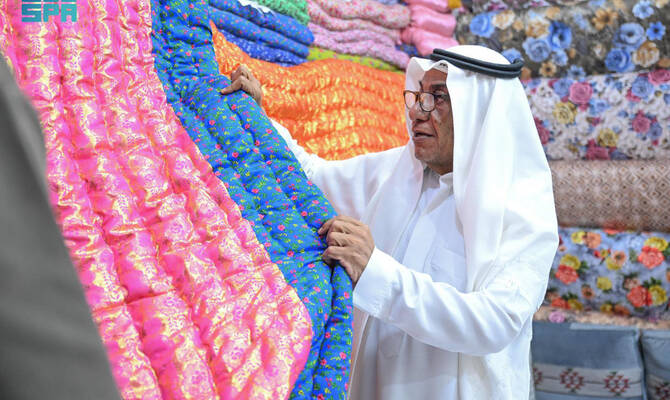
The ‘naddaf’ is an artisan who cleans, softens, and reshapes wool and cotton using traditional tools. (SPA)
2 / 3
Image: SPA
3 / 3
Image: SPA
Short Url
Updated 27 August 2025
Follow

Saudi wool craft preserves artisanal heritage in Northern Borders region

  • The handmade products stand out for their durability, natural materials, and cultural authenticity

RIYADH: In Saudi Arabia’s Northern Borders region, the traditional craft of Al-Naddafa continues to preserve the community’s heritage, with artisans transforming wool and cotton into bedding and quilts that reflect generations of skill.

Craftsman Nidal Al-Obaid told the Saudi Press Agency that the “naddaf” is an artisan who cleans, softens, and reshapes wool and cotton using traditional tools.

The artisan then turns the materials into mattresses, quilts, and pillows, a craft that once provided comfort to locals across the region before industrial, modern alternatives arrived.

Despite the availability of ready-made products, Al-Naddafa is still practiced by locals in Arar and the surrounding governorates, SPA reported.

The region’s pastoral landscape and abundance of sheep have long ensured a steady supply of wool, sustaining the craft and embedding it in the fabric of local life.

The handmade products stand out for their durability, natural materials, and cultural authenticity, making them highly valued at heritage exhibitions and national festivals celebrating Saudi traditions, SPA added.

While some artisans now use simple machines to speed up the fluffing process, the essence of the craft remains largely unchanged.

From carefully selecting the wool to cleaning, smoothing, and stuffing it into locally woven fabrics, each step reflects both tradition and adaptation to modern tastes.

Saudi Arabia’s Heritage Commission and Ministry of Culture are working to safeguard and promote handicrafts like Al-Naddafa under Vision 2030, supporting artisans with training, development, and marketing opportunities to help turn heritage crafts into sustainable industries.


Royal reserve intensifies efforts for environmental conservation

Updated 16 sec ago
Follow

Royal reserve intensifies efforts for environmental conservation

  • Protection contributes toward sustainability to align with Saudi Vision 2030

RIYADH: The King Salman bin Abdulaziz Royal Reserve Development Authority is intensifying efforts to protect the vegetation, wildlife, and public property within its reserve, the largest in the Kingdom at 130,700 sq. km.

Distinguished by its nature, terrain and archaeological sites (some dating back to 8000 B.C.), its protection contributes to environmental sustainability and aligns with Saudi Vision 2030’s goal of making the Kingdom a global environmental tourist destination, the Saudi Press Agency reported.

The authority’s efforts include enforcing regulations against violators, in partnership with the Special Forces for Environmental Security; rehabilitating damaged lands affected by overgrazing and desertification; planting nearly 4 million seedlings; rehabilitating 750,000 hectares of degraded land to restore plant life; and distributing tonnes of native wild seeds.

The authority has urged adherence to regulations, stressing continuous monitoring and enforcement against violations.

The royal reserve, a vast ecological haven across the Northern Borders, Jouf, Tabuk and Hail regions, is a vital hub for migratory birds. It is home to more than 290 bird species, with 88 percent being migratory and 12 percent resident.

This accounts for 58 percent of all bird species recorded in the Kingdom. The reserve also protects 26 bird species listed as threatened on the International Union for Conservation of Nature Red List.

The reserve serves as the Kingdom’s first stop for flocks arriving from Asia and Europe in the autumn, and their last station before departing in spring.

With its rich biodiversity, balanced environment and varied landscapes, the reserve also stands as a natural sanctuary, hosting remarkable species such as the steppe eagle, the eastern imperial eagle, and the houbara bustard.