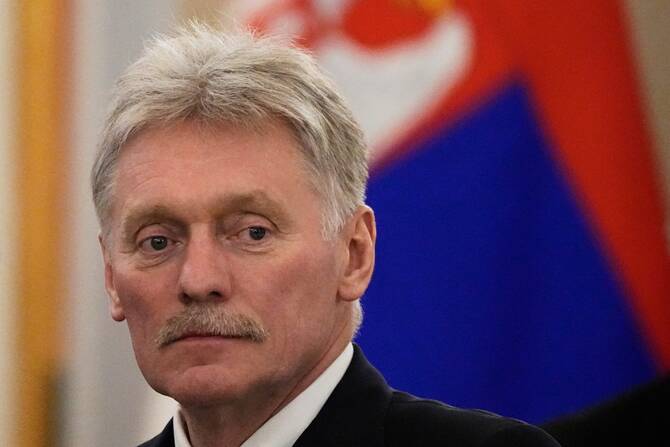
Russia is open to peace with Ukraine, but achieving its goals remains a priority, Kremlin spokesman Dmitry Peskov said Sunday, days after US President Donald Trump gave Moscow a 50-day deadline to agree to a ceasefire or face tougher sanctions.
Peskov and other Russian officials have repeatedly rejected accusations from Kyiv and its Western partners of stalling peace talks. Meanwhile, Moscow continues to intensify its long-range attacks on Ukrainian cities, launching more drones in a single night than it did during some entire months in 2024, and analysts say the barrages are likely to escalate.
Russian President Vladimir Putin “has repeatedly spoken of his desire to bring the Ukrainian settlement to a peaceful conclusion as soon as possible. This is a long process, it requires effort, and it is not easy,” Peskov told state television in an interview.
“The main thing for us is to achieve our goals,” he said. “Our goals are clear.”
The Kremlin has insisted that any peace deal should see Ukraine withdraw from the four regions that Russia illegally annexed in September 2022, but never fully captured. It also wants Ukraine to renounce its bid to join NATO and accept strict limits on its armed forces — demands Kyiv and its Western allies have rejected.
In his nightly address on Saturday, Ukrainian President Volodymyr Zelensky said that his officials have proposed a new round of peace talks this week. Russian state media on Sunday reported that no date has yet been set for the negotiations, but said that Istanbul would likely remain the host city.
Truce or sanctions
Trump threatened Russia on July 14 with steep tariffs and announced a rejuvenated pipeline for American weapons to reach Ukraine, hardening his stance toward Moscow after months of frustration following unsuccessful negotiations aimed at ending the war. The direct Russia-Ukraine negotiations in Istanbul resulted in several rounds of prisoner exchanges but little else.
The US president said that he would implement “severe tariffs” unless a peace deal is reached within 50 days. He provided few details on how they would be implemented, but suggested they would target Russia’s trading partners in an effort to isolate Moscow in the global economy.
In addition, Trump said that European allies would buy “billions and billions” of dollars of US military equipment to be transferred to Ukraine, replenishing the besieged country’s supplies of weapons. Included in the plan are Patriot air defense systems, a top priority for Ukraine as it fends off Russian drones and missiles.
Doubts were recently raised about Trump’s commitment to supply Ukraine when the Pentagon paused shipments over concerns that US stockpiles were running low.
Drone strikes
Elsewhere, Ukraine’s air force said that it shot down 18 of 57 Shahed-type and decoy drones launched by Russia overnight into Sunday, with seven more disappearing from radar.
Two women were wounded in Zaporizhzhia, a southern Ukrainian region partly occupied by Russia, when a drone struck their house, according to the regional military administration. Two more civilians were wounded in Ukraine’s northeastern Kharkiv province, after a drone slammed into a residential building, local Ukrainian officials said.
Later Sunday, drones struck a leafy square in the center of Sumy, wounding a woman and her 7-year-old son, officials said. The strike also damaged a power line, leaving around 100 households without electricity, according to Serhii Krivosheienko, of the municipal military administration.
Meanwhile, Russia’s Defense Ministry said that its forces shot down 93 Ukrainian drones targeting Russian territory overnight, including at least 15 that appeared to head for Moscow. At least 13 more drones were downed on the approach to the capital on Sunday, Mayor Sergei Sobyanin said. One drone struck a residential building in Zelenograd, on the outskirts of Moscow, damaging an apartment, but caused no casualties, he said.


![]()

Russia insists on achieving Ukraine goals despite Trump’s ultimatum
Short Url
https://arab.news/9af4m
Russia insists on achieving Ukraine goals despite Trump’s ultimatum
- Moscow continues to intensify its long-range attacks on Ukrainian cities, launching more drones in a single night than it did during some entire months in 2024
- US President Donald Trump gave Moscow a 50-day deadline to agree to a ceasefire or face tougher sanctions


Latest updates


© 2026 SAUDI RESEARCH & PUBLISHING COMPANY, All Rights Reserved And subject to Terms of Use Agreement.