
OSAKA: Saudi Arabia’s National Center for Non-Profit Sector (NCNP) is expanding at a rapid pace with the number of registered NPOs surpassing 5,700 last year.
In a bid to capitalize on the situation and position Saudi Arabia as a global leader in the sector, the NCNP brought together leading voices from the Kingdom’s non-profit organizations (NPOs) for a high-profile panel discussion and for a separate U-Table meeting at the World Expo in Osaka.
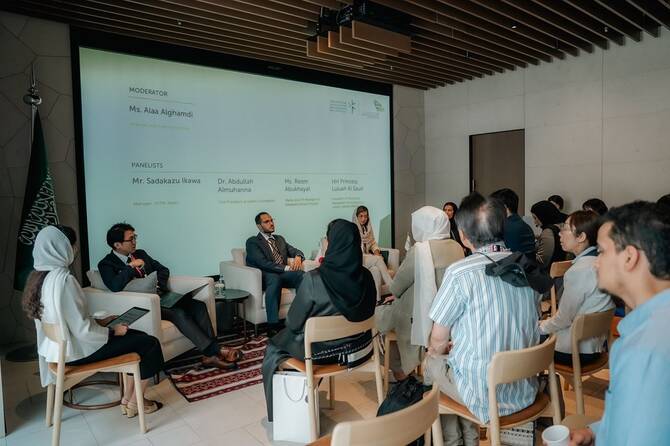
NCNP hosted the panel session — The Future of Non-Profits — at the Saudi Pavilion to highlight how the Kingdom has advanced the United Nations’ Sustainable Development Goals (SDGs) through non-profit entities.
The panel demonstrated the NCNP’s goal of activating the Kingdom’s SDGs through innovation, collaboration, and strategic partnerships.
The panel featured HRH Princess Luluah Bint Nawaf Al Saud, President of the Board at Mawaddah Association for Family Stability (MAFS), Reem Abukhayal, Media and PR Manager of Alwaleed Philanthropies, and Dr. Abdullah AlMuhanna, Vice President of Sector Empowerment at National Developmental Housing Foundation (Sakan).
NCNP’s International Communication lead, Alaa Alghamdi addressed the successful models and initiatives led by Saudi NPOs and the challenges and opportunities in scaling impact through innovation, partnerships, and sustainability.
“We were very excited to highlight how NCNP is building a sustainable future through non-profit innovation during our informative panel discussion,” Mishari Alturaif, GM of Government Outsourcing at NCNP, said.
“The Future of Non-Profits discussion underscores the ambitious efforts that NCNP is putting into supporting innovation across the local and global non-profit sector through constructive dialogue and engagement.”
NCNP also hosted a U-Table meeting with leading Saudi and international NPO’s that introduced NCNP and its international collaboration goals.
Participants from the Saudi nonprofit sector included Bunyan Charity, the National Developmental Housing Foundation (Sakan), Saudi Food Bank, and Alwdad Orphanage Care.
The participants exchanged best practices in non-profit governance and public-civil partnerships and identified areas for future collaboration aligned with national priorities and SDGS.
They also discussed the importance of shifting the mindset in the non-profit sector from one that focuses on charity to one of development, allowing for social innovation and entrepreneurship to support economic growth.
“At the U-Table, we had the opportunity to learn about how NCNP is partnering globally to advance non-profit solutions for a better world, solutions that support economic growth and innovation,” Sadakazu Ikawa, co-founder and Executive Director at the Trust Based Philanthropy Japan and Manager at the AVPN.
“We look forward to working with NCNP to activate solutions that help achieve sustainable development worldwide.”
In Osaka, the NCNP team also met with the Japan Foundation to explore opportunities for collaboration with Japanese entities and to exchange international expertise and best practices in the non-profit sector.
Under NCNP’s leadership, Saudi Arabia’s non-profit ecosystem has expanded rapidly. The number of registered NPOs surpassed 5,700 last year, with over 6,000 fundraising licenses issued and more than 2,000 active civil associations. Volunteerism has surged from just under 23,000 in 2015 to 1.2 million in 2024.
Thirty government entities now contribute to non-profit development, showing their rising national importance. Thus, NCNP continues to serve as the Kingdom’s catalyst for non-profit growth, linking local action with global collaboration to unlock sustainable impact.