

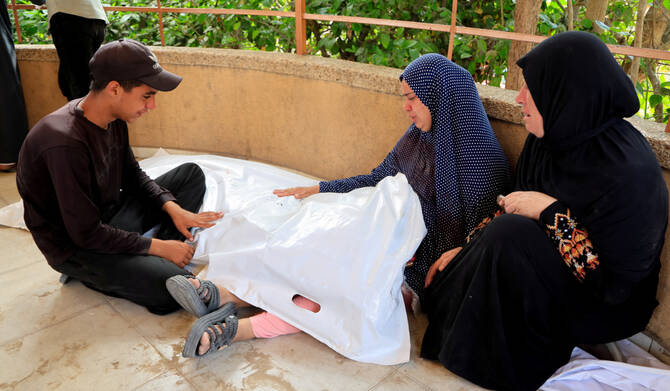

GAZA CITY, Palestinian Territories: Stuttering Gaza ceasefire talks entered a second week on Monday, with meditators seeking to close the gap between Israel and Hamas, as more than 20 people were killed across the Palestinian territory.
The indirect negotiations in Qatar appear deadlocked after both sides blamed the other for blocking a deal for the release of hostages and a 60-day ceasefire after 21 months of fighting.
An official with knowledge of the talks said they were “ongoing” in Doha on Monday, telling AFP: “Discussions are currently focused on the proposed maps for the deployment of Israeli forces within Gaza.”
“Mediators are actively exploring innovative mechanisms to bridge the remaining gaps and maintain momentum in the negotiations,” the source added on condition of anonymity.
Hamas accused Israeli Prime Minister Benjamin Netanyahu — who wants to see the Palestinian militant group destroyed — of being the main obstacle.
“Netanyahu is skilled at sabotaging one round of negotiations after another, and is unwilling to reach any agreement,” the group wrote on Telegram.
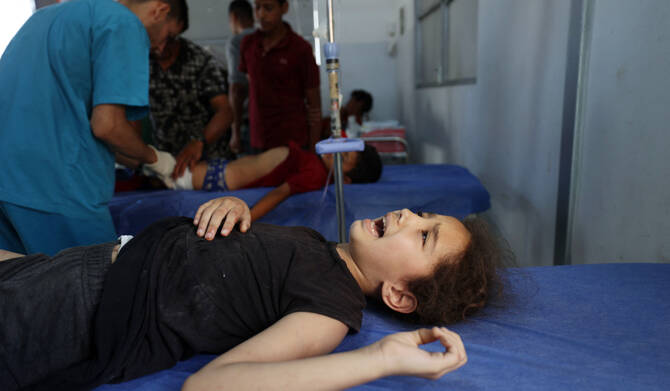
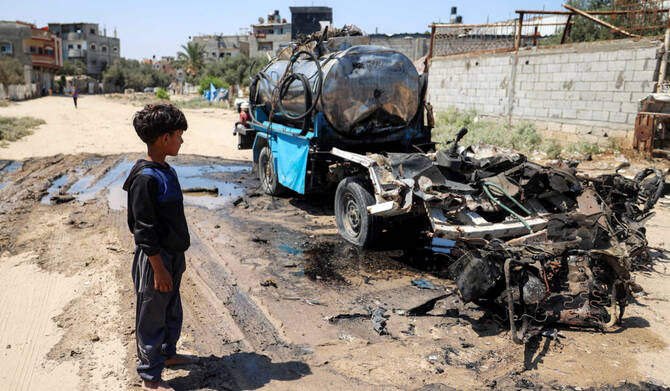
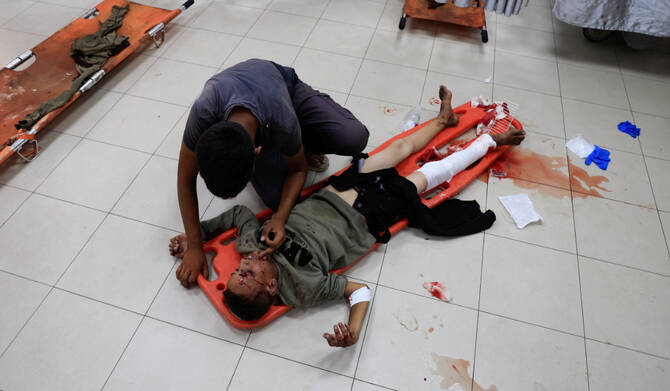
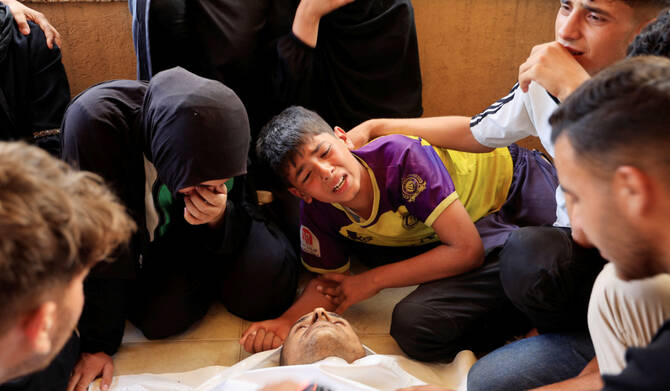
In Gaza, the civil defense agency said at least 22 people were killed Monday in the latest Israeli strikes in and around Gaza City and in Khan Yunis in the south.
An Israeli military statement said troops had destroyed “buildings and terrorist infrastructure” used by Hamas and Palestinian Islamic Jihad militants in Gaza City’s Shujaiya and Zeitun areas.
The Al-Quds Brigades — the armed wing of Islamic Jihad, which has fought alongside Hamas — released footage on Monday that it said showed its fighters firing missiles at an Israeli army command and control center near Shujaiya.
The military later on Monday said three soldiers — aged 19, 20 and 21 — “fell during combat in the northern Gaza Strip” and died in hospital on Monday. Another from the same battalion was severely injured.
US President Donald Trump said he was still hopeful of securing a truce deal, telling reporters on Sunday night: “We are talking and hopefully we’re going to get that straightened out over the next week.”
Hamas’s top negotiator, Khalil Al-Hayya, and the leadership of Hamas and Islamic Jihad held a “consultative meeting” in Doha on Sunday evening to “coordinate visions and positions,” a Palestinian source with knowledge of the talks told AFP.
“Egyptian, Qatari and American mediators continue their efforts that make Israel present a modified withdrawal map that would be acceptable,” they added.
On Saturday, the same source said Hamas rejected Israeli proposals to keep troops in more than 40 percent of Gaza, as well as plans to move Palestinians into an enclave on the border with Egypt.
A senior Israeli political official countered by accusing Hamas of inflexibility and trying to deliberately scupper the talks by “clinging to positions that prevent the mediators from advancing an agreement.”
Netanyahu has said he would be ready to enter talks for a more lasting ceasefire once a deal for a temporary truce is agreed, but only when Hamas lays down its arms.
He is under pressure to wrap up the war, with military casualties rising and with public frustration mounting at both the continued captivity of the hostages taken on October 7 and a perceived lack of progress in the conflict.
Politically, Netanyahu’s fragile governing coalition is holding, for now, but he denies being beholden to a minority of far-right ministers in prolonging an increasingly unpopular conflict.
He also faces a backlash over the feasibility, cost and ethics of a plan to build a so-called “humanitarian city” from scratch in southern Gaza to house Palestinians if and when a ceasefire takes hold.
Israel’s security establishment is reported to be unhappy with the plan, which the UN agency for Palestinian refugees and Israel’s former prime minister Ehud Olmert have described as a “concentration camp.”
“If they (Palestinians) will be deported there into the new ‘humanitarian city’, then you can say that this is part of an ethnic cleansing,” Olmert was quoted as saying by The Guardian newspaper late on Sunday.
Hamas’s attack on Israel in 2023 resulted in the deaths of 1,219 people, most of them civilians, according to an AFP tally based on official figures.
A total of 251 hostages were taken that day, of whom 49 are still being held, including 27 the Israeli military says are dead.
Israel’s military reprisals have killed 58,386 Palestinians, mostly civilians, according to the health ministry in Hamas-run Gaza.


