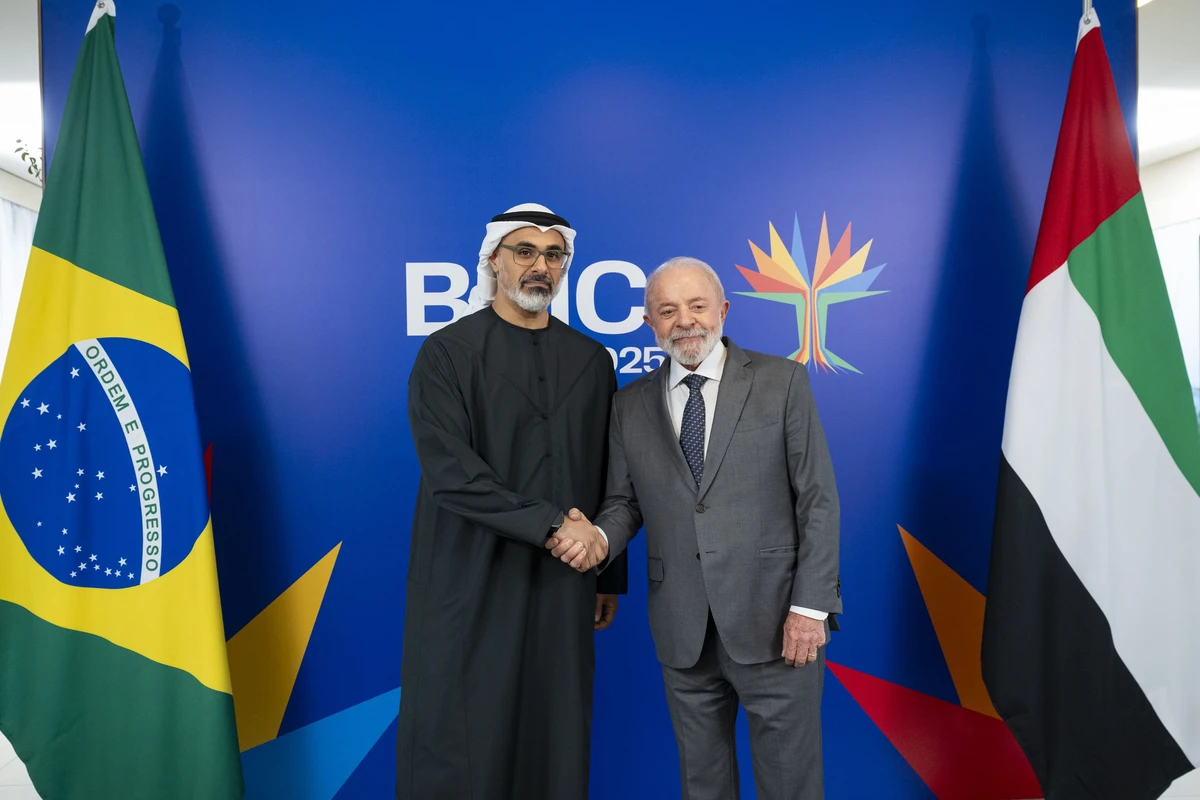
Abu Dhabi crown prince holds talks with Brazilian president on sidelines of BRICS summit

1 / 3
Sheikh Khaled bin Mohamed bin Zayed Al-Nahyan, the crown prince of Abu Dhabi, and Brazilian President Luiz Inacio Lula da Silva. (WAM)
2 / 3
Officials from the UAE and Brazil met on the sidelines of the 17th BRICS Summit. (WAM)
3 / 3
Sheikh Khaled bin Mohamed bin Zayed Al-Nahyan, the crown prince of Abu Dhabi, in Rio de Janeiro. (WAM)
Short Url
Updated 06 July 2025
Follow

Abu Dhabi crown prince holds talks with Brazilian president on sidelines of BRICS summit

  • Sheikh Khaled bin Mohamed bin Zayed Al-Nahyan emphasized that the 50-year bond highlights the UAE and Brazil’s commitment to collaboration
  • Luiz Inacio Lula da Silva underscored the strength and depth of the bilateral relations between Abu Dhabi and Brasilia

LONDON: Sheikh Khaled bin Mohamed bin Zayed Al-Nahyan, the crown prince of Abu Dhabi, and Brazilian President Luiz Inacio Lula da Silva, discussed ways to strengthen ties between the UAE and Brazil during a meeting on the sidelines of the 17th BRICS Summit.

Sheikh Khaled emphasized the UAE’s pride in its strategic relationship with Brazil, a pioneering partnership built on decades of cooperation, mutual respect, and shared interests, the Emirates News Agency reported.

He stressed that the 50-year bond highlights both nations’ commitment to collaboration and sustainable development.

BRICS was founded in 2009 by Brazil, Russia, India and China. South Africa became a member the following year, and in late 2023 Egypt, Ethiopia, Iran and the UAE accepted invitations to join.

Rio de Janeiro is hosting the 17th edition of the summit on Sunday and Monday.

The Brazilian president underscored the strength and depth of the bilateral relations between his country and the UAE.

The meeting was attended by several Emirati officials, including Reem Al-Hashimy, minister of state for international cooperation; Thani bin Ahmed Al-Zeyoudi, minister of foreign trade; and UAE Ambassador to Brazil Saleh Ahmad Salem Alsuwaidi.
UN peacekeepers say Israeli forces fired on them in southern Lebanon

Updated 11 December 2025
Follow

UN peacekeepers say Israeli forces fired on them in southern Lebanon

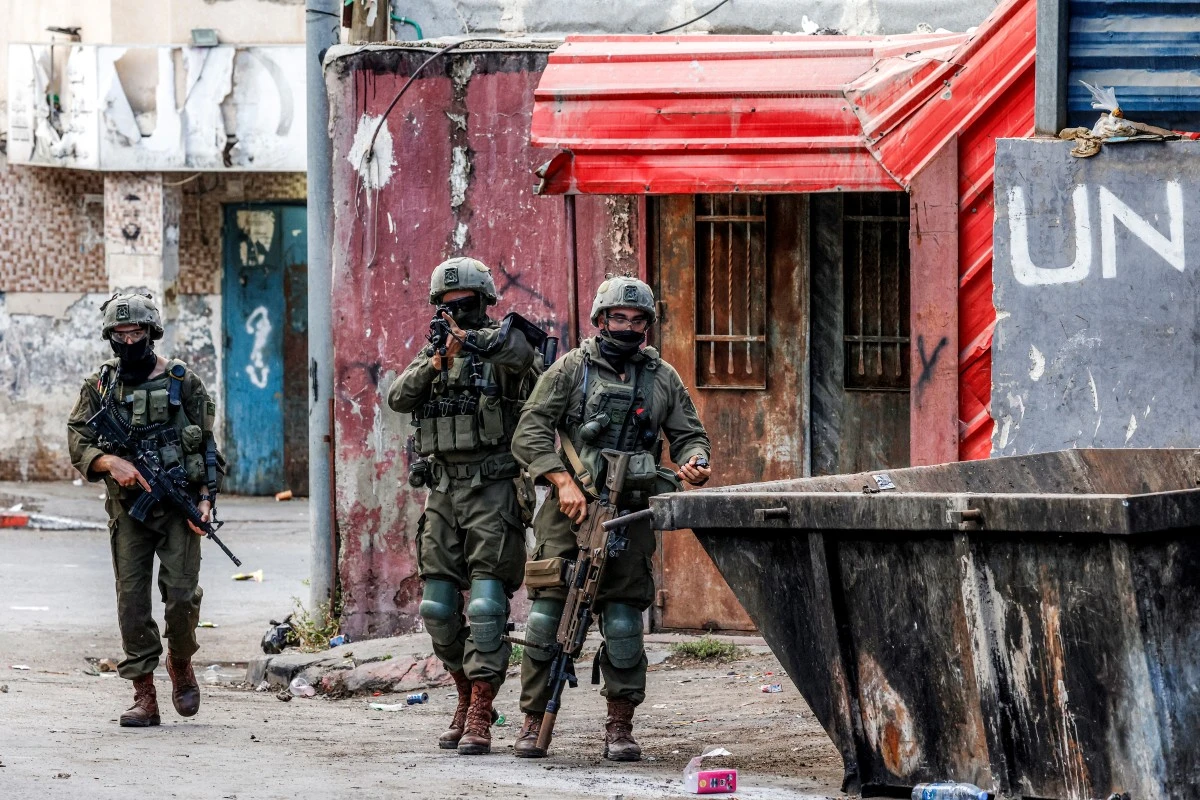
  • “Yesterday, peacekeepers in vehicles patrolling the Blue Line were fired upon by IDF soldiers in a Merkava tank,” UNIFIL said
  • It said that both the peacekeepers and the Israeli tank were in Lebanese territory

BEIRUT: The United Nations Interim Force in Lebanon said Wednesday that Israeli forces fired on its peacekeepers a day earlier in the country’s south, urging Israel’s army to “cease aggressive behavior.”
It is the latest such incident reported by the peacekeepers in southern Lebanon, where UNIFIL acts as a buffer between Israel and Lebanon and has been working with Lebanon’s army to support a year-old truce between Israel and militant group Hezbollah.
“Yesterday, peacekeepers in vehicles patrolling the Blue Line were fired upon by IDF (Israeli army) soldiers in a Merkava tank,” a UNIFIL statement said, referring to the de facto border.
“One ten-round burst of machine-gun fire was fired above the convoy, and four further ten-round bursts were fired nearby,” the statement said.
It said that both the peacekeepers and the Israeli tank were in Lebanese territory at the time of the incident and that the Israeli military had been informed of the location and timing of the peacekeeping patrol in advance.
“Peacekeepers asked the IDF to stop firing through UNIFIL’s liaison channels... Fortunately, no one was injured,” it said.
Last month UNIFIL said Israeli soldiers shot at its troops in the south, while Israel’s military said it mistook blue helmets for “suspects” and fired warning shots.
In October, UNIFIL said one of its members was wounded by an Israeli grenade dropped near a UN position in the country’s south, the third incident of its kind in just over a month.
“Attacks on or near peacekeepers are serious violations of (UN) Security Council Resolution 1701,” UNIFIL said on Wednesday, referring to the 2006 resolution that formed the basis of the November 2024 truce.
“We call on the IDF to cease aggressive behavior and attacks on or near peacekeepers working to rebuild stability along the Blue Line,” the peacekeepers said.
Israel carries out regular attacks on Lebanon despite the truce, usually saying it is targeting sites and operatives belonging to Hezbollah, which it accuses of rearming.
It has also kept troops in five south Lebanon areas it deems strategic.
On Saturday, a UN Security Council delegation visiting Lebanon urged all parties to uphold the ceasefire.
It emphasized that the “safety of peacekeepers must be respected and that they must never be targeted,” after gunmen on mopeds attacked UNIFIL personnel last week.